


There are golf courses, and then there are legends carved into the very landscape. Pebble Beach Golf Links, perched precariously on the rugged cliffs of California’s Monterey Peninsula, belongs firmly in the latter category. It’s a place I’ve visited many times, each journey revealing a new facet of its enduring allure, a fresh appreciation for the genius of its original architects, Jack Neville and Douglas Grant, and the subtle evolutionary touches over the decades.
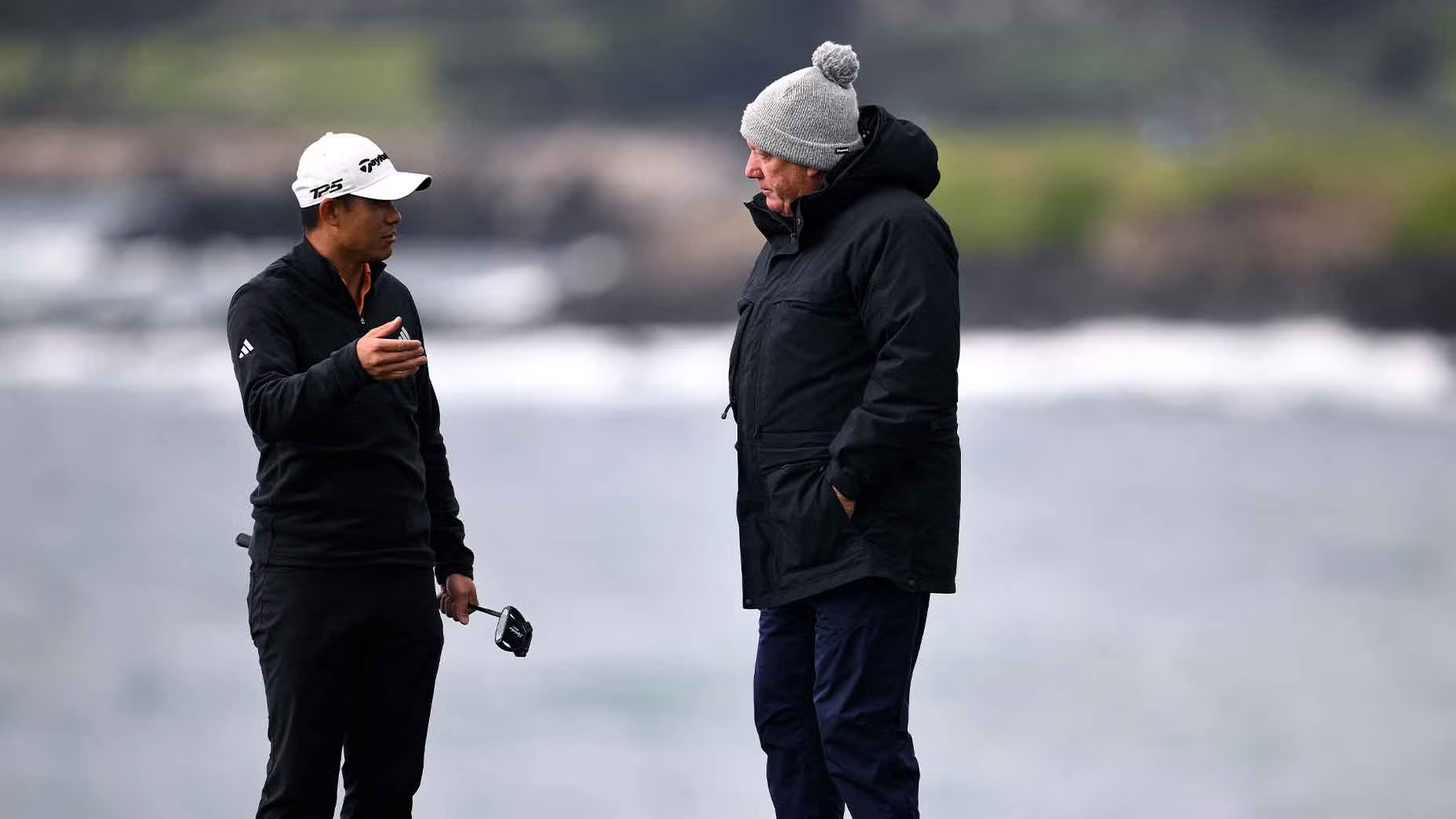
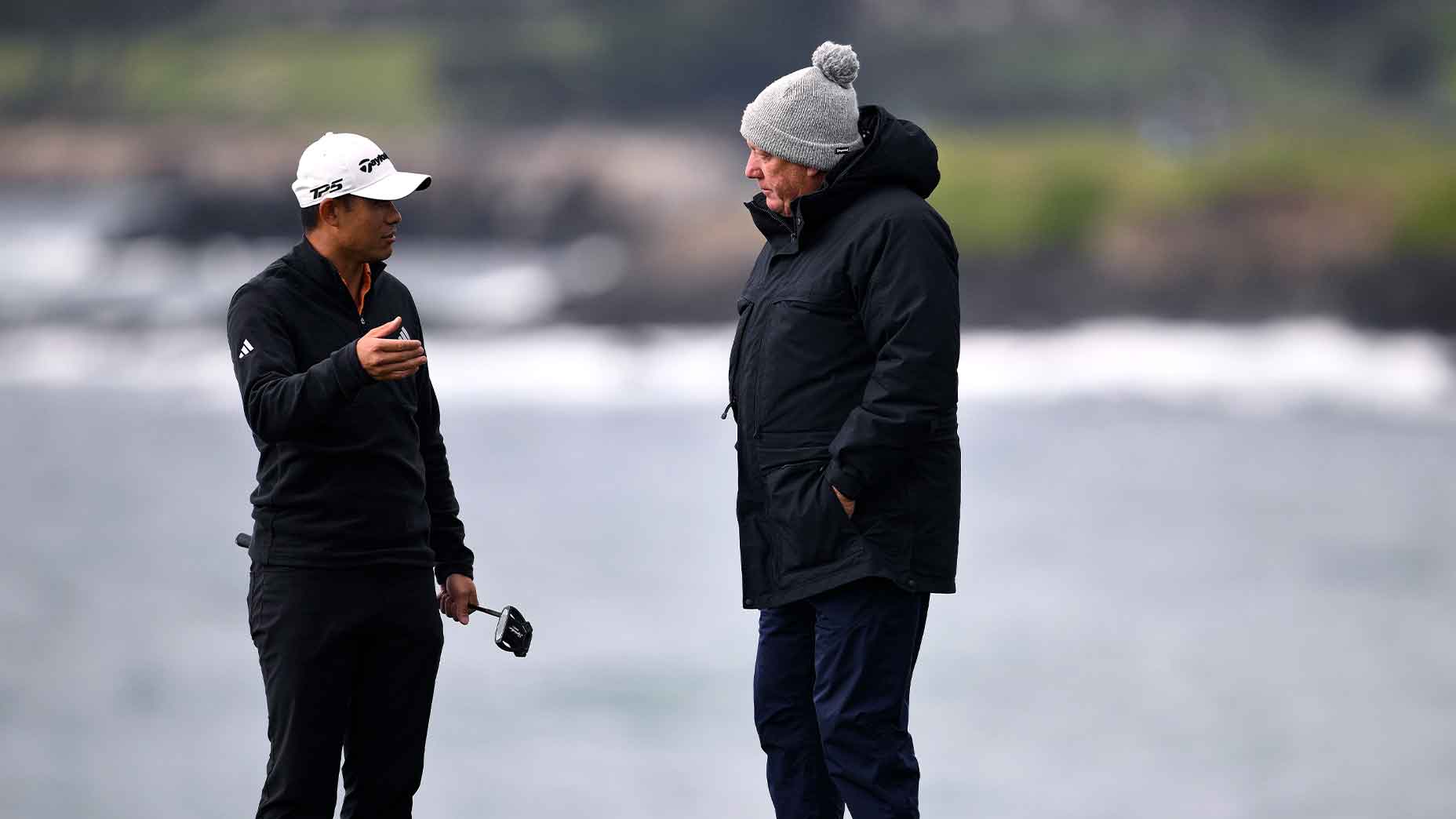
Most recently, the famed 18th hole was the stage for Collin Morikawa’s triumphant return to the winner’s circle on American soil. Observing the closing dramatics, it struck me again just how deeply the design of Pebble Beach influences every shot, every decision, and every nerve-wracking moment. It’s not merely a picturesque backdrop; it’s an active participant, a co-conspirator, in the unfolding drama.
The 18th at Pebble, a sweeping par-5 that hugs the dramatic coastline, is arguably one of the most iconic finishing holes in golf. Its strategic brilliance lies in its dual nature: offering a tantalizing risk-reward proposition for those chasing glory, while simultaneously presenting a formidable challenge to simply make par. From the tee, the Pacific stretches endlessly to your left, a constant, mesmerizing distraction. The fairway is generously wide but tilts towards the ocean, urging the ball closer to the hazard with every bounce. The famed Cypress tree, a sentinel standing guard near the dogleg, forces a decision – play safe right, or flirt with the abyss for a shorter approach.
Morikawa’s victory was a testament to his composure, especially after an almost comical display of golf-meets-rules-officialdom unfolded with his playing partner, Jacob Bridgeman. The article recounts the agonizing wait Morikawa endured:
“Morikawa had been standing in the fairway over his ball — facing a terrifying second shot and needing a birdie to win the golf tournament — for more than 20 minutes.”
This delay, often a mental death knell for players, highlights the pressure uniquely amplified by the course itself. The wind, ever-present at Pebble, became a character in its own right, swirling and playing tricks with Bridgeman’s ball, leading to yet another rules discussion. Even without the technicalities, the 18th demands absolute focus. Any lapse in concentration, any flinch at the sight of the crashing waves, can prove disastrous.
What makes Pebble Beach truly special, beyond its breathtaking scenery, is this strategic depth woven into its natural canvas. Neville and Grant, with later significant contributions from Alister MacKenzie (another architectural hero of mine), understood that the Pacific Ocean wasn’t just a view; it was an integral design element. The famous stretch from 4 to 10, arguably the finest outward nine in golf, perfectly illustrates this. Each of these holes uses the ocean not just as a boundary, but as a strategic hazard, demanding a precise carry, a delicate fade, or a bold draw over the crashing waves. The par-3 7th, a mere flick of a wedge, plays infinitely longer when the wind howls, its tiny green seemingly adrift in an azure expanse.
“When I first came out and turned pro, like I didn’t care about honestly making cuts or top-20s, I came out to win,” Morikawa said. “I wanted to come out and win, win the weekend, win the tournament.”
This winning mindset, especially at a course like Pebble, is crucial. It’s a course that rewards boldness when executed well, but punishes even the slightest miscalculation with severe consequences. The routing itself is a masterstroke, teasing glimpses of the ocean on the opening holes before revealing its full majesty on the iconic stretch, then retreating inland for a few holes before a grand, dramatic return to the shore for the crescendo of 17 and 18.
The green complexes at Pebble, often smaller and subtly contoured, also demand precision. They aren’t Pete Dye’s theatrical, multi-tiered monsters, but rather more understated, organic surfaces that blend seamlessly with the natural undulations of the land. This means approach shots aren’t just about finding the green; they’re about finding the right section, setting up a makeable putt on greens that often feature more break than they initially reveal.
Playing Pebble Beach is an experience that transcends golf. It’s a journey through one of nature’s masterpieces, enhanced by human ingenuity. My own rounds there have been a blur of photographic memory – the crisp salt air, the cry of gulls, the sun sparkling on the water, the terrifying yet exhilarating sight of a tee shot hanging over the ocean. It’s a bucket-list destination for a reason, and one that consistently delivers on its legendary status.
“Shoot, we’re at Pebble Beach right now, so I’m gonna enjoy this one.”
Morikawa’s words perfectly encapsulate the feeling. It’s hard not to get swept up in the grandeur of the place. If you’re fortunate enough to visit, Pebble Beach is located in Pebble Beach, California, approximately two hours south of San Francisco. It is a public course, though booking well in advance and paying a premium green fee is essential. A stay at the Lodge or Inn at Spanish Bay is often part of the package for non-members looking to experience this hallowed ground. But trust me, every dollar and every minute spent contemplating a shot over the Pacific is worth it. It’s not just golf; it’s an education in architectural brilliance and a sensory feast.
