


Tiger’s TGL Stumble Reveals a Deeper Truth About Competitive Golf in 2025
There’s a moment in every athlete’s comeback narrative where the real story reveals itself—and Monday night in Palm Beach Gardens, that moment arrived in the form of a 3-foot-6-inch putt that didn’t fall.
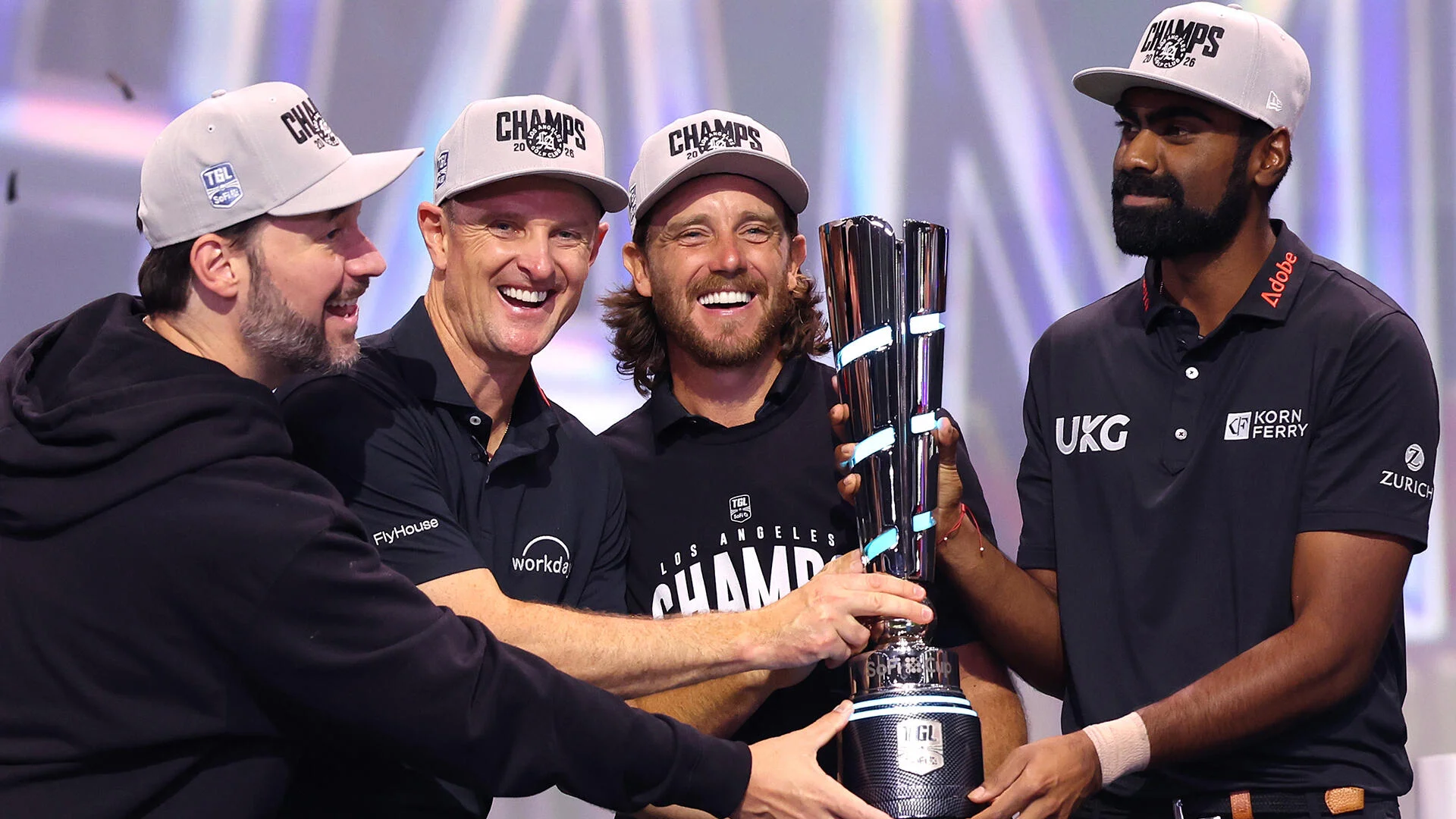
Los Angeles Golf Club dismantled Jupiter Links 9-2 in the second match of the TGL championship series, and while the scoreline was one-sided, what struck me most wasn’t the dominance of Tommy Fleetwood, Justin Rose, and Sahith Theegala. It was watching Tiger Woods—a man who’s stared down thousands of crucial putts across 35 years of professional dominance—miss a short one and, more importantly, watch his team never recover from it.
“We got our ass kicked at the end. … We didn’t respond. I missed a short one at the beginning to give them momentum, and we never got it back,” Woods said.
That’s the sound of a champion being honest about momentum in team golf, and it tells us something crucial about where Tiger is right now as he plots his path toward a 2026 Masters comeback.
The Weight of One Swing
In my three and a half decades covering professional golf—and having carried a bag for Tom Lehman during some of his biggest moments—I’ve learned that team competition operates on a different frequency than individual play. One poor shot doesn’t just cost you a stroke; it deflates the entire room. I’ve felt it from both sides of the bag.
What fascinated me about this TGL final wasn’t just the 6-5 victory Los Angeles grabbed in Match 1, or the clinical performance in Match 2. It was how quickly the momentum swung. Jupiter Links came out swinging with Max Homa, Tom Kim, and Kevin Kisner in the opener, and they nearly stole it. They were the aggressors. But when Woods made his season debut in Match 2 after months away from competitive play, Jupiter needed him to be the closer, the anchor—the guy who steadies the ship.
Instead, they got a player who’s still finding his legs, and Los Angeles capitalized immediately.
Why LA Never Blinked
Here’s what I found most impressive: Los Angeles stuck with the same three-man lineup for both matches. In this era of golf, where load management and specialization are king, that kind of consistency sends a message. You’re saying: “We trust these guys. We’re not looking for magic; we’re looking for excellence.”
Fleetwood, Rose, and Theegala executed that formula perfectly. Down early—actually down 0-2 at one point—they could have panicked. Instead, something beautiful happened. Rose kept the unit calm.
Rose credited Fleetwood for keeping the team calm during the early deficit, while letting them know they had done nothing wrong up to that point.
That’s team golf at its finest. That’s what separates championship teams from good ones. And frankly, that’s what Tiger’s side lacked on Tuesday night. When momentum swung, Jupiter never found a way to stabilize.
By the time Theegala tied things at hole 6, the psychological tide had shifted. When he set up Fleetwood for an eagle on the par-4 8th, Jupiter was staring at a 4-2 deficit heading into singles. The match was essentially over by the time Rose and Homa squared off on hole 10 in singles play, with Rose absolutely smoking a 5-wood from 255 yards to set up the eagle that clinched the championship.
The Tiger Question
Now, here’s where I need to be careful—and fair. Tiger playing competitive golf after months away is encouraging. Full stop. The fact that he stepped into a high-pressure TGL format rather than waiting for some lower-stakes tune-up shows confidence, maybe even cockiness, about his physical readiness. I respect that.
But missing that putt on hole 7, and more importantly, the inability to generate a response when the team needed him most? That’s the real data point. That’s what we’ll be watching as he continues his comeback trajectory. In team environments, one player’s slump compounds quickly. The chemistry breaks. The belief fractures.
Jupiter Links needed their best player to be their best player on Tuesday. Woods showed he’s still getting there.
What This Means for TGL (and Golf’s Future)
If there’s a silver lining for the tour—pun intended—it’s that TGL is proving itself as a legitimate competitive format. The championship between LA and Jupiter delivered drama, strategy, and the kind of momentum swings that have people talking. The strategic use of “hammers” (the ability to force your opponent to accept certain conditions) added genuine chess-match elements to the proceedings.
Los Angeles made four straight pars to start Match 2. They fell behind. They responded with four straight points. That’s not luck; that’s execution under pressure, which is exactly what the PGA Tour is trying to showcase with this format.
What strikes me most about this championship is that it proved TGL isn’t just an exhibition. It matters. The intensity was real. The stakes were real. And for a player like Tiger trying to build momentum for Augusta in 2026, the sting of this loss will matter too—in exactly the right way.
Sometimes the best comeback stories aren’t about the wins. They’re about the losses that light the fire.
