

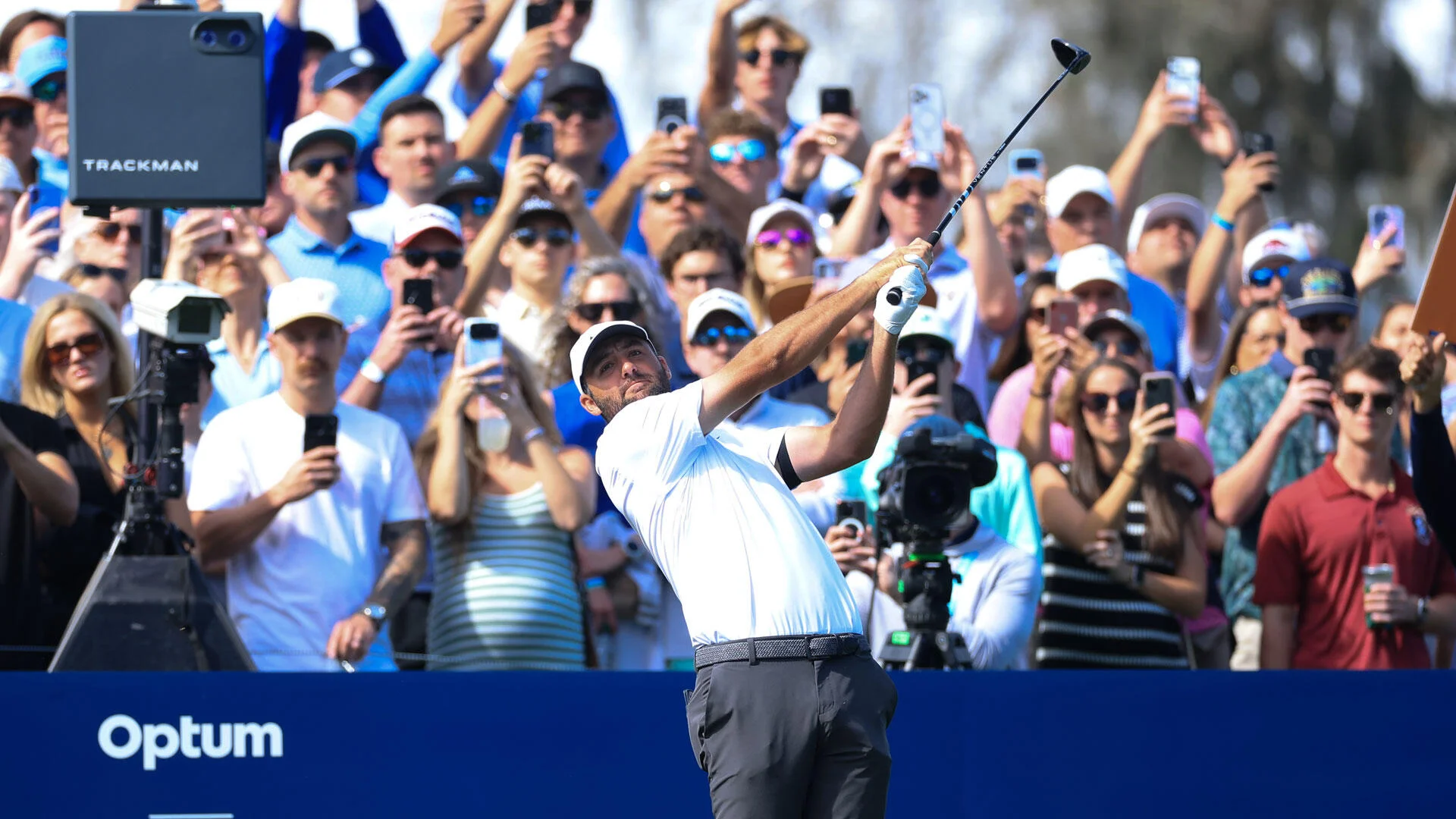

Scottie’s Scramble at The Players: When Attitude Trumps Scorecard
There’s an old saying in professional golf that separates the contenders from the pretenders: “You don’t have to play well to play well.” It sounds like a koan, I know. But after watching Scottie Scheffler navigate Saturday at TPC Sawgrass—barely clinging to the cut line on Friday, then firing a bogey-free 67 to climb nearly 30 spots up the leaderboard—that paradox suddenly makes perfect sense.
In my 35 years covering this tour, I’ve learned that the tournaments a player wins aren’t always the ones they dominate. Sometimes, they’re the ones where they learn something valuable about themselves when things aren’t clicking. And that’s precisely what we saw unfold this week at The Players.
The Fairway Fix
Let’s start with the mechanics, because the numbers tell a fascinating story. Scheffler hit only 14 fairways combined over his first 36 holes. That’s, frankly, tour-player-trying-not-to-get-his-card-yanked territory. On Saturday? He found 11 of 14 fairways. That single stat jump doesn’t sound revolutionary until you understand what it means downstream.
When you’re playing from the rough at a place like Sawgrass, you’re not just playing golf—you’re playing defense. You’re worrying about hazards, contending with unpredictable lies, and most importantly, you’re working from your back foot rather than your front foot coming into the greens. That’s a fundamental swing difference that impacts everything from club selection to tempo.
Scheffler understood this intuitively. As he told us after the round:
“I was a little sharper today than I was the first two days. I felt like I was swinging it better each day of the tournament. Today hit a few more fairways and was able to give myself a few more looks for birdie.”
Notice the progression he’s describing—not “I fixed my swing overnight,” but rather “I’ve been improving incrementally.” That’s the mark of a player with genuine emotional intelligence on the course.
The Art of the Scramble
Here’s what impressed me most, though, and what separates Scottie from a lot of elite players I’ve covered: his par saves. The man hit only 9 greens in regulation on Saturday. That’s a number that should produce at least a couple of bogeys at TPC. Instead, he salvaged a pristine card.
Take the par-5 11th hole. His second shot found the water. That’s the kind of mistake that can spiral mentally. You take a penalty drop, you’re now hitting your fourth shot, and the hole is essentially lost. Except Scheffler’s fourth shot from 112 yards settled inside 2 feet. That’s not luck—that’s course management and poise under pressure. Having worked as a caddie for Tom Lehman back in the day, I can tell you: those are the shots that show up in the big moments.
The par-4 4th was similarly telling. Tee shot in the rough, forced to lay up short of water, and still he coaxed out a par. These aren’t the glamorous moments that make highlight reels, but they’re the foundation of tournament wins.
Where He Stumbled
Now, I don’t want to paint this as a complete turnaround story, because it isn’t quite. Scheffler’s work on the par-5s remains a significant weak spot. He played those four holes in 3-under for the week. For context, leader Ludvig Åberg went 6-under on those same holes on Friday alone. That’s a meaningful difference, and it’s not something Scottie can ignore heading into the final round.
Two of his three missed fairways came on par-5s (Nos. 9 and 16), and both instances handcuffed him from attacking the greens in regulation. In a tournament where risk management is typically rewarded, that’s a vulnerability. The question for Sunday: can he tighten that up, or will it remain a leak in his game?
The Real Story Here
But here’s what really strikes me about this week, and why I think it matters beyond just The Players: Scheffler’s framing of his own performance. He said something that deserves a close read:
“I think with the way I hit it the first couple days, to kind of have the attitude that I did and the fight that I did… when I look at tournaments, I’m not thinking about winning, I’m thinking about approaching things the right way. I did my best to stay committed and I did a good job I think of keeping the right attitude and keeping my head on straight in order to grind out a couple rounds that were difficult.”
This is a player specifically decoupling his self-worth from his placement on the leaderboard. That’s not false humility or golf-speak deflection. That’s a 28-year-old (or however old Scottie is these days—time flies) with the emotional maturity to understand that winning follows from the process, not the other way around.
In my experience, that mindset is exactly what separates the guys who win once or twice on tour from the guys who win repeatedly. Scottie may not capture The Players this week, but the foundation he’s building—staying committed when things aren’t working, fighting back when he’s out of position, and maintaining perspective about what actually matters—that’s the blueprint for the next decade of his career.
Not every Saturday needs to end in a trophy. Sometimes, a bogey-free 67 and a lesson in resilience is worth far more than Sunday’s hardware.
