

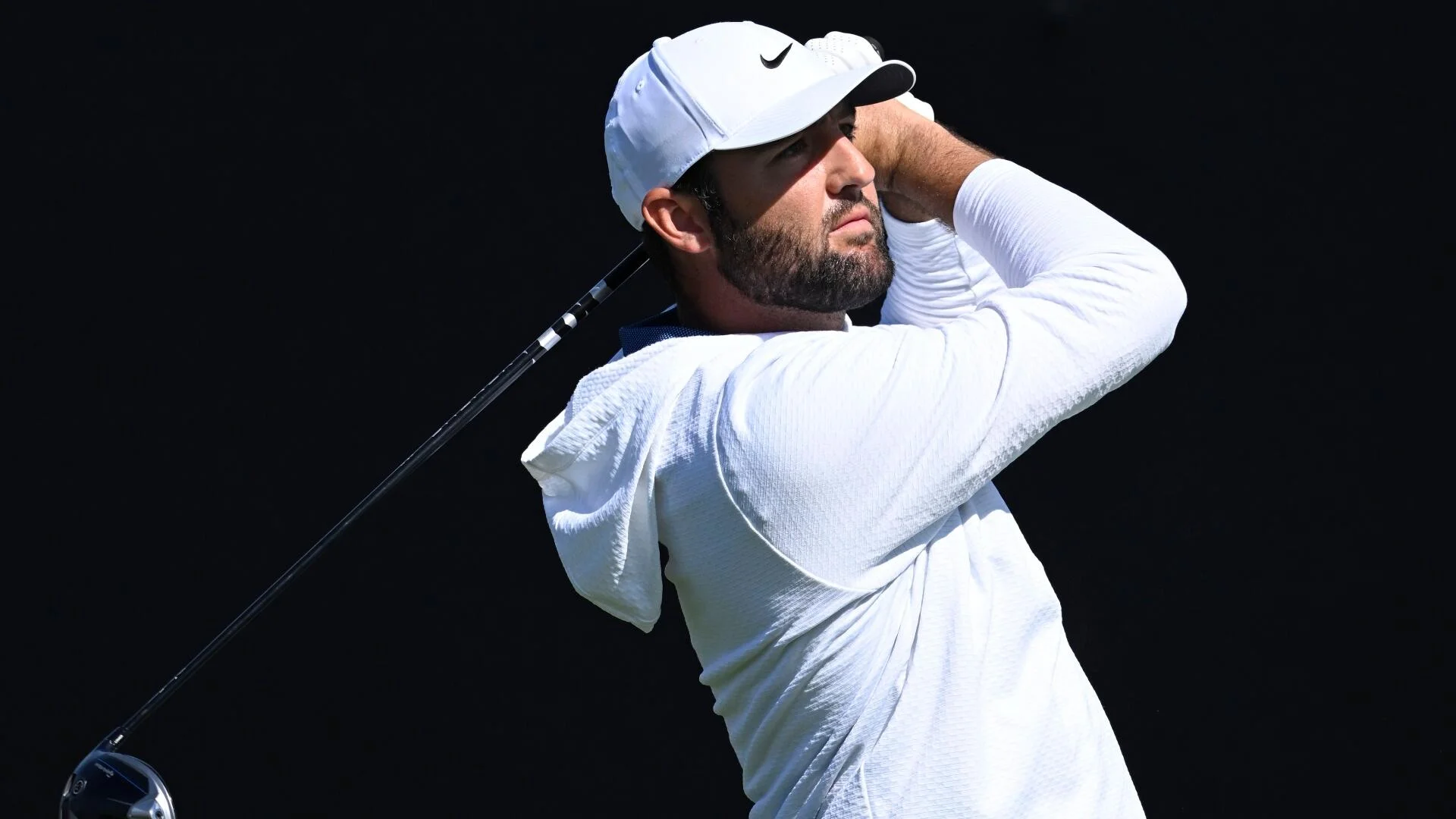

Houston Sets Up as Scheffler’s to Lose, But the Real Story Is Deeper
Look, I’ve been around long enough to know that when a player goes off at +350 in a 156-person field, the market’s essentially saying everyone else is playing for second place. That’s where we sit with Scottie Scheffler heading into this week’s Houston Open at Memorial Park—and frankly, it’s hard to argue with the math.
But here’s what strikes me after 35 years watching tour dynamics unfold: the real intrigue this week isn’t whether Scheffler wins. It’s what happens in the margins, and more importantly, what the field’s structure tells us about the state of professional golf right now.
The Scheffler Question Gets Easier Every Year
In my experience covering the tour, you learn to recognize when a player has fundamentally changed the competitive landscape. I caddied for Tom Lehman through some of his best years, and even Tom at his peak never generated the kind of gravitational pull we’re seeing from Scottie. The disparity between his odds (+350) and the next closest legitimate threat—Min Woo Lee at +1500—tells you everything you need to know.
“Scottie Scheffler is in the 2026 Houston Open field, and he’s a substantial favorite in the 2026 Houston Open odds this week at +350. Defending champion Min Woo Lee (+1500) is the only other golfer going off lower than +2000.”
That’s not a competitive field anymore. That’s a Scheffler invitational with supporting cast. And yes, I know what you’re thinking—he’s the best player in the world, so of course the odds reflect that. But what fascinates me is how the tour has become almost binary: Scottie, and then everybody else trying to figure out their spot.
Min Woo Lee’s Fade Is the Week’s Real Story
Now here’s where it gets interesting. The computer model at SportsLine is fading the defending champion, and I think they might be onto something real.
“One major surprise the model is calling for at the Houston Open 2026: Min Woo Lee, the defending champion and the second favorite, is not in the projected top five. He’s a golfer to fade this week.”
Having seen hundreds of defending champions come back to courses where they’ve won, I can tell you there’s a pattern: sometimes the magic doesn’t travel. Min Woo’s got a strong season overall, but his last outing at The Players was rough—three rounds at 70 or better, then a 74 closing round to finish T32. That’s the kind of finish that sticks with you, especially when you’re returning to defend.
The thing is, this isn’t a referendum on Min Woo’s talent. The 27-year-old Australian has legitimately performed well this season. But defending at a course puts different pressure on you. You know exactly what worked last year. You know every break, every wind pattern you encountered. And somehow, that knowledge can work against you just as easily as it works for you.
The Value Play Everyone’s Missing
What really caught my eye—and what separates casual bettors from sharp ones—is the computer model’s conviction on Nicolai Hojgaard at +3300. That’s a 10-plus shot price improvement on where the market has him in its collective consciousness.
“Another surprise: The model says Nicolai Hojgaard is a top-three favorite this week despite his longer odds at +3300. He had a tough weekend at the Valspar Championship last week, but hasn’t finished worst than T27 at any other event this season.”
Here’s what I see when I look at that resume: consistency. In my three decades covering the tour, I’ve learned that week-to-week consistency often matters more than a single dominant performance. Nicolai’s T3 at the Phoenix Open, his T6 at the Cognizant Classic—those are the kinds of finishes that tell you a player is tracking well. One bad weekend at Valspar doesn’t erase that trajectory.
The field also includes several +4000-plus longshots the model likes, including apparently a +6000 shot. I’m genuinely curious which player that is, because at those odds, the model would need to see something the market isn’t pricing in—a favorable draw, a course setup that suits their eye, or simply a player whose form is trending upward while the public hasn’t noticed.
Brooks Koepka’s Return Remains Puzzling
I’d be remiss if I didn’t mention Brooks at +2700. Look, Brooks is a major championship pedigree kind of player, and you never want to count him out. But one top-10 finish in five events since returning? That’s concerning. It suggests he’s still finding his rhythm, still acclimating to competition at this level after his time away.
That doesn’t mean he can’t break through—I’ve seen comebacks before. But the early returns suggest patience might be warranted before loading up on Brooks futures.
What This Means for the Masters Run-Up
The Houston Open has become Augusta’s unofficial final exam, and this year’s field is no different. Two weeks separate us from the Masters, and players are either building momentum or desperately trying to find it. Scheffler’s dominance suggests he’ll enter Augusta playing the kind of golf you simply can’t defend against. For everyone else, this week is about proving they belong in the conversation.
The computer model has been remarkably sharp—nailing 16 majors including four Masters in a row—so there’s real value in taking their contrarian positions seriously. But after three and a half decades watching this game, I’ll tell you what I think: Scheffler will likely win because he’s the best player in the field. The real money, though? It’s made by the folks who correctly identify who finishes second through fifth.
That’s where the week gets played. That’s where the model might be earning its keep.
