

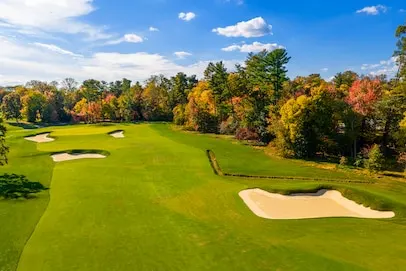

Spanish Bay’s Second Act: Why This Monterey Peninsula Makeover Matters More Than You Think
I’ve walked the grounds of Spanish Bay maybe thirty times over the past four decades, and I’ll be honest—I’ve always felt the place was caught between two worlds. It had the setting of a world-beater, the oceanside drama of anything on the peninsula, yet something never quite clicked. The routing felt forced. The conditioning seemed at odds with what the land wanted to be. Players liked it well enough, but loved it? That was a different story.
Now, with Gil Hanse and Jim Wagner’s comprehensive redesign kicking off March 18 with an April 2027 opening target, Spanish Bay finally gets a chance to become what it was always meant to be—and that’s worth paying attention to, even if you’ve never stepped foot on the Monterey Peninsula.
The Problem With Being a Child of the ’80s
Here’s what struck me reading David Stivers’ comment about the original design philosophy. He nailed it:
“Everybody liked playing Spanish Bay, but the problem for us was that it was an 1980s style golf course where harder was better.”
That sentence deserves to hang in every golf architecture classroom. Because it’s not just about Spanish Bay—it’s about an entire era of American golf design that prioritized difficulty and spectacle over playability and subtlety. I caddied in that era. I watched designers and developers become obsessed with the idea that championship-level challenge automatically translated to great golf.
Spanish Bay opened in 1987 with the best intentions. Robert Trent Jones Jr., Tom Watson, and Sandy Tatum—I mean, that’s a resume that commands respect. They faced a legitimate challenge: transforming a sand-mined property into a links course in a country where hardly anyone had attempted that since the 1920s. They hauled over half a million cubic yards of sand back onto the site. That’s ambition. That’s vision.
But Hanse identified the core issue with surgical precision:
“The golf course is ‘of its time.’ There was an era in golf architecture 40 years ago when this kind of design was the model and the standard for what they were trying to achieve. But we feel we have an opportunity to present a different vision for the land, something more natural that sits into the landscape softer.”
Notice he didn’t trash the original work. He contextualized it. That’s the mark of a thoughtful architect, and frankly, the mark of someone who understands that golf course design—like all design—is subject to fashion and philosophy.
The Unrealized Potential Problem
What’s fascinating here is the utility rate comparison Stivers mentioned almost in passing: Spanish Bay runs at 80-85 percent tee-time capacity, while Spyglass Hill sits at mid-90s and Pebble Beach near 100 percent. That’s the real story. It’s not about revenue—though obviously Stivers sees the upside there. It’s about whether a golf course achieves that magical quality where guests actively choose to play it again.
In my thirty-five years covering this game, I’ve learned that the gap between “okay” and “great” isn’t always dramatic. Sometimes it’s about removing the barriers that prevent golfers from enjoying what’s already there. Spanish Bay’s original designers created narrow fairways and deep, punitive bunkers that fought against the site rather than working with it. The result? A course that intimidated rather than invited.
The redesign addresses this directly. Hanse notes that what might appear as 50-yard-wide corridors actually play much narrower due to perimeter mounding that repels rather than guides. Broadening greens and entrances, softening the relationship between fairway and rough, and allowing more running shots—these aren’t dumbing down the course. They’re making it smarter. They’re letting the ocean and the land do the talking instead of forcing players to navigate artificial obstacles.
The Grass Question
One detail worth examining: the decision to use rye grass in the fairways rather than the fescues typically associated with links courses. Rye historically requires more water and maintains that deeper green color—the opposite of what a true links aesthetic demands.
Hanse’s response was refreshingly honest. He’s banking on getting the soil structure right to play the rye “droughty” and relying on irrigation controls. That’s a gamble, and in my experience, gambits involving grass management don’t always pay off in coastal California’s specific microclimates. But the willingness to experiment—to not simply replicate Bandon Dunes’ fescue model—suggests they’re thinking independently rather than reflexively copying what’s trendy.
Why This Matters Beyond Monterey
Spanish Bay’s redesign signals something broader about American golf: we’re finally mature enough to revisit our mistakes without shame, and thoughtful enough to improve them without erasing them. This isn’t the ham-fisted “tear it down and start over” approach. Hanse is maintaining the current routing because it uses the property well. He’s preserving the spectacular dunescapes and the lovely 12th green set in its wooded glen.
The environmental stewardship adds another layer. Reducing irrigated turf by 12 percent while giving more acreage back to sensitive coastal areas? That’s not greenwashing. That’s genuine long-term thinking from a company that’s been operating in that ecosystem for decades.
If Hanse and Wagner pull this off—and their track record (three courses on the 100 Greatest in this decade alone) suggests they will—Spanish Bay could redefine how we think about public resort golf on the West Coast. Not as secondary to Pebble Beach and Spyglass, but as an equal partner in what could be the strongest trio of public courses in America.
That’s worth watching when the dirt starts moving in March.
