

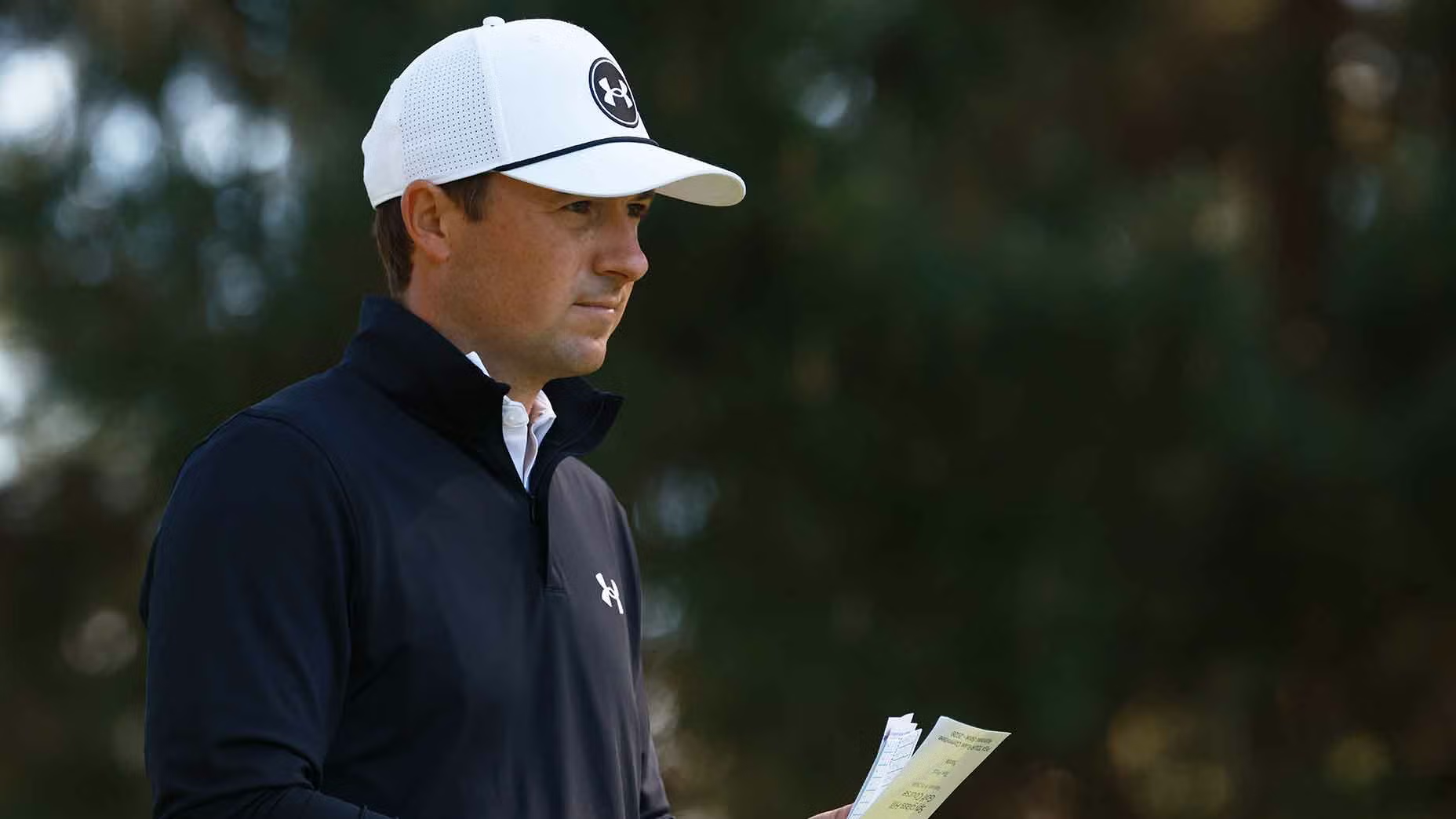

Jordan Spieth’s Pebble Beach Resurrection: When the Real Enemy Lives Between the Ears
There’s a moment in every long sports career when you realize the opponent isn’t always holding a golf club across the fairway from you. Sometimes it’s staring back from the mirror.
That’s the real story of Jordan Spieth’s return to Pebble Beach this week, and in my 35 years covering professional golf—including four years as Tom Lehman’s caddie in the ’90s—I’ve learned that these introspective moments often matter far more than the scorecard itself.
The Weight of Self-Sabotage
Let’s cut right to what struck me most about Spieth’s comments after Thursday’s opening round at the AT&T Pebble Beach Pro-Am. When a player ranked 89th in the world shoots 6-under and finishes T11, that’s noteworthy. But when he openly admits he talked himself out of a winning mentality just days earlier in Phoenix, that’s something else entirely.
“I got in a bad kind of mental place Friday,” Spieth said, referring to the second-round 75 that ended his week at the WM Phoenix Open prematurely with a missed cut. “I was swinging it well and I decided to tell myself I wasn’t. I just had a bad day.”
That confession contains more truth about the modern PGA Tour than most post-round interviews I’ve conducted in recent years. Here’s what most casual fans don’t understand: the gap between Spieth’s physical abilities and his mental framework has been the real story of his last nine years, not the injuries or the ranking.
I’ve watched enough golf from the inside to know that technique can be fixed. I’ve seen it happen a thousand times. Wrist surgery, swing adjustments, equipment changes—these are all resolvable problems. But the moment you stop believing your own swing? That’s the kind of damage that doesn’t show up on TrackMan.
The Phoenix Precedent and Pebble’s Redemption
What Spieth is attempting here is actually quite clever, and I suspect it’s intentional. He’s reframing Pebble Beach as his “pseudo-Phoenix,” turning last week’s missed cut into what he calls a “springboard” opportunity rather than a setback.
“The last five or six years Phoenix has been a big springboard for me, and I thought, ‘let’s just forget about it and use this as our pseudo-Phoenix and try to get dialed in.'”
In my experience, the players who truly understand how to navigate a long career are the ones who know how to rewrite narratives. Not dishonestly—but strategically. Spieth’s been doing this for 15 years. He knows that dwelling in Phoenix’s wreckage serves no one. Moving to Pebble, putting up a clean scorecard with four birdies, an eagle-2 on 18, and crucially, seven-for-seven scrambling around the greens? That’s how you reset the mental hard drive.
Thursday’s scorecard at Spyglass Hill tells the story of a player whose fundamentals haven’t abandoned him. That vintage short-game performance—perfect scrambling from seven opportunities—is the signature of someone whose hands still remember how to play.
The Cliff Isn’t Just Geographic
Now, about that absurd swing thought from 2022. You’ll forgive me if I smile every time I think about a three-time major champion literally worried about falling off a cliff mid-backswing.
“Let’s not shift our weight forward or we might die,” Spieth said with a chuckle, recalling the cliff scene from ’22 on Thursday. “That’s probably the weirdest [swing thought] I’ve ever had.”
But here’s what that moment actually reveals: Spieth has been playing under the shadow of figurative cliffs for years now. The questions about his fall from grace. The endless speculation about whether he’d ever win again. The nine-year drought since 2017. Those mental cliffs are considerably scarier than Pebble’s actual topography.
What I’m watching now is whether he can recognize the difference between the two.
The Wrist, the Swing, and the Real Prize
I want to be careful here not to oversell things based on one good round. I’ve been wrong about Spieth’s comebacks before, and plenty of smart people in this game have too. The man currently ranked 89th in the world hasn’t forgotten how to play golf—he’s struggled with consistency and belief.
But the physical situation does appear genuinely improved. Spieth’s been public about the wrist tendon surgery from last offseason finally delivering pain-free motion. That’s not nothing. In my years caddying and covering, I’ve seen wrist issues derail careers. The fact that he’s reporting full healing matters.
What strikes me most, though, is Spieth’s willingness to name his demons. He didn’t blame external circumstances for Phoenix. He didn’t hide behind bad luck. He said he “woke up on the wrong side of the bed” and decided to tell himself he was swinging poorly when he wasn’t.
That’s the kind of self-awareness that actually can spark a genuine resurgence. Not because it guarantees results—nothing does in golf—but because it suggests he understands what’s been holding him back.
Looking Forward
Will Thursday’s performance at Pebble lead to a major championship? I’m not going to pretend I have a crystal ball. What I will say is this: the most interesting story in golf right now isn’t whether Spieth wins—it’s whether he can stop being his own opponent before facing anyone else’s.
He’s got the wrist. He’s got the swing. He’s got the track record proving he knows how to win at the highest level. The question remaining is whether he can keep his mental weight forward without falling off the cliff.
Based on Thursday’s clean scorecard and his honest reflections, I’d say he’s at least aware of the challenge. In this game, awareness is often where comebacks begin.
