

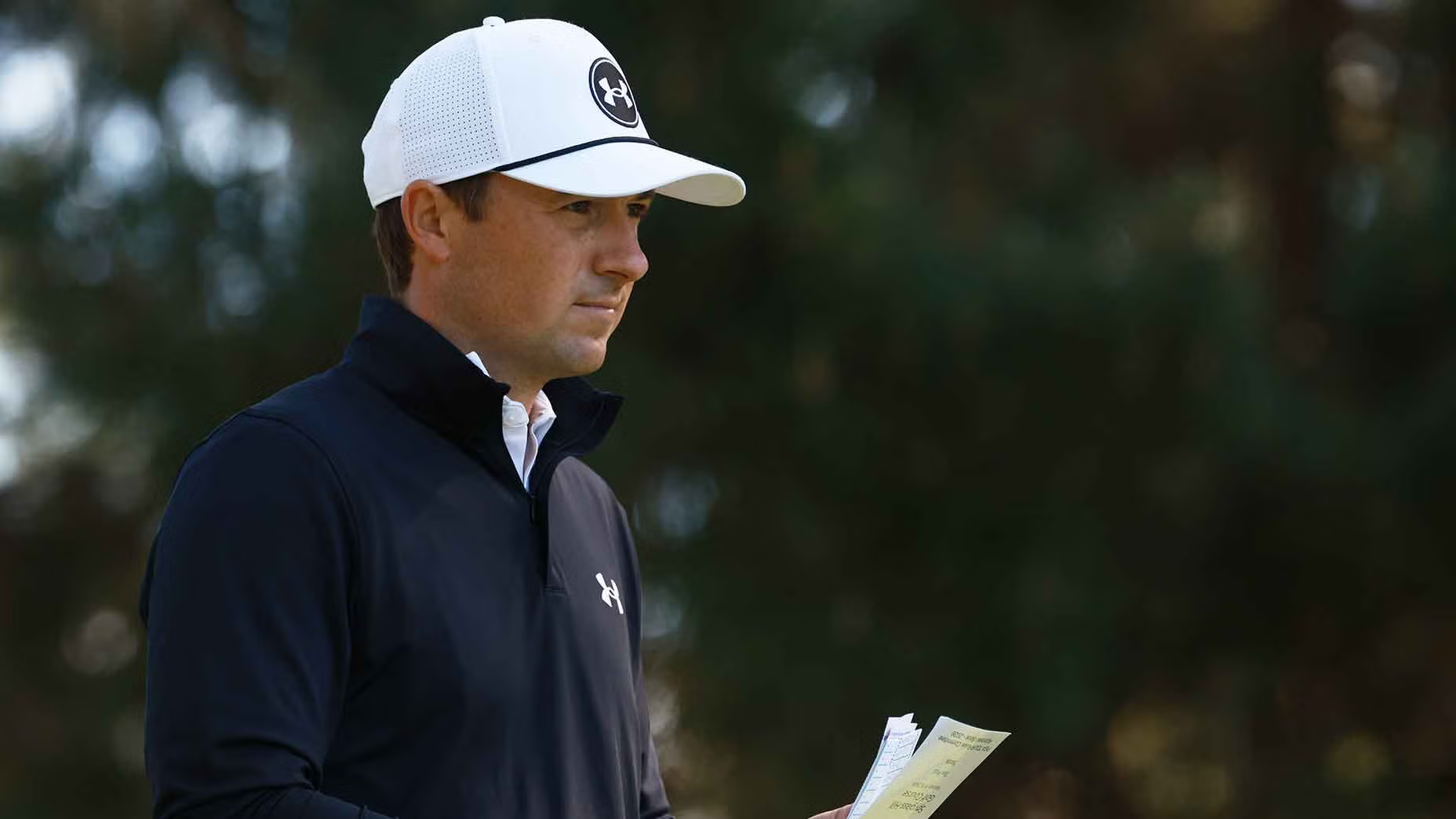

Jordan Spieth’s Pebble Beach Redemption: A Reminder That Mental Golf Can Be Deadlier Than Any Cliff
There’s a tweet making the rounds from my colleague James Colgan that perfectly captures the absurdity of professional golf in 2026:
“Jordan Spieth (-7) is back at Pebble Beach, the location of the weirdest swing thought of his career. The thought, as he told me Thursday? ‘Let’s not shift our weight forward or we might die.'”
And honestly? That might be the most honest thing Spieth has said all week.
Here’s what strikes me after 35 years covering this tour: Jordan Spieth’s real battle at Pebble Beach this week wasn’t against the Pacific Ocean or the treacherous conditioning of the Monterey Peninsula. It was against the voice in his own head—the same voice that told him he was swinging poorly at the WM Phoenix Open when, by his own admission, he actually wasn’t.
That’s the thing about Spieth that casual fans don’t fully appreciate. I caddied for Tom Lehman back in the day, and I learned pretty quick that the physical game of golf is maybe 40% of what separates the elite from everyone else. The mental part? That’s where championships are won and lost. And that’s where Spieth has been battling demons for nearly a decade.
The Phoenix Stumble and What It Really Means
Let’s be clear about what happened in Phoenix. Spieth didn’t suddenly forget how to play golf. He didn’t lose his swing. He lost faith in it for a single afternoon, and that lack of belief compounded into a missed cut. Listen to how he describes it:
“I got in a bad kind of mental place Friday. I was swinging it well and I decided to tell myself I wasn’t. I just had a bad day.”
In my experience, this is the most dangerous version of Jordan Spieth—not the one struggling with mechanics, but the one struggling with self-sabotage. I’ve watched him do this before. The man won three majors by age 26. That kind of early success can leave scars. When the victories stopped coming after 2017, when the injuries piled up, when surgery after surgery became necessary just to hold a golf club without pain, something shifts psychologically. You start questioning whether you ever deserved those wins in the first place.
But here’s what I found encouraging about Thursday’s 6-under round at Spyglass Hill: Spieth didn’t just bounce back. He bounced back cleanly. Seven-for-seven scrambling. Four birdies. An eagle-2 on 18. No bogeys. That’s not a guy grinding to hang on. That’s a guy who’s remembered how to trust himself.
The Wrist, The Reset, and Reason for Cautious Hope
Over the past nine years since his last major championship, Spieth has cycled through more “comeback narratives” than I can count. Reset after reset. New coaches, new equipment, new philosophies. Some of it worked temporarily. Most of it didn’t stick. His current world ranking of 89th tells you everything you need to know about how those comebacks have landed.
But this time feels genuinely different, and I don’t say that lightly.
The wrist surgery from last offseason appears to have actually addressed the core issue. For years, pain had been the silent governor on Spieth’s swing. You can’t fully commit to aggressive golf when your body is whispering—or screaming—that something might give way. That creates tension, hesitation, second-guessing. The exact mental state that leads to telling yourself you’re swinging poorly when you’re not.
“Things are better than what they seem there. That was just kind of a strange deal. I came up here, I played a fun round with my brother on Sunday morning at Pebble. I hit a few balls Saturday when we got in.”
Notice what Spieth is doing here? He’s reframing. He’s treating Phoenix not as a harbinger of doom but as an anomaly—a weird week where circumstances conspired against him. And crucially, he’s using Pebble Beach as a reset, much like he’s historically used Phoenix as a springboard. That’s sophisticated mental management. That’s a golfer who’s learning to manage the narrative rather than be consumed by it.
The Spieth Paradox
What makes Jordan Spieth perhaps the most compelling golfer on tour isn’t his talent—though he’s abundantly talented. It’s his volatility. The swings between brilliance and struggle are genuinely stark. In my three decades covering professional golf, I’ve watched guys battle through injuries and slumps. But Spieth’s battles have this theatrical quality to them. When he’s right, he’s transcendent. When he’s wrong, it’s not just technically wrong; it’s spiritually wrong.
That’s partly why his 2013-2015 run was so electrifying. We weren’t just watching someone play great golf. We were watching someone navigate the psychological pressure of being golf’s golden child in real time.
The question now is whether he can maintain the mental equilibrium long enough for the physical skills to matter. A 6-under opening round at a loaded Signature Event field is a start. It’s not a major championship. It’s not even a win. But it’s a coherent golf performance from someone whose performances have been decidedly incoherent.
Looking Forward
Will Spieth win majors again? I honestly don’t know. At 89th in the world, he’s got considerable ground to make up. But will he have moments of brilliance that remind us why we fell in love with his golf in the first place? Absolutely. Thursday at Pebble Beach was one of those moments.
And maybe—just maybe—if he can avoid staring over too many cliffs, metaphorical or otherwise, we’ll get to see more of them.
