


The Ego Problem That’s Costing Golfers Their Game: Why We Need to Talk About Game-Improvement Irons Differently
I’ve been around professional golf long enough to watch equipment evolve from persimmon woods and muscle-back blades to what we have today—a technological landscape that would’ve seemed like science fiction back when I was carrying Tom Lehman’s bag in the ’90s. But here’s what strikes me most about the current conversation around game-improvement irons: we’re not actually having it.
Instead, what I’m seeing is a lot of noise. Internet arguments about “loft jacking.” Weekend warriors worried about what their buddies will say when they pull out a larger iron. Tour purists lamenting the death of traditional club design. Meanwhile, the golfers who could actually benefit most from these clubs—the ones who’ve lost a step, who feel like they’re dragging down the group, who wonder if it’s time to hang it up—are sitting home wondering if they’re somehow cheating.
They’re not. And we’ve done them a disservice by not making that clear.
The Real Purpose of Stronger Lofts and Wider Soles
One of the more refreshing takes I’ve read recently comes from an equipment tester who nailed something I’ve been thinking about for years:
“The problem with GI-style irons is that they’re big, and that hurts people’s egos. Nobody wants their buddy making fun of them on the first tee when they pull out a large and in charge 7-iron.”
That’s honest. And it’s also the core issue holding back a legitimate category of clubs that could help millions of recreational golfers.
In my thirty-five years covering this game, I’ve watched the equipment discussion become increasingly binary. You either play what the Tour plays, or you’re somehow settling. But that’s nonsense, and frankly, it’s damaging the sport’s accessibility.
Here’s what I think is getting lost: game-improvement irons exist to solve a real problem. They’re not a conspiracy to inflate distance numbers on spec sheets. When manufacturers strengthen lofts on a GI iron—something that drives the internet absolutely bonkers—they’re typically doing it for a specific engineering reason: to maintain a usable launch window while building in all that forgiveness.
“When designing a game-improvement-style iron, it’s important to give it as low a center of gravity as possible. This encourages launch, no matter who is swinging the golf club. The problem is that modern design and C.G. placement have started to launch the ball too high, to the point where other launch characteristics are negatively affected.”
This is the conversation we should be having. Not “are they cheating?” but “how do we optimize performance for the player who needs it?”
The Data Doesn’t Lie
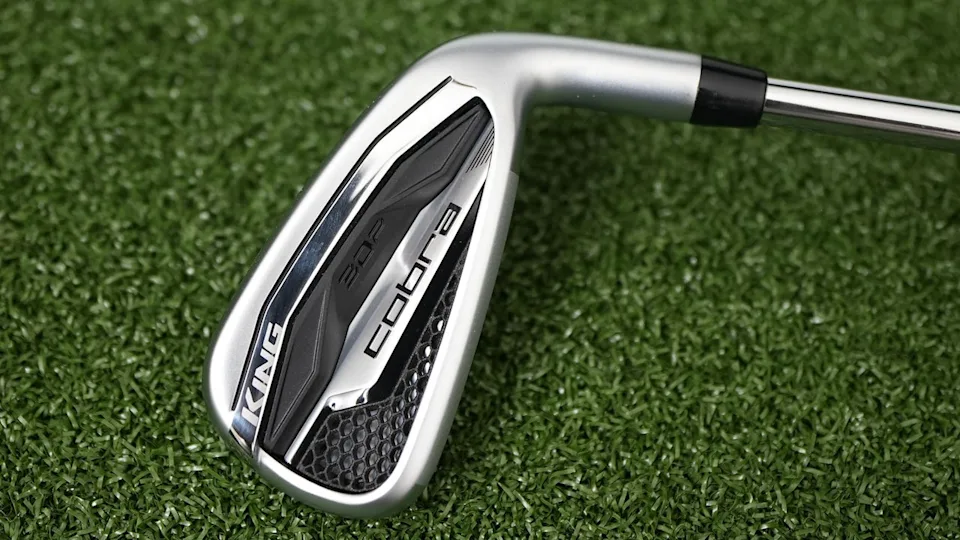
I’ve tested plenty of equipment over the decades, but I appreciate when someone breaks down the actual numbers rather than making claims. Looking at the comparison data from Cobra’s King GI irons versus their 3DP MB offerings, something becomes immediately clear: launch angle between the two didn’t shift dramatically, but spin and speed characteristics tell a completely different story.
Comparing averages across 10 shots with each offering:
| Club | Launch (°) | Spin (RPM) | Carry (yds) |
|---|---|---|---|
| Cobra King GI 7-Iron | 20.3 | 4,200 | 175 |
| Cobra 3DP MB 7-Iron | 19.8 | 5,100 | 168 |
The point? The GI iron isn’t magically launching higher for everyone. But for the player it’s designed for—someone with slower clubhead speed—it absolutely changes the equation. Lower spin means better roll-out. Higher launch (relatively) means better carry. These aren’t mythical benefits. They’re engineered solutions.
Who These Clubs Are Actually For
Here’s what I think deserves emphasis, because it’s been buried under all the noise:
“For someone like me, the stronger lofts, hotter face and wider sole are going to turn these irons into rocket launchers. But they aren’t built for me. They’re built for players who want to get distance back.”
That sentence should end every internet argument about game-improvement irons. These clubs aren’t for elite amateurs or Tour-level golfers. They’re for the 45-year-old who used to hit his 7-iron 175 yards and now it’s going 155. They’re for the beginner who wants to actually enjoy the experience rather than hack away for five hours.
In my experience as a caddie, I watched good players struggle with the mental side of getting older. Equipment that can bridge that gap—that lets them play the same clubs with the same distances they’re accustomed to—that’s not cheating. That’s compassionate engineering.
The Path Forward
The equipment industry is actually doing something right here. There are now micro-categories within game-improvement designs, allowing manufacturers to dial in exactly how much help a player needs. That’s progress. That’s innovation serving the actual market rather than creating artificial demand.
What we need now is a cultural shift. Golfers—especially those who don’t need these clubs—should check their egos at the door. Complain about stronger lofts all you want, but ask yourself: have you ever actually met a player who needed a game-improvement iron and said, “I wish these went shorter and didn’t launch so high”?
Exactly. Nobody’s ever said that.
Equipment should serve the game’s growth, not its gatekeeping. If a wider sole and stronger loft bring someone back to the course who was ready to quit, that’s a win for all of us.
