

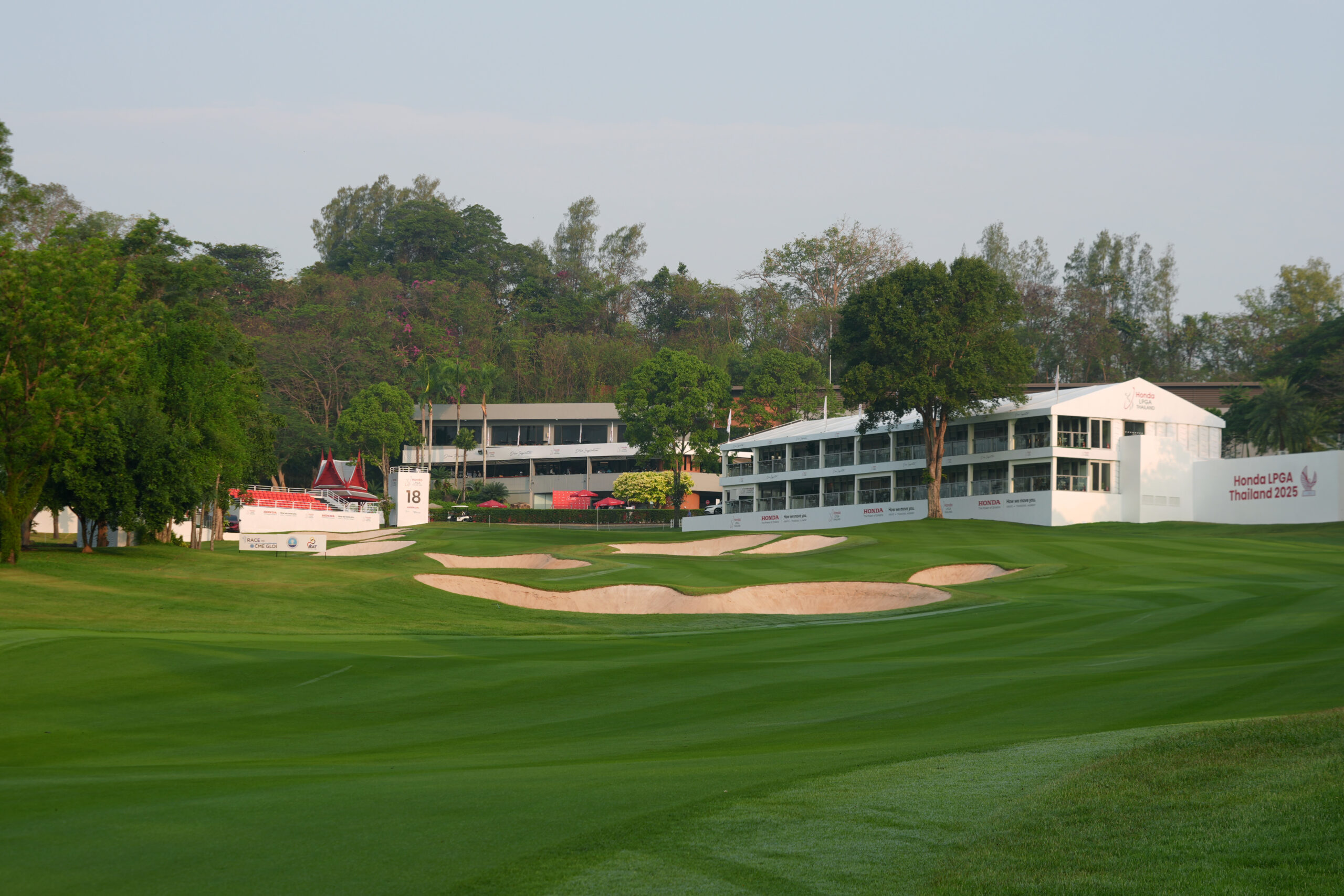

The Honda LPGA Thailand: Where Stars Skip Out But the Real Story Runs Deep
Look, I’ve been around professional golf long enough to know when something doesn’t add up on the surface. The Honda LPGA Thailand kicked off this week with 21 of the world’s top 25 players on hand—impressive on paper—yet conspicuously absent were Nelly Korda, Charley Hull, and Lydia Ko. That’s not a coincidence. That’s a trend, and frankly, it’s one worth examining honestly.
Having spent 35 years covering this tour, having carried the bag for Tom Lehman back in the day, I’ve learned that where the top players choose to compete tells you everything about the state of professional golf. And right now, the LPGA’s international expansion is sending some mixed signals.
The Korda Pattern Nobody’s Talking About
Let’s start with the elephant in the room. Nelly Korda has now skipped 19 LPGA Tour events in Asia—including this one. That’s not a scheduling preference. That’s a statement. The fact that she won the season-opening Hilton Grand Vacations Tournament of Champions, then immediately opted out of Thailand, suggests the calculus these elite players are running doesn’t always favor Asian swing events, no matter how prestigious they appear on the schedule.
I get it from a business standpoint. Prize purses matter, sure, but so do logistics, travel fatigue, and the broader economics of how players structure their seasons. What strikes me, though, is that the LPGA is putting on quality events in premium destinations, yet still can’t get everyone to show up. In my experience, that’s usually when you need to look at the real issues: prize money distribution, timing within the calendar, or simply the reality that elite athletes have choices the tour would prefer they didn’t exercise quite so publicly.
The Prize Money Reality Check
Here’s where I think the article buries the lede. The Honda LPGA Thailand features the lowest prize purse on the circuit all season at $1.8 million. Yes, it’s $100,000 higher than last year. But let’s be honest about what that really means: incremental improvement masking a larger structural problem.
Consider the winner’s share:
“The winner will earn $270,000 – before various takeaways reduce the amount of money they really see – while the runner-up could bank over $166,000 if they finish there alone. Ending without company in third place is the only other way to pick up a six-figure check at the Honda LPGA Thailand.”
That qualifier—”before various takeaways”—is doing a lot of heavy lifting. In my day caddying and covering the tour, I watched the appearance of prize money and the reality of take-home earnings diverge more and more. Taxes, agent fees, appearance money splits… a $270,000 first-place check becomes substantially less in a player’s pocket. For a world-class golfer flying halfway around the globe, preparing for tournament golf in a foreign climate, that arithmetic might simply not work.
| Position | Prize Money |
|---|---|
| 1st | $270,000 |
| 2nd | $166,643 |
| 3rd | $120,888 |
| 10th | $36,951 |
| 25th | $17,426 |
Now contrast that with what’s actually being offered beyond the top finishers.
“A top-10 finish could secure upwards of $35,000, while a top-25 result should result in a windfall of at least $17,000. Even if a player finishes last, they will collect over $3,500.”
That’s the no-cut structure at work—and it’s genuinely commendable from an inclusivity standpoint. Nobody leaves empty-handed. But here’s the thing: when you can guarantee every player a payday, you’re also signaling that this event exists somewhere in the middle tier of LPGA importance. The elite players recognize that immediately.
What’s Actually Happening Here
After three rounds, World No. 1 Jeeno Thitikul holds a two-shot lead, with Hyo-Joo Kim chasing. The defending champion, Angel Yin, finds herself 17 shots back in a tie for 52nd. That’s the kind of volatility you see in tournament golf, but it also underscores that this field, while talented, skews toward the next tier of excellence rather than the absolute apex.
The Race to CME Globe points (500 available) and Rolex ranking points matter enormously—don’t get me wrong. Those are serious incentives for the mid-level elite trying to climb rankings. But for someone like Korda, already world No. 3-ish territory depending on the week, the calculation shifts. Rest, family time, preparation for marquee events stateside—those become competitive advantages too.
The Honest Take
I’m not here to bury the LPGA’s international vision. Having covered 15 Masters and watched professional golf evolve globally, I think expansion into Asia is essential for the tour’s long-term health. Thailand is a beautiful country with a strong golf culture, and hosting world-class women’s professional golf there matters.
But this week’s absences remind us that good intentions and nice venues aren’t quite enough yet. The prize purses need to climb. The scheduling needs refinement. And the tour needs to give its elite players compelling enough reasons to show up that they’re not doing the mental math of flying 20 hours for a paycheck that barely justifies the effort and recovery time.
That’s not a criticism of Honda LPGA Thailand specifically. It’s an observation about where women’s professional golf sits globally, and what it’ll take to get there completely.
