

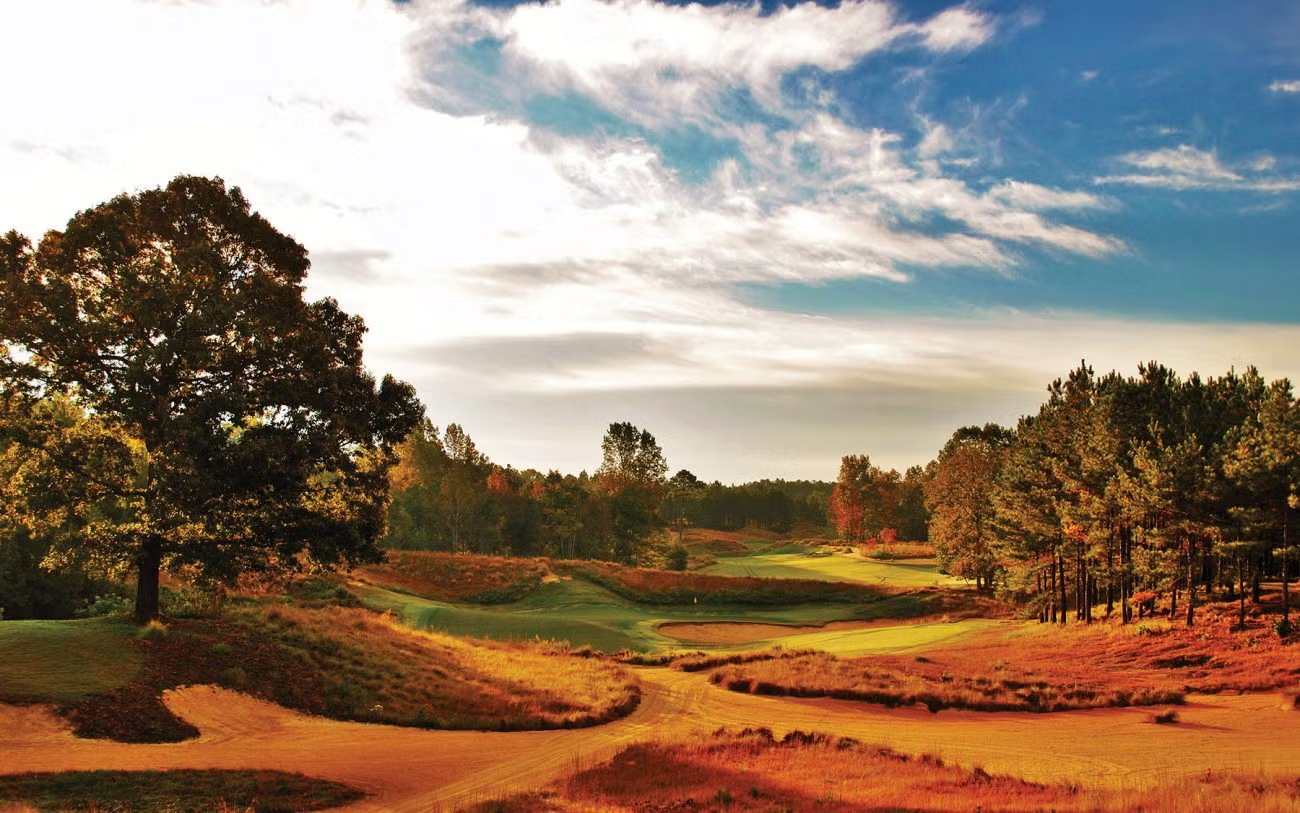

The Sandhills of North Carolina are hallowed ground for golf architects and aficionados alike. Pinehurst, Mid Pines, Southern Pines – the names alone conjure images of strategic genius carved from sandy loam and towering longleaf. But then there’s Tobacco Road, a place that delights, confounds, and ultimately captivates. It’s a golf course designed not just to be played, but to be experienced, a wild, theatrical statement penned by the late, great Mike Strantz.
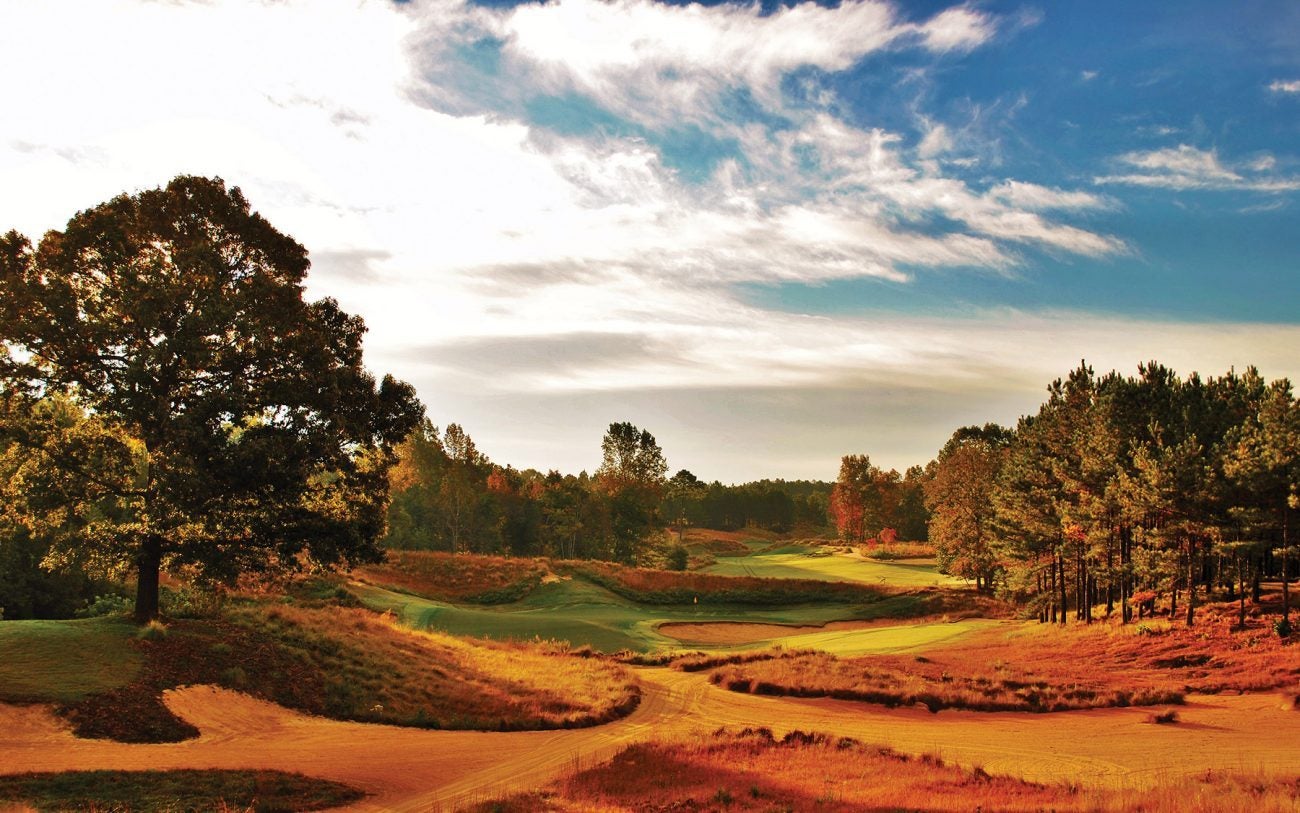
I’ve walked countless fairways across this golfing globe, from the windswept links of Scotland to the tropical delights of the Caribbean. I’ve marveled at the strategic brilliance of Alister MacKenzie’s greens and wrestled with the severe beauty of Pete Dye’s earthworks. Yet, few courses have left such an indelible mark on my golfing psyche as Tobacco Road. It’s a maverick, a course that defies easy categorization, and unmistakably a Strantz. His philosophy was never to hew to convention, and Tobacco Road is the purest expression of that irreverent genius. It’s a course that demands your attention, your imagination, and sometimes, your humility.
The genius of Strantz, whom I had the privilege of meeting once at a golf writers’ conference, was his ability to see art in the rawest of landscapes. Tobacco Road, originally a gravel mining site, offered him a canvas of “spoil piles and sandy ridges,” and he transformed it into a “wondrous funhouse of a layout.” It’s characterized by immense, sculptured bunkers that appear less like hazards and more like ancient, windswept dunes, greens that ripple and undulate with sometimes infuriating but always intriguing contours, and tee shots that demand trust and a healthy dose of audacity. Critics initially “perplexed some critics,” but the “huge faction of admirers” it attracted has only grown, making it a Sandhills “must-play.”
A New Chapter: The Matchbox
Now, this iconoclastic creation is getting a fitting companion. Owner Mark Stewart, a man clearly attuned to Strantz’s unconventional spirit, has announced “The Matchbox,” a 12-hole par-3 course that promises to be as unique as its big brother. Tucked into “the trees near the 12th and 13th fairways,” on land that shares the original’s mining heritage, The Matchbox isn’t just another short course. It’s a thoughtful extension of the Tobacco Road ethos.
“I think he’d be thrilled,” Stewart said of Strantz. “It goes along with his whole maverick approach.”
Stewart’s sentiment perfectly captures the essence of this new endeavor. Strantz always pushed boundaries, and The Matchbox continues that tradition in several fascinating ways. Perhaps most notable is the incorporation of synthetic turf. Now, for a golf architecture purist like myself, synthetic greens might raise an eyebrow. But the thinking behind it is compelling: to “allow for more consistent conditions without having to clear the tree canopy for sunlight.” This is a brilliant design choice, respecting the natural environment and embracing innovation to achieve playability. It ensures that the course can be woven more seamlessly into the existing landscape, retaining the wild, natural feel that defines Tobacco Road.
The design forces at play are also intriguing. Carlton Marshall Golf Design, specialists in synthetic-turf projects, are leading the charge. But critically, “Mark White, a former Strantz apprentice and one of Tobacco Road’s original shapers,” is a key player. This connection to the progenitor’s vision is vital, ensuring that the spirit, even if not the hand, of Strantz will guide the new layout. Imagine the nuances they can draw from the original’s massive scale and apply to a more intimate setting.
The scale of The Matchbox is indeed intimate, “stitched onto a five-acre parcel with roughly 40 feet of elevation change.” But don’t mistake intimate for tame. The preview of holes suggests miniature versions of the big course’s drama. The 3rd hole, for instance, will feature a “blind 60-yard shot from an elevated tee.” This immediately conjures images of Tobacco Road’s signature blind shots, forcing players to trust their instincts and the architect’s intention. The 7th demands a “40-yard carry over a cove,” and the 9th promises to “channel the spirit of the big course’s in-your-face opening, playing through two large mounds.” This last detail is particularly exciting; Tobacco Road’s sheer audacity at its first tee is legendary, and to capture that spirit in a par-3 is a testament to sensitive and intelligent design.
“Part of the Matchbox routing will play along a pond that even many Tobacco Road regulars might not know exists. Stewart said that he and Strantz had discussed having a par-3 play over it during the original design process, but it didn’t make the final routing.”
This historical anecdote adds another layer of appreciation. It’s not just a new short course; it’s the realization of an idea that germinated in Strantz’s mind years ago. This feels like finishing a conversation with a lost friend, an echo of a creative spark finally brought to fruition.
The name itself, “The Matchbox,” is a stroke of understated genius. As Stewart explains, it “nods to tobacco (matches for lighting), but also alludes to a golf match while winking at the intimate scale of a matchbox car.” It’s playful, meaningful, and perfectly aligned with the course’s identity. Stewart’s foresight, having “had that name in mind for years,” speaks to a deep connection with the land and a long-held vision for its development.
Planning Your Visit
Tobacco Road is located in Sanford, North Carolina, a short drive from the Pinehurst area. It’s a public, daily-fee course, meaning anyone can experience its unique brand of golf. When you go, be prepared for a round unlike any other. Leave your preconceptions at the gate and embrace the adventure. The course rewards boldness, but also demands precision, especially around its formidable green complexes. It’s a course that will ask questions of your game and your golf philosophy at every turn.
The Matchbox, once open (no official date yet, but construction is underway), will offer a fantastic complement, perfect for a warm-up, a cool-down, or a fun, quick match with friends. It’s always exciting to see architects, even posthumously, continue to influence and shape the landscape of golf. The Matchbox is more than just a short course; it’s a tribute, an innovation, and a testament to the enduring legacy of Mike Strantz—a true maverick of golf course design.
