


Alright, Daily Duffer faithful, Tyler Reed here, and today we’re taking a hard look at the Vice Golf VGW02 wedges. Vice, for most of us, means golf balls – their direct-to-consumer model shook up that market. But now they’re expanding, and when any brand jumps from consumables to clubs, my antennae go up. Is this a shrewd expansion into a crowded market, or just slapping a recognizable logo on some generic metal?
The previous VGW01 had a certain niche with its full-face grooves, something we’ve seen other manufacturers dabble in to give higher-handicappers maximum spin across the face on less-than-perfect strikes. But the VGW02 pivots dramatically, embracing a more traditional aesthetic and, I’d wager, a more precise player profile. This immediately sets a performance expectation: less forgiveness, more workability and feel. That’s a bold move for a brand still trying to establish itself in the club space, moving away from a feature that would inherently appeal to a broader segment.
First Impressions: Aesthetics & Feel
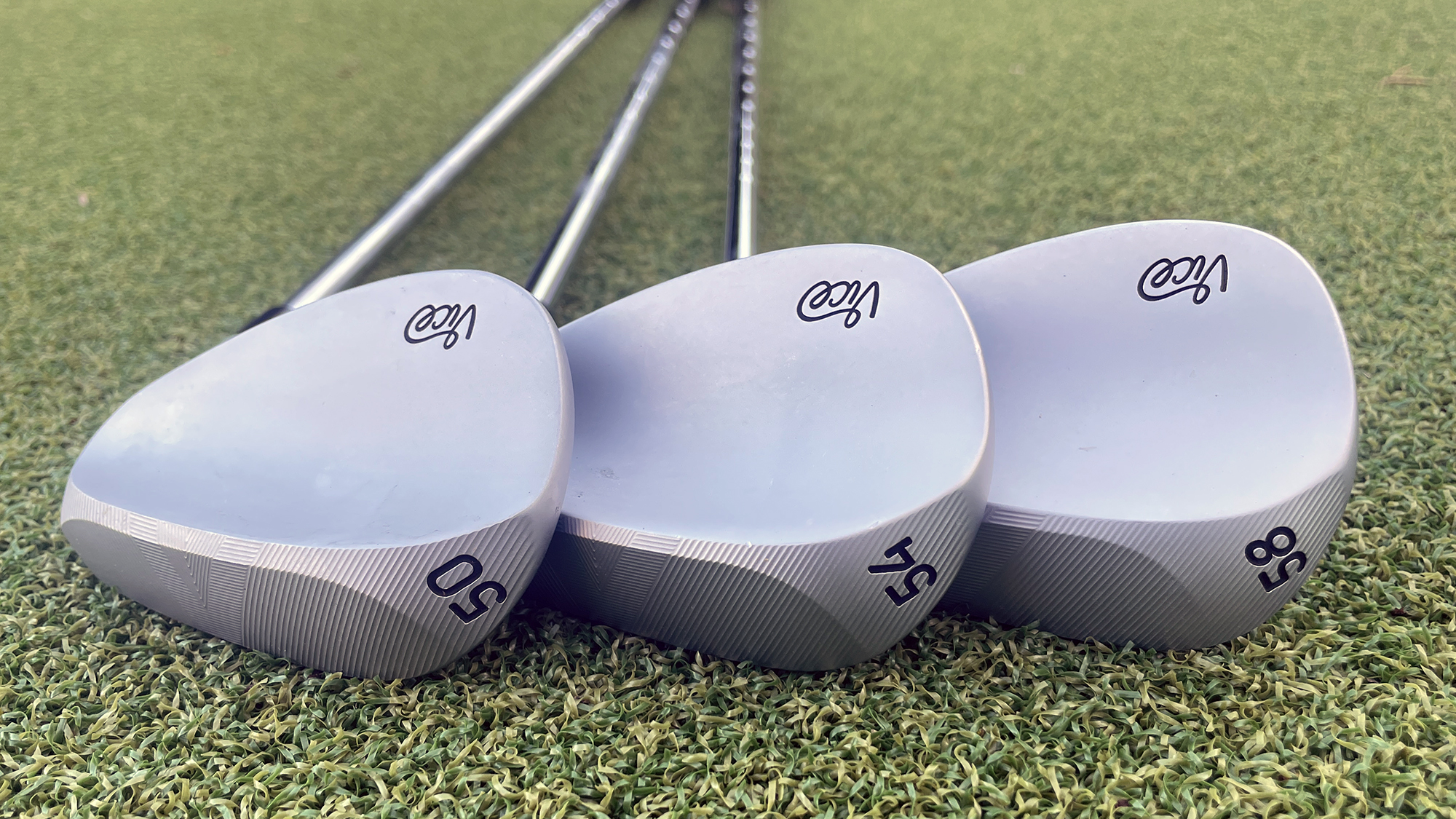
Let’s not kid ourselves, how a club looks in the bag and at address matters. The writer gushed about the VGW02’s visual appeal, and frankly, I agree from the images. The brushed chrome is a classic, timeless look, and that simple, unobtrusive logo suggests confidence, not over-branding. Given the direct-to-consumer model, packaging is also part of the experience, and it sounds like Vice nailed that too. While packaging doesn’t impact performance, it contributes to the perceived value, which is crucial when you’re competing against titans of the industry.

(Image credit: Vice Golf)
The core of wedges, however, is all about that tactile feedback. Forged 1020 carbon steel consistently delivers a soft, responsive feel at impact, and it seems the VGW02 is no exception:
“I enjoyed the feel, which is exactly what you would expect from forged 1020 carbon steel – very responsive with excellent feedback.”
From a club fitter’s perspective, responsive feedback is critical in a wedge. It allows a skilled player to precisely gauge strike location and adapt. Forged clubs offer that connection with the ball that cast clubs, while often more forgiving, simply can’t match.
Performance Data: The Gapping & Spin Story
This is where the rubber meets the road, or more accurately, where clubhead meets ball on a launch monitor. The reviewer focused on consistency and gapping, which is absolutely paramount for scoring clubs. If your 50°, 54°, and 58° wedges aren’t consistently spaced, or if they have significant drop-offs on slight misses, you’re costing yourself strokes. The article notes:
“In testing the VGW02 wedges performed impressively. The standout for me was the consistency on full shots. I tested three different lofts (50°, 54° and 58°) and the gapping between them was exactly what I look for.”
This is a positive sign. On our launch monitors, “tight numbers” on well-struck shots translate to consistent carry distances and predictable flight. For a forged wedge aimed at better players, I’d expect to see a relatively flat trajectory with a consistent peak height, and spin rates in the 8,000-11,000 RPM range for full swings, depending on loft, conditions, and strike. The phrase “spin levels were in the window I would expect and definitely comparable to other higher end wedges” implies these wedges are delivering those tour-level spin characteristics. Good spin allows for aggressive targeting and stopping power, essential for controlling the ball around and into greens.
Where these wedges likely differ from more forgiving options is in off-center strike performance. While the article acknowledges an expected “drop off on poorer strikes,” that drop-off will likely be more pronounced than with, say, a cavity-back design or a wedge with perimeter weighting. This reinforces the idea that the VGW02 is for the player who consistently finds the sweet spot.

Testing the Vice Golf VGW02 wedges at Aintree Golf Centre
(Image credit: Vice Golf)
The mention of “turf interaction” being a highlight on the course is also key. This speaks to the grind and bounce characteristics, which are often overlooked but critical for consistent performance. A well-designed sole glides through various turf conditions without digging, preserving clubhead speed and maintaining face presentation. The fact that the reviewer felt confident enough to say these would be among the best for chipping this year suggests a high degree of versatility around the green, a hallmark of excellent wedge design.
The “Direct-to-Consumer” Value Proposition
This is where Vice truly differentiates itself. As the equipment editor, I’ve seen countless brands struggle to justify premium pricing. Vice’s model sidesteps some of those inherent costs, and it pays off for the consumer:
“This brings a trickle down effect to the consumer, as the lack of huge tour contracts and other unnecessary overheads allows Vice to undercut some of the competition while still offering a similar quality of product.”
At $129 (£109.99 UK), these wedges are significantly more affordable than comparable offerings from major brands. When I’m fitting a club for a golfer, especially wedges, I preach about getting properly gapped and having a fresh set of grooves. The lower price point makes it easier for golfers to invest in a full set of three or four wedges, and to replace them more frequently when grooves inevitably wear down. This alone is a massive benefit for serious golfers. I’ve often seen golfers try to stretch the life of their wedges too long because of the cost barrier; Vice essentially reduces that barrier.
Who Is This Wedge For?
Based on the traditional face design, emphasis on workability over forgiveness, and responsive feel, the VGW02 is squarely aimed at the better player. I’d translate “low-mid handicap players” to anyone consistently striking their wedges with reasonable precision. If you struggle with inconsistent strikes across the face, or if you still rely on the massive perimeter weighting of a game-improvement iron, these likely aren’t your ideal choice. For you, the VGW01 with its full-face grooves might still be a better, more forgiving option. But for the player seeking maximum control, exceptional feel, and a clean aesthetic at a price that won’t break the bank, the VGW02 offers a compelling package.
The reviewer’s final comment, “It would take a lot for me to turn away from the trusty Cleveland CBX Zipcore wedges that have been in my bag for three years, but if I had to replace them with the VGW02 I could happily live with that,” is high praise indeed. The CBX Zipcore is a fantastic, slightly more forgiving wedge, so for the VGW02 to earn that level of confidence suggests it’s a legitimate contender. For the golfer who priorities feel, workability, and value in their short game, the Vice VGW02 wedges definitely warrant a serious look. It seems Vice is proving that premium performance doesn’t always require a premium price tag.
