


The “Playable Blade” Paradox: Vice Golf’s VG103 & The Search for Forgiveness in a Forged World
Vice Golf charging into the club business feels a bit like a punk band trying to play classical, but in a good way. They disrupted the golf ball market with a direct-to-consumer model that actually worked. Now, two years in, they’re taking a swing at irons, and their latest offering, the VG103, has definitely piqued my interest. Vice is calling it a single-piece forged blade that could be playable for an 8- to 10-handicapper. My immediate reaction, after years on the launch monitor and countless fitting sessions, is skepticism mixed with a healthy dose of curiosity. Can a blade truly shed its demanding skin for the “common man”? Let’s dive in.
Vice’s initial iron offerings, the VGI01 and VGI02, showed promise but, frankly, were a mixed bag. MyGolfSpy’s 2025 testing data, which I always keep a close eye on, painted a clear picture. The VGI02 game-improvement iron, while strong on distance, lagged in accuracy and forgiveness. It technically finished near the bottom of a crowded field, though as the article points out, the overall scores were tight enough that it wasn’t a total disaster.
“In MyGolfSpy’s 2025 testing, the VGI02 game-improvement iron showed impressive distance. However, it posted relatively low scores in accuracy and forgiveness. Of 17 iron sets tested, the Vice VGI02 technically finished next to last. However, its overall score was only 5/10th of a point south of the winner, the Callaway Elyte HL. Taking ties into account, you could say it finished tied for fifth overall.”
The VGI01, positioned as a player’s iron, excelled in distance but was average in the critical metrics of accuracy and forgiveness – the hallmarks of what I look for in a player’s iron. When I’m fitting a golfer for a “player’s iron,” I’m analyzing dispersion patterns, consistent ball speed across the face, and how effectively the club maintains spin rates on slight mishits. Average accuracy means a wider shot pattern, even if the ball is going far. That’s not what most discerning golfers are looking for from this category.
The VG103: A Blade with a Stretch Armstrong Face?
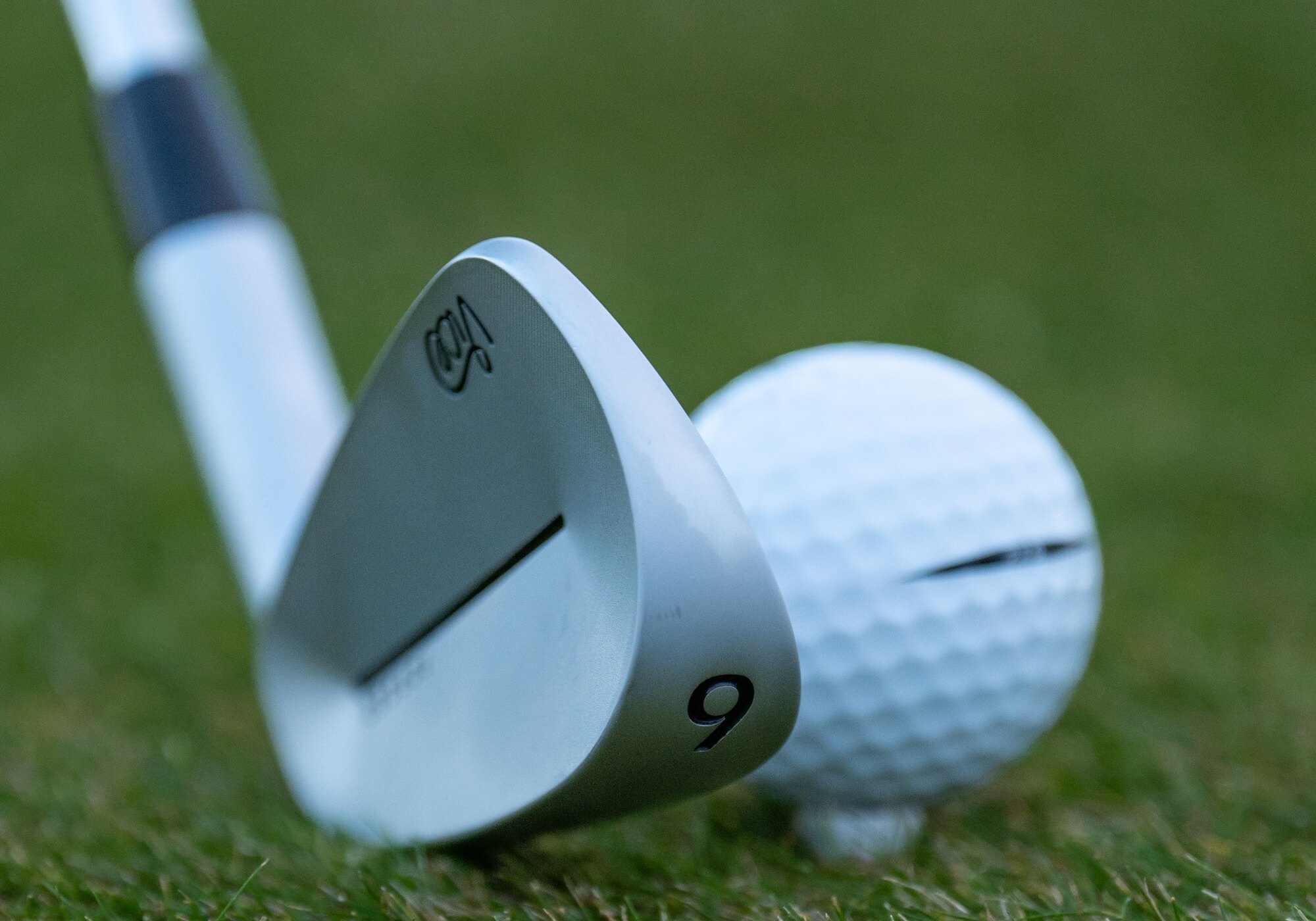
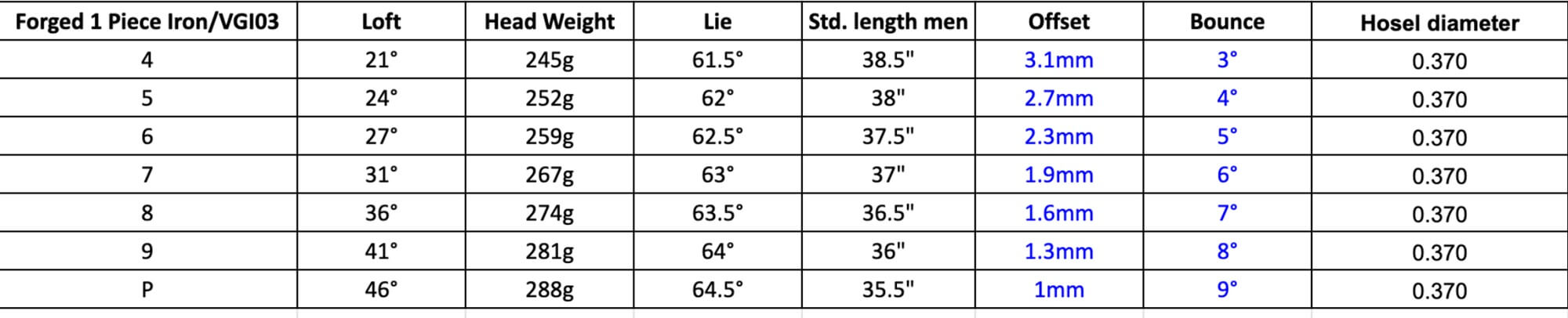
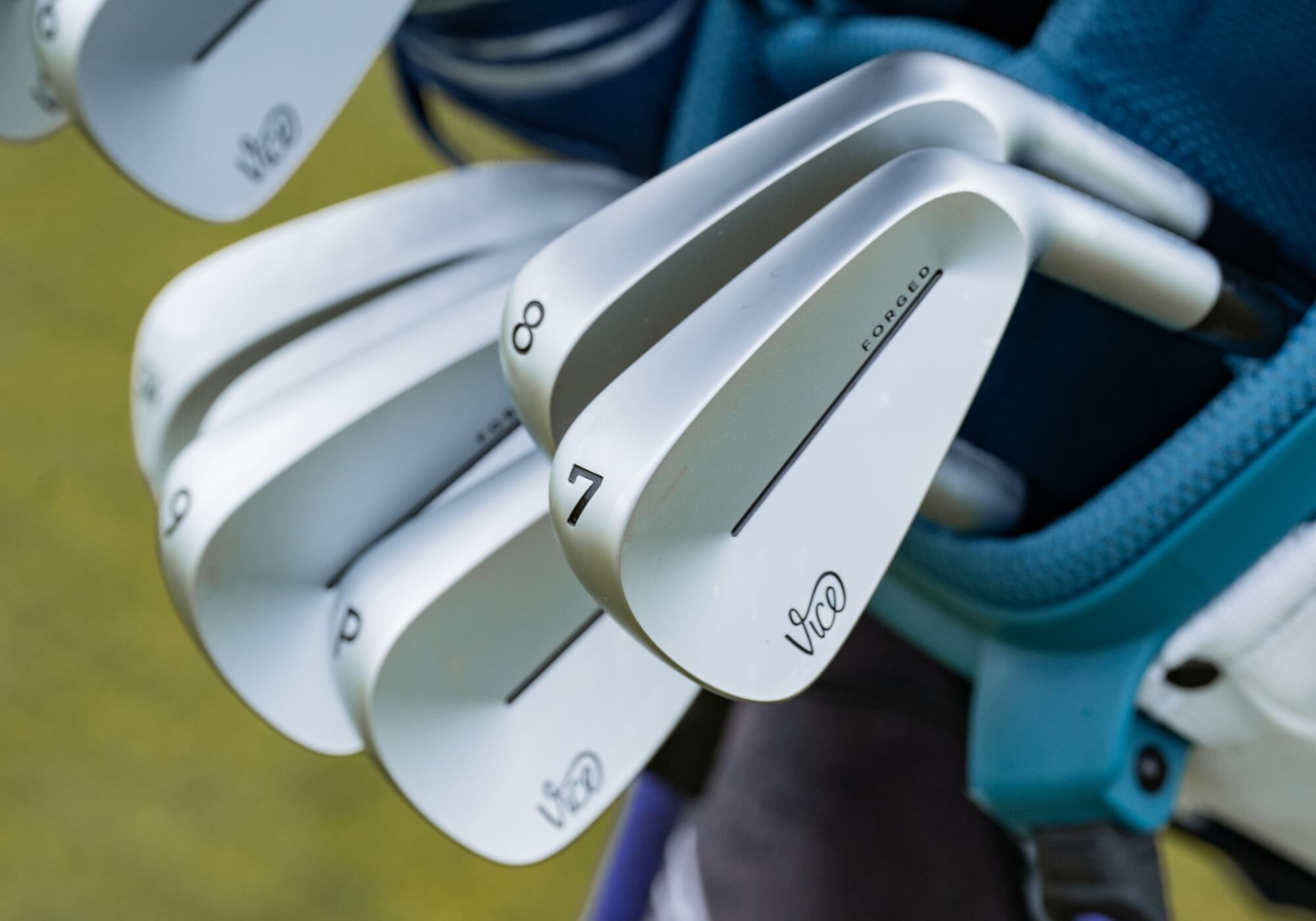
Now, we have the VG103, a single-piece forged blade made from 1020 carbon steel. Visually, Vice knocked it out of the park. It’s Euro-minimalist, clean, and elegant – a look that appeals to many better players who appreciate that “butter knife” aesthetic without necessarily having the game for it. But aesthetics don’t translate to performance on the launch monitor. Vice is touting “soft feel,” “exceptional feedback,” and “workability,” which are pretty standard blade buzzwords. The real head-scratcher, or rather, the potential game-changer, is their “face-stretching design.”
This “face-stretching design,” as Vice CEO Marco Burger explains, is intended to increase the effective hitting area and, crucially, allow for more perimeter weighting than one typically finds in a blade. More perimeter weighting usually translates to a higher Moment of Inertia (MOI), which is the holy grail of forgiveness. A higher MOI means the clubhead resists twisting on off-center hits, preserving ball speed and maintaining a tighter dispersion pattern. This is why cavity-back irons generally offer more forgiveness than traditional blades.
“Traditionally, one-piece forged irons are less forgiving due to their smaller face size,” says Vice Golf CEO Marco Burger. “But our innovative face-stretching design overcomes this challenge. It increases the effective hitting area without compromising workability.”
The question isn’t whether it *can* make a blade more forgiving, but *how much* more forgiving. In my experience, there are limits to how much forgiveness you can pack into a compact blade without sacrificing the very characteristics that define it – feel, workability, and the precise feedback better players crave. The challenge for Vice, and any manufacturer attempting this, is balancing those often-conflicting priorities. You might gain some MOI, but at what point does it start feeling less like a blade and more like a player’s cavity-back with strong lofts?
Lofts and the Elephant in the Room: Data
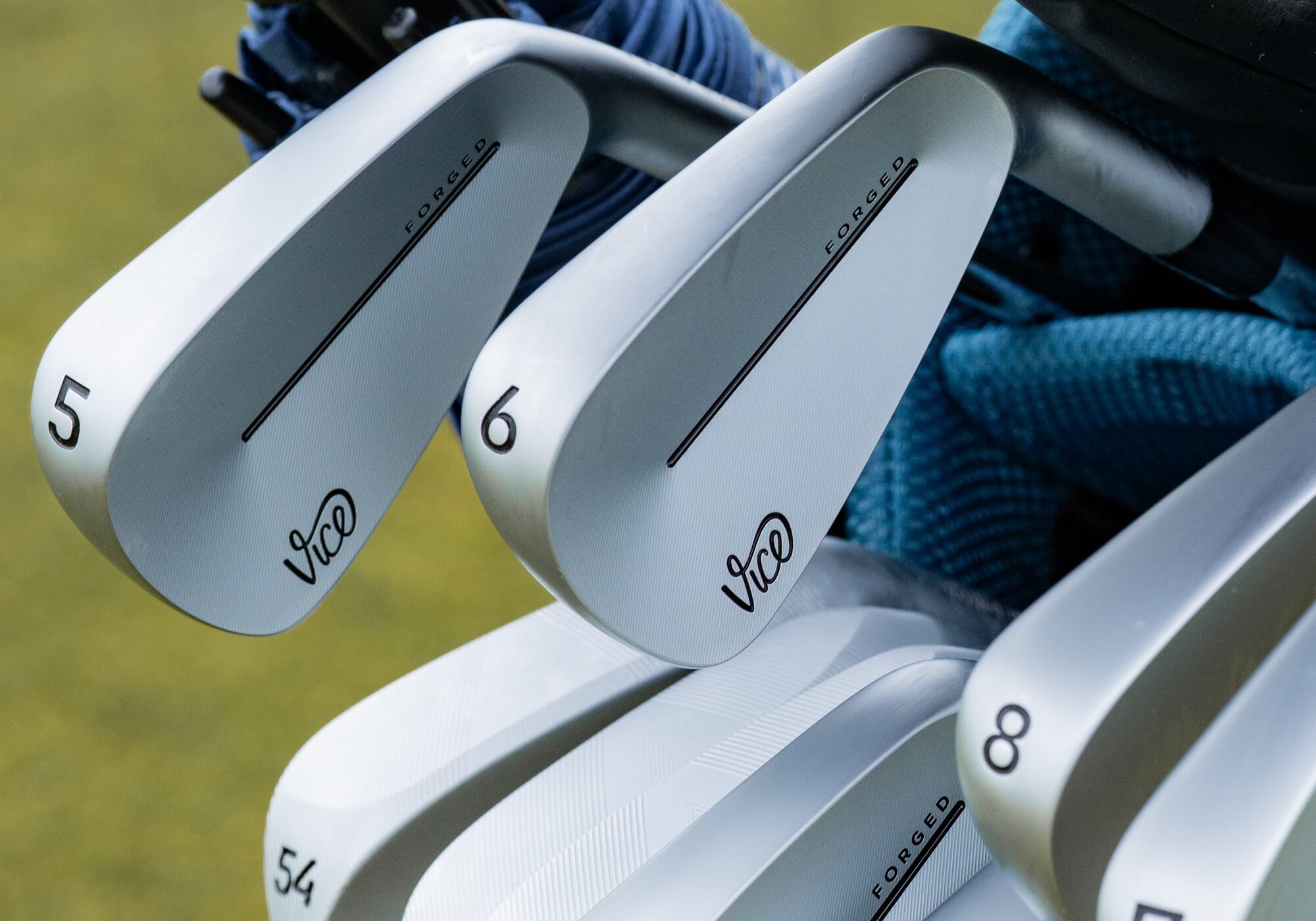
Looking at the provided specs, the VGI03’s loft structure isn’t exactly traditional blade. A 45-degree pitching wedge (standard for a 7-iron in the good old days) with what I’m assuming are corresponding strong lofts throughout the set, suggests some “pop” built in. Stronger lofts inherently increase ball speed and distance, but often at the expense of launch angle and spin. With a blade, controlled launch and spin are paramount for workability and stopping power on greens. It will be crucial to see how Vice has managed to balance these factors. Can they maintain adequate spin and launch for green-holding shots with these lofts, especially for the 8-10 handicapper they’re targeting?
The article mentions that Vice is confident an 8- to 10-handicapper with decent ball-striking could succeed with these. From my fitting bay, I can tell you that a typical 8- to 10-handicapper, while certainly capable, still benefits immensely from more forgiveness than a traditional blade offers. They might hit the sweet spot reliably 7 out of 10 times, but those 3 mishits can be costly. A true player’s distance or even a good player’s cavity back iron would likely provide significantly tighter dispersion on those misses, leading to lower scores. The question for the VG103 will be: how tight is “tighter”? If the “face-stretching” genuinely boosts MOI enough to maintain 85-90% of ball speed and tightens dispersion by, say, 10-15% on off-center hits compared to a classic blade, then Vice might be onto something for that segment of the market who prioritizes feel and looks above all else.
The Verdict: Who is this for?
At $999 for a 4-PW set, the VG103 is competitively priced, especially for a forged iron. The full customizability through Club Champion for fitting is a smart move, as a player considering these *needs* a proper fitting. This isn’t an off-the-rack purchase for most. Based on the claims and my experience, I’d say the VGI03 is primarily for the golfer who:
- Is a consistent ball-striker (more like a 5-8 handicap, honestly, than 8-10, unless that 8-10 is a phenomenal ball striker with a poor short game).
- Aesthetically craves the pure look and feel of a blade.
- Values workability and feedback above absolute forgiveness.
- Is willing to sacrifice some margin for error for that classic blade experience, but appreciates any incremental forgiveness they can get.
My advice? Don’t fall for the “playable blade” hype without trying it on a launch monitor. Get fitted. Hit it side-by-side with a player’s distance iron and a player’s cavity back. Compare the spin rates, the ball speeds on flush shots versus slightly off-center strikes, and most importantly, the dispersion circles. If Vice’s “face-stretching design” truly narrows those circles significantly for *your* swing without compromising the feel, then it might be a legitimate option. Otherwise, for the typical 8-10 handicapper, a player’s distance iron will likely still offer a better combination of distance, forgiveness, and consistent ball flight. Vice has done a commendable job with the aesthetics here, and the concept of a subtly-more-forgiving blade is certainly trending. Now, it’s time to see the hard data that supports the claims on the course and on the monitor.
And the VGW02 Wedges?
The new VGW02 wedges, also single-piece forged from 1020 carbon steel, present a much cleaner, straightforward look compared to earlier Vice offerings. This is a positive step. Like the irons, they are minimalist, with a simple aesthetic that should appeal to better players. They come in 50-, 54-, and 58-degree models – a sensible modern gapping. The “mid-bounce with added toe and heel relief” sounds like a versatile grind, which is crucial for a no-option offering. At $129 each, with decent stock shaft options (KBS Tour, Tour Lite), they are competitively priced. The absence of grind and bounce options might be a limitation for some, especially those with specific turf interaction preferences, but for a general “player-focused” wedge, it’s a solid, value-oriented play. I’d be looking closely at the groove integrity and how they perform with different golf ball types and turf conditions during my testing.
Ultimately, Vice continues to impress with their willingness to challenge the status quo. The VG103 irons and VGW02 wedges signify a maturing club lineup that’s becoming increasingly serious about performance, not just price. The real test just like with anything is the data the average golfer gets when they test these models for themselves.
