

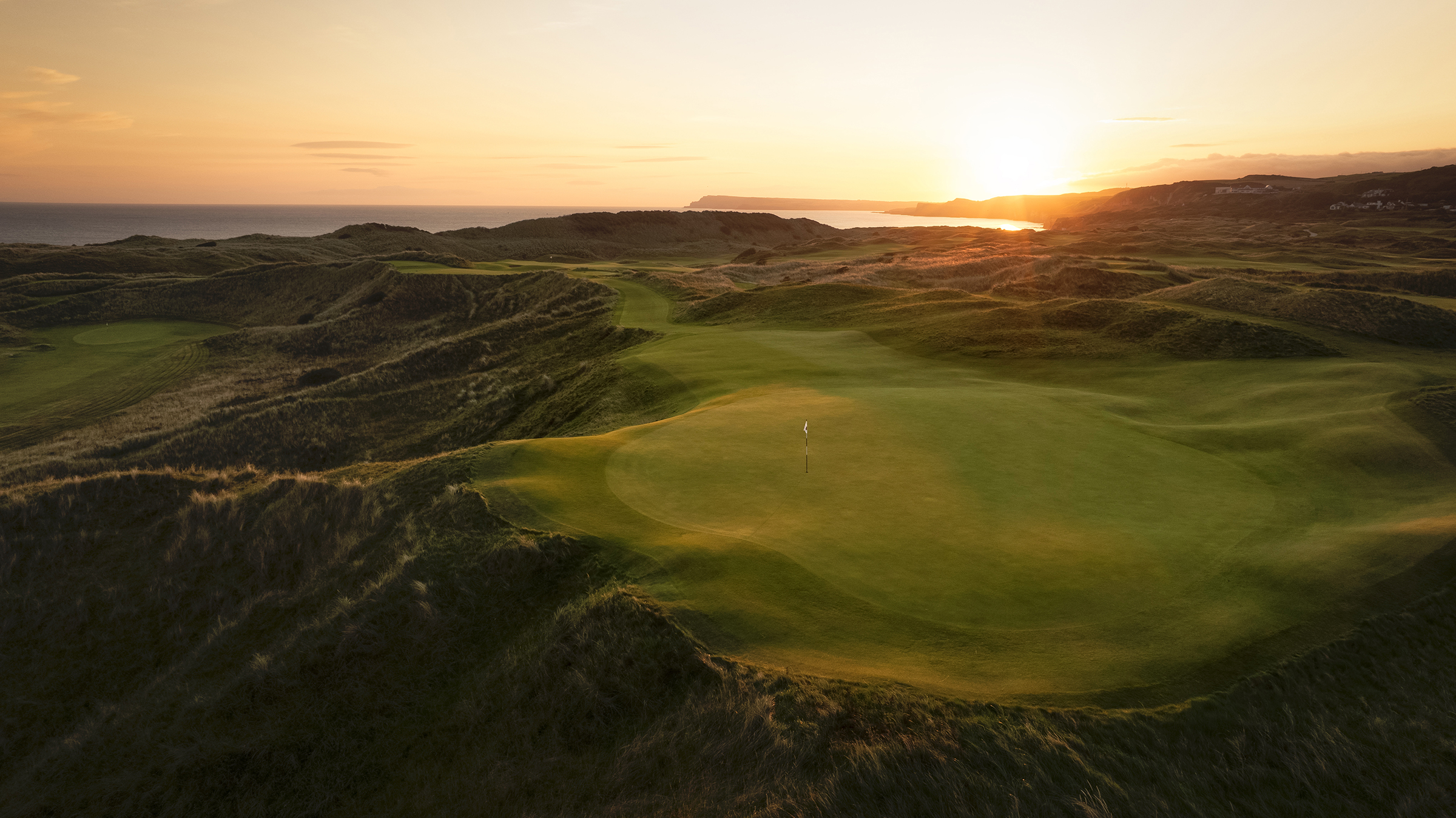

There are courses that challenge you, courses that charm you, and then there are those rare architectural masterpieces that brand themselves onto your golfing soul, leaving an indelible mark. Like so many of us who chase the white ball over greensward and through the windswept links, I’ve been fortunate enough to traverse hundreds of layouts across the globe, from the sandbelt gems of Melbourne to the rugged, ancient links of the British Isles. And in that grand journey, a select few rise above the rest, not just for their beauty or their beastly challenge, but for the sheer genius of their design and the character etched into every inch of their turf. My friends, Royal Portrush’s Dunluce Links, with its infamous 16th hole, “Calamity Corner,” is undeniably one of those hallowed grounds.
Perched precariously on the Causeway Coast of Northern Ireland, Dunluce is a symphony of wind, elevation, and the raw, untamed beauty of nature. It’s a course that feels as if it wasn’t built, but rather discovered, its fairways flowing across the crumpled, rumpled landscape. Dr. Alister MacKenzie himself would have adored how the land dictated the lines, how the natural contours shaped the shots. You arrive, perhaps a little windswept, possibly a little damp, and instantly you understand: this isn’t just golf; this is an experience.
While the entire course is a masterclass in links golf, a strategic journey demanding thought and execution from the first tee shot, it’s the back nine where the legend solidifies. And within that legendary stretch, the 16th hole stands as a titan, a par-3 that has humbled the world’s best and instilled a primal fear in casual players and Open champions alike. It is, quite rightly, known as Calamity Corner.
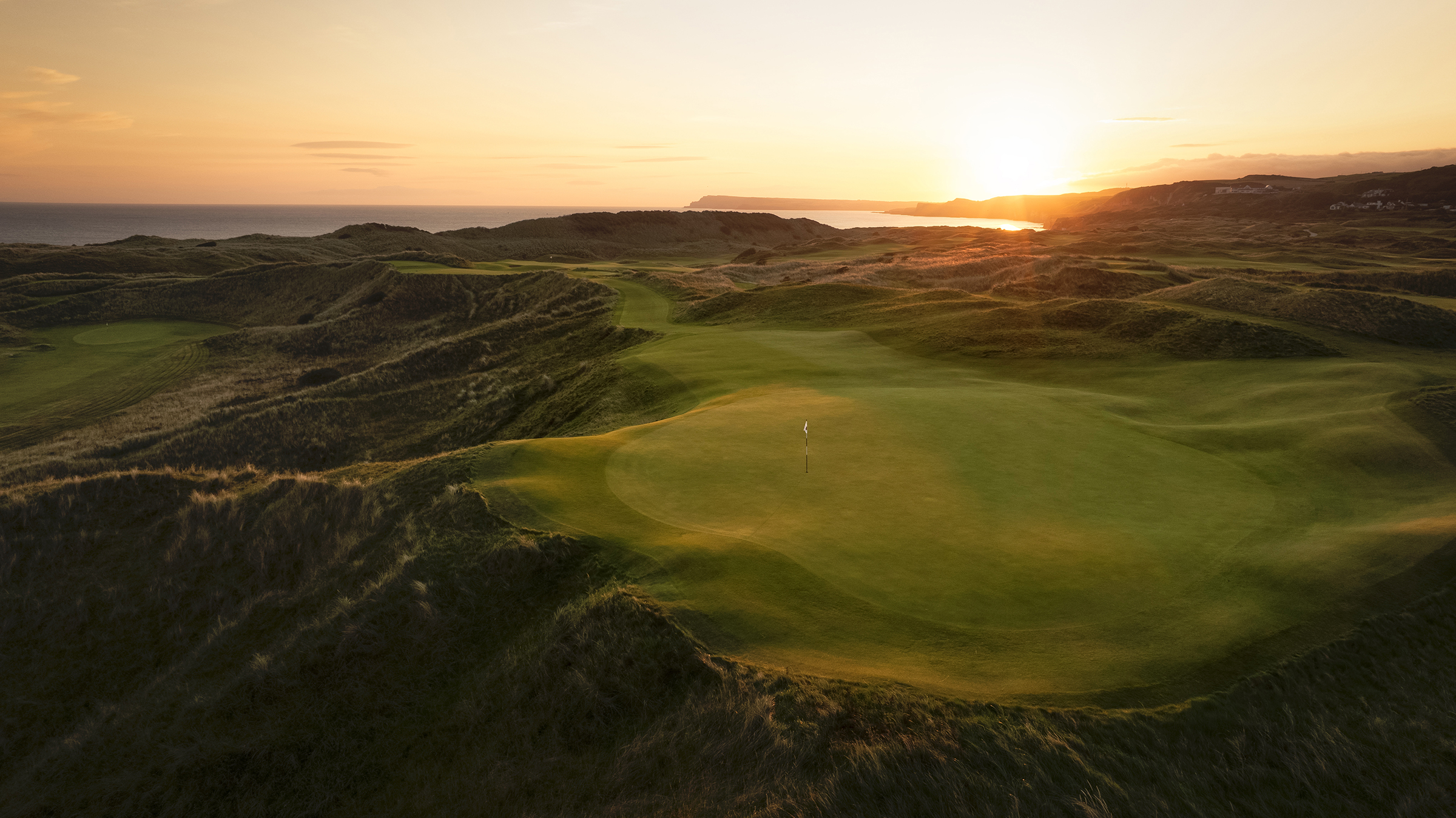
When you stand on the 16th tee, the sheer scale of the challenge reveals itself. From the back markers, it can stretch to a staggering 236 yards, often played directly into a whipping wind off the Atlantic. But it’s not just the length that grips you; it’s the void. As the source article vividly describes:
“Some have argued that the 16th hole on Royal Portrush’s championship layout is the most dramatic and intimidating one-shot hole that isn’t set on a body of water. It’s hard to argue, given that the par three—already playing 236 yards from the back tee—curls around a ravine that drops precipitously more than 50 feet.”
This ravine, a gaping maw that plummets 50 feet below, guards the short and right side of the green. It’s a cruel, strategic design choice where anything less than a perfectly struck, long iron or rescue club is swallowed whole. There’s no gentle slope to kick a slightly wayward shot back onto the putting surface; there’s only the abyss. The green itself, while receptive to a pure strike, sits like a postage stamp in the distance, often appearing smaller than it is under the weight of expectation. The genius of its architecture lies in its simplicity – a clear objective, a terrifying consequence for failure.
Having navigated Calamity Corner myself (with varying degrees of success, I might add), I can attest that the name is not hyperbole. It’s an accurate, gut-wrenching descriptor of the situation. The strategic element here isn’t about shaping a shot around a dogleg, but about mental fortitude and clinical execution. The yardage guide’s advice is simple:
“If you want to avoid a calamity on your scorecard, follow the yardage guide’s advice and ‘take plenty of club and hit for the back left of the green.'”
This isn’t just about avoiding the ravine; it’s about understanding the internal movement of the green, which often repels shots hit short or right. The back left offers the widest, safest landing area, a true “bail-out” for mere mortals. Yet, the temptation to flirt with the right side, to pull off the heroic shot, remains. This internal conflict is what makes great architecture great.
Royal Portrush, as a destination, is an essential pilgrimage for any golf architecture aficionado. It’s a championship venue, host of The Open, and yet it retains that quintessential links-course feel. The turf is firm, the lies are tight, and the weather is an ever-present character in your round. Public play is available, but booking well in advance is highly recommended due to its prestige and popularity. Staying in the charming town of Portrush allows for easy access and the opportunity to truly soak in the local atmosphere. It’s a place where history breathes through the duneland, where every bunker and every undulation in the fairways tells a story, and where a single par-3 can define your day, perhaps even your trip.
