

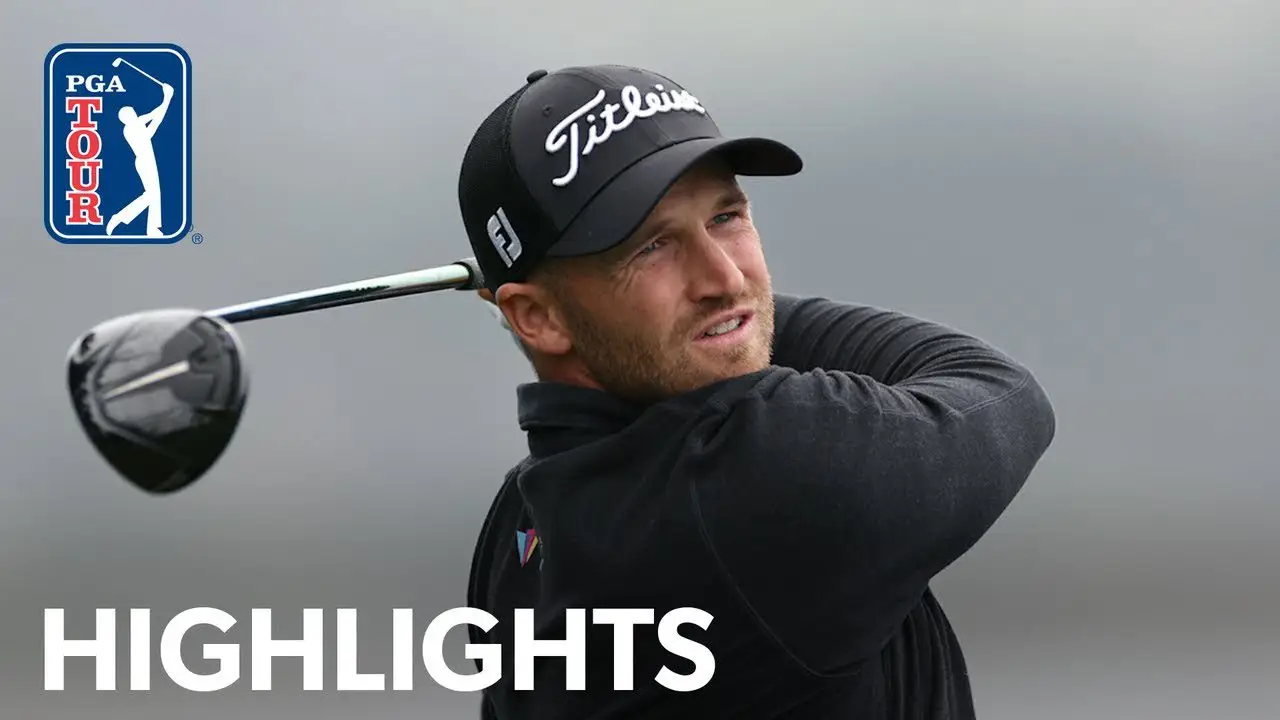

Wyndham Clark’s 60 at Pebble Beach Reminds Us Why This Game Still Captivates
There’s a moment that happens maybe once every few years in professional golf when you witness something so purely excellent that it transcends the typical tournament narrative. Wyndham Clark’s 12-under 60 at Pebble Beach last year was exactly that kind of moment—and what makes it even more remarkable is how it unfolded against a backdrop of frustration that, frankly, many casual fans completely missed.
I’ve been covering this tour for 35 years, and I’ve seen some spectacular rounds. I caddied for Tom Lehman back in the day, watched the evolution of how players approach courses like Pebble Beach, and covered fifteen Masters tournaments where lightning-in-a-bottle golf rounds happened on the biggest stage. But there’s something particularly special about Clark’s performance that speaks to where professional golf is headed—and why courses like Pebble Beach remain absolutely essential to this sport.
The Context Behind the Brilliance
Here’s what strikes me about this particular record-breaker: Clark had already played two solid rounds before ever reaching Pebble Beach on Saturday. After even par at Spyglass Hill and five-under at Monterey Peninsula’s Shore Course, he was positioned well but hardly running away with the tournament. This wasn’t a guy who stumbled into greatness on a pushover layout—this was methodical excellence across three different courses in one of the toughest pro-am formats on the schedule.
The par-5 sixth hole is where everything changed. Clark hit eagle there, then rattled off five consecutive birdies to turn in just 28 strokes. That’s the kind of sequence you see maybe once or twice a decade at a major championship venue. What I appreciated most, having spent decades watching the mental side of tournament golf, is that Clark didn’t let the inevitable bogey at 12 derail him. He made consecutive birdies after that and pushed to 11-under through 14 holes.
“It was kind of surreal; it really felt like I won the tournament with that two-putt even though it was a Saturday. I think that was because I broke the course record. Everyone gave me a standing ovation. It honestly felt like the end of the tournament and that’s what made yesterday so unique and weird because I would have thought that it was Sunday.”
That quote right there tells you everything about the atmosphere that day. Clark understood he was doing something historic, and the crowd’s reaction confirmed it.
Why This Record Matters More Than You Might Think
Now, let’s talk about something that doesn’t always get attention: Clark missed what could have been a 59. At 16, he failed to reach 12-under on a par-4. At 17, he missed another birdie opportunity. Then came that agonizing moment at 18—a par-5 where he needed eagle for the magic number. His 27-foot putt for three stopped painfully short.
In my experience, this is exactly where you separate the players who understand golf from those who just play it. A 60 is already historic. Most golfers—even tour professionals—would take that result and run. But I’ve watched Clark’s career arc since his 2023 US Open victory, and what I see is a player who’s learning to embrace those near-miss moments as part of the journey rather than letting them consume him.
What’s fascinating about the Pebble Beach course record history is how it’s evolved. Before 2024, four men shared the honor with 62s: Matthias Schwab (2022), Patrick Cantlay (2021), David Duval (1997), and Tom Kite (1983). Here’s the kicker—Schwab never broke par in any of his other three rounds that week, finishing T49th. That’s the difference between one magical round and sustained excellence. Clark’s 60 wasn’t a fluke; it was a masterclass in capitalizing on favorable conditions while a solid tournament position was already in place.
The previous overall course record, a 59 by Texas Tech’s Hurly Long at the Carmel Cup in 2017, had stood for seven years. The fact that Clark obliterated both the pro tournament record and the overall competitive record in a single afternoon speaks to how much the caliber of professional golf has elevated.
The Weather Gods and Tournament Circumstances
Here’s where the story takes an interesting turn, and this is something I think deserves more analysis. Heavy storms cancelled the final round, which means Clark’s 60 essentially decided the tournament on Saturday. That’s unusual territory for a major PGA Tour event, and it raises an interesting question: does the magnitude of the round feel different when you’re not defending it through a final 18 holes?
“I would have thought that it was Sunday.”
Clark’s own words capture the strangeness of it perfectly. In my three decades covering this tour, I’ve seen tournaments concluded early due to weather maybe a handful of times at this level, and the psychological impact is real. Part of what makes a record feel sacred is the gauntlet you run afterward. That said, there’s no asterisk on this 60. The conditions were what they were, the field was elite, and Clark executed at the highest level.
What It All Means Going Forward
I think what this moment reveals is that Pebble Beach, for all its reputation as a brutal task-master, is fundamentally a fair and beautiful examination of golf. The course record has now been reset by a world-class player operating at peak efficiency. The par-5 sixth, extended by 17 yards for 2026, might affect future scoring slightly, but I doubt it will significantly diminish the likelihood of exceptional rounds.
What Wyndham Clark did last year wasn’t just about shooting a low number. It was about demonstrating the kind of complete golf—iron play, short game, course management, and mental resilience—that the modern tour demands. That’s something worth celebrating.
