

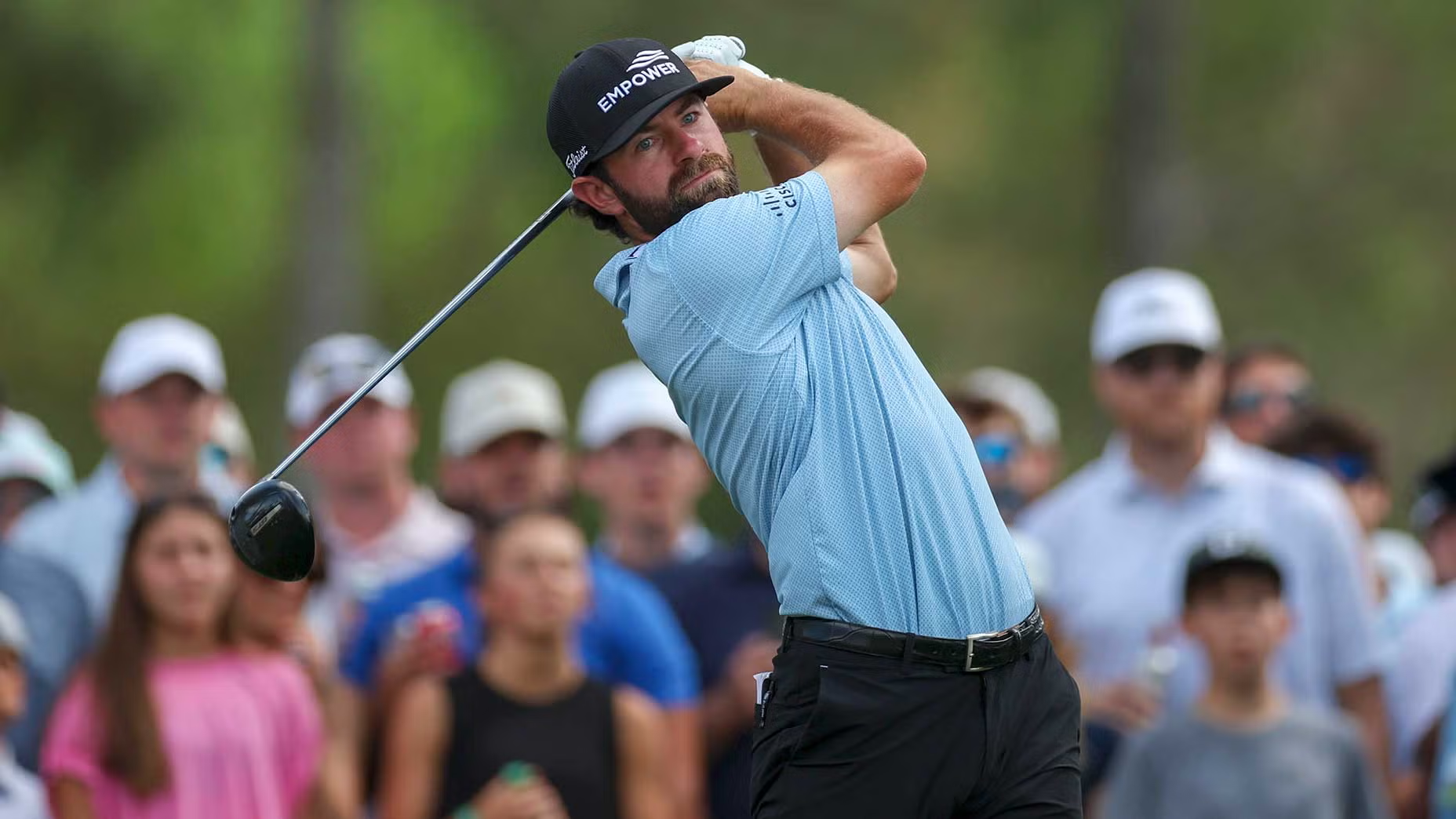

Cameron Young’s Players Championship Victory Reveals Hard Truth About Tour Pressure
I’ve been covering professional golf for 35 years, and I can tell you with certainty: Sunday at TPC Sawgrass reminded us why this tournament remains the measuring stick of the PGA Tour. It wasn’t pretty, it wasn’t particularly high-scoring, but it was brutally honest. And Cameron Young’s first Players Championship title says more about modern tour dynamics than any stat sheet ever could.
Let’s start with the obvious. Young closed with a four-under 68, and at 13 under overall he beat Matthew Fitzpatrick by one. Young’s 68 on a day when conditions deteriorated and pressure mounted like humidity in a Florida afternoon—that’s championship mettle. But here’s what interests me more: how quickly Ludvig Aberg’s three-shot advantage evaporated.
The Collapse Nobody Expected
Aberg shot 76 and tied for fifth. That’s the headline that will sting for weeks. But I’ve seen enough final rounds at Sawgrass to know that a three-shot lead heading into Sunday at this place is not the comfortable cushion it appears to be. The Stadium Course doesn’t care about your overnight advantage. It never has.
What strikes me most about Aberg’s collapse is that it wasn’t one catastrophic mistake—it was the compounding effect of pressure, wind, and a course that punishes hesitation. He turned in even par after the front nine, still holding a two-stroke lead. That’s respectable. But then:
“On the par-5 11th, Aberg made his first big mistake of the day, hitting his approach into the water and making bogey. As Aberg missed his par putt, Fitzpatrick, in the pairing ahead, drained his short birdie putt to tie the lead at 12 under. On the next hole, Fitzpatrick stuck it to 4 feet, made birdie and took the solo lead. And on 12 things went officially sideways for Aberg. He drew his tee shot into the water, missed the green with his next shot and made double bogey, dropping three shots in a matter of two holes.”
Two holes. Water twice. That’s not just bad luck—that’s the mental unraveling that separates winners from runners-up at this level. In my experience caddying for Tom Lehman back in the ’90s, I learned that Players Championship pressure is different. It’s not the weight of major championship history like Augusta. It’s something more immediate: 144 of the best players in the world, on a course designed to expose every weakness, with the tour watching.
Young’s Aggressive Approach Pays Off
Now, let’s talk about why Young won. Because here’s the thing—Fitzpatrick played well. Really well. But Young played smarter when it mattered most.
On the par-3 island-green 17th, with the tournament on the line and wind swirling, Young took the aggressive line. He stuck it to 10 feet and rolled in the birdie putt to tie things at 13 under. Fitzpatrick played it safe, two-putted for par. In that moment, I think you saw the difference between a tour player trying to win a major tournament and a tour player believing he would win.
“Young took the aggressive line, stuck it to 10 feet and rolled in the birdie putt to make it a tie at 13 under with one to play. On 18, Young went driver-wedge to 15 feet and made par.”
That’s not luck. That’s a player who trusts his swing under pressure and isn’t afraid of Sawgrass’s teeth. Young walked off the green with $4.5 million and his second career PGA Tour victory. More importantly, he walked off with what all tour players desperately crave: a signature win on the calendar’s most prestigious non-major stage.
What This Means for the Tour’s Narrative
Here’s what I think gets overlooked: this tournament matters more than most realize for assessing tour health and player trajectory. Young’s breakthrough here, following his title at the Wyndham Championship last August, suggests we’re watching a player who’s moving from “talented prospect” to “legit threat.” That evolution is crucial on a tour that desperately needs fresh narratives beyond the usual suspects.
Aberg, meanwhile, had his coronation delayed. He’ll be back—players don’t lose talent overnight. But having a three-shot lead slip away like sand through your fingers at TPC Sawgrass? That’s a memory that lives in your head. I’ve seen it before with younger players who hadn’t fully grasped just how relentless this tour can be.
What I appreciated most about Sunday was that it rewarded execution and mental toughness over who happened to get the best weather or the softest pin positions. Fitzpatrick played well enough to win most weeks. Young simply played better when the pressure mattered most. In 35 years of covering this game, that distinction has never changed.
The Players Championship—for all its modern amenities and massive purses—still does what it’s supposed to do: separate the very good from the great. Young earned his place at that table on Sunday.
