

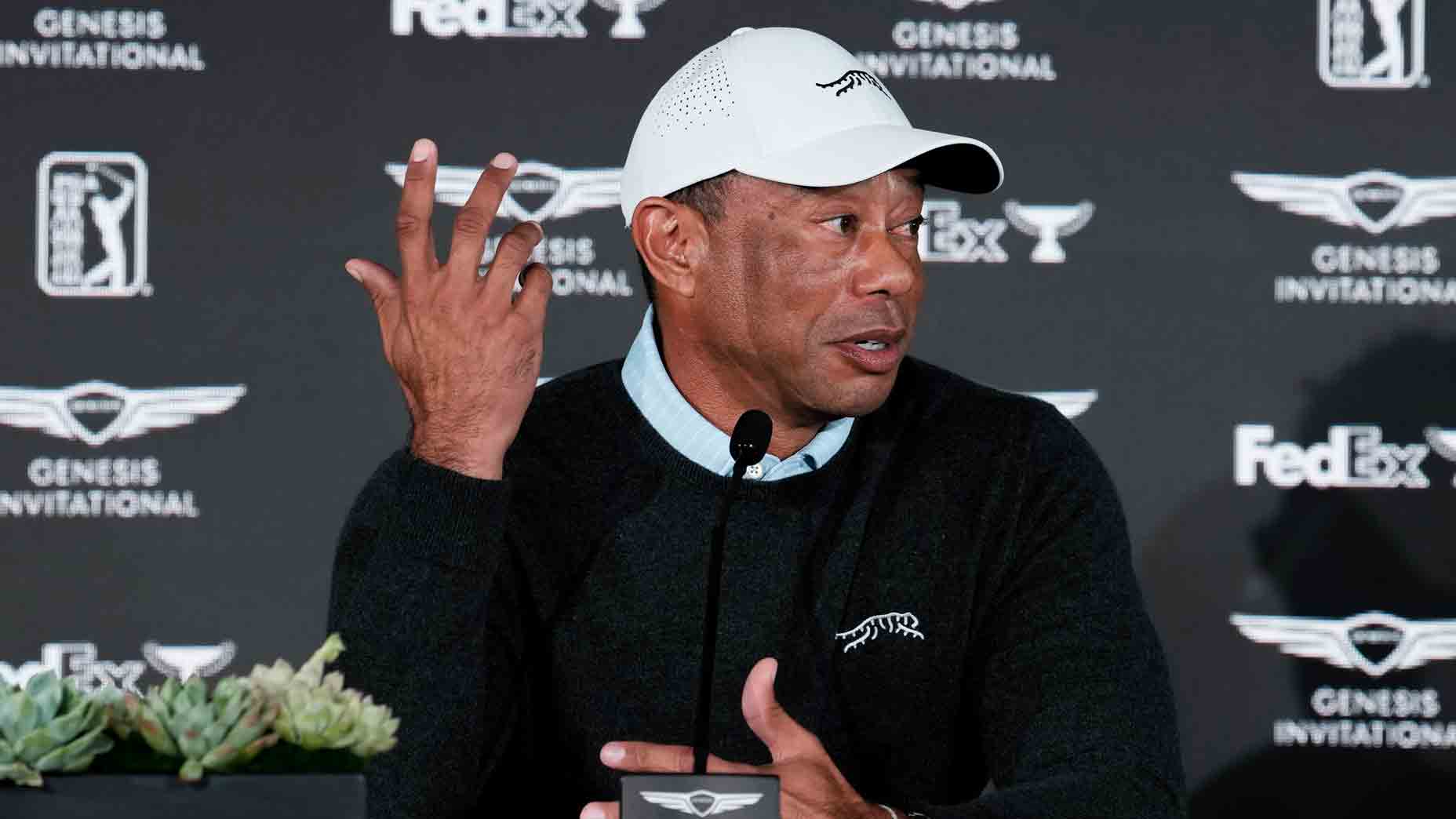

Tiger’s Riviera Memories Remind Us Why This Tournament Still Matters
There’s a moment in every golf writer’s career when you realize the sport isn’t really about the scorecards. It’s about the people, the places, and the way memory works when you’ve spent half your life chasing birdies across America’s finest courses. Tiger Woods gave us one of those moments this week at Riviera Country Club.
In 35 years covering professional golf—and having caddied for Tom Lehman back when the tour felt smaller and somehow bigger all at once—I’ve learned to listen carefully when a 15-time major champion decides to tell stories. Usually, there’s something beneath the surface. Usually, it matters.
The Story We Need Right Now
So let me set the scene. Tiger’s hosting the Genesis Invitational at Riviera, a course he knows like his own driveway. He’s been coming here since he was a kid watching tournaments with his father, Earl. And on Tuesday, ahead of the week’s competition, he recalls an encounter from those early years—a moment so small it could’ve been forgotten, but wasn’t.
“And this golf ball comes slamming in there,” he said, “I go running over to it, and it’s a Ram golf ball. I’ve never heard of Ram. What is Ram? I’m 8 years old, right? So I go running over there, and I’m just looking at it, and this caddie just pushes me out of the way. ‘Kid, get out of the way.'”
That caddie, it turned out, was Bruce Edwards working for Tom Watson. A Hall of Famer’s bag man showing a curious kid the sharp side of professional golf. Not mean-spirited, mind you. Just matter-of-fact. This is how it works out here. Stay focused. Stay out of the way.
What strikes me about this story—and I think this is crucial for understanding where golf sits right now—is what it reveals about the relationship between the game’s elite and those of us who admire it. There’s a natural hierarchy at work, sure. But there’s also a humanity that persists across decades. Tiger didn’t hold a grudge. He gave Edwards grief about it later. They laughed.
Why Riviera Still Feels Different
In my experience, not all courses carry the same weight. Some are just real estate with fairways. But Riviera? Riviera is a living archive. It’s got history woven into every blade of grass.
Tiger acknowledged this in his own way during that press conference. He mentioned the banter—the conversations between players and galleries that happen late on Fridays and Saturdays near the 10th tee, or on the back nine finishing holes. Those moments when the gallery gets a little loose, players loosen up a bit too, and the sport becomes less about the leaderboard and more about the connection.
“For me, that’s part of the neat things being here at Riv,” he said, “being able to go back in time as a kid.”
This is something professional golf has been wrestling with for years now. How do you maintain the integrity and excellence of the sport while also preserving—or recovering—the accessibility and warmth that drew people to it in the first place? That’s not a rhetorical question. It’s the defining tension of modern professional golf.
A Course That Teaches You Something
Having covered 15 Masters and countless other events, I can tell you that the venues that endure in fans’ memories are the ones that tell a story beyond the tournament itself. Riviera does this effortlessly. It’s the site of Tiger’s first PGA Tour appearance as a 16-year-old amateur in 1992—where he shot 72 and 75 and missed the cut by six shots, by the way. Not glamorous. Just real.
But it’s also a place where legends like Watson made their mark, where Edwards pushed a kid out of the way on the 8th green, where the gallery and the players exist in a slightly different relationship than they do at some other stops on tour.
I think what Tiger’s doing by hosting the Genesis Invitational and telling these stories is quietly important. He’s not lecturing about the state of professional golf or making grand proclamations. He’s simply reminding us—and himself—why these places matter beyond the final scores. They’re where memories get made. They’re where golf becomes more than golf.
The Balance We’re Looking For
The PGA Tour has faced legitimate criticism in recent years about accessibility, about whether the sport has become too corporate, too insulated. But then you get a week like this—where the host is reflecting on childhood moments, on caddie interactions, on the texture of being at a place over time—and you remember that the cure for what ails professional golf isn’t sweeping changes or revolutionary concepts.
Sometimes it’s just memory. It’s bringing people back to why they loved the game in the first place. It’s Bruce Edwards pushing a kid out of the way, and then, decades later, that kid laughing about it with the man who did it.
Tiger’s at Riviera this week. He’s playing well. He’s connected to this place in ways most players never will be. And in a sport that sometimes forgets to value its own history and humanity, that feels like exactly the kind of story we need to be paying attention to.
