


The Ryder Cup Aftermath: Insights from Rory McIlroy
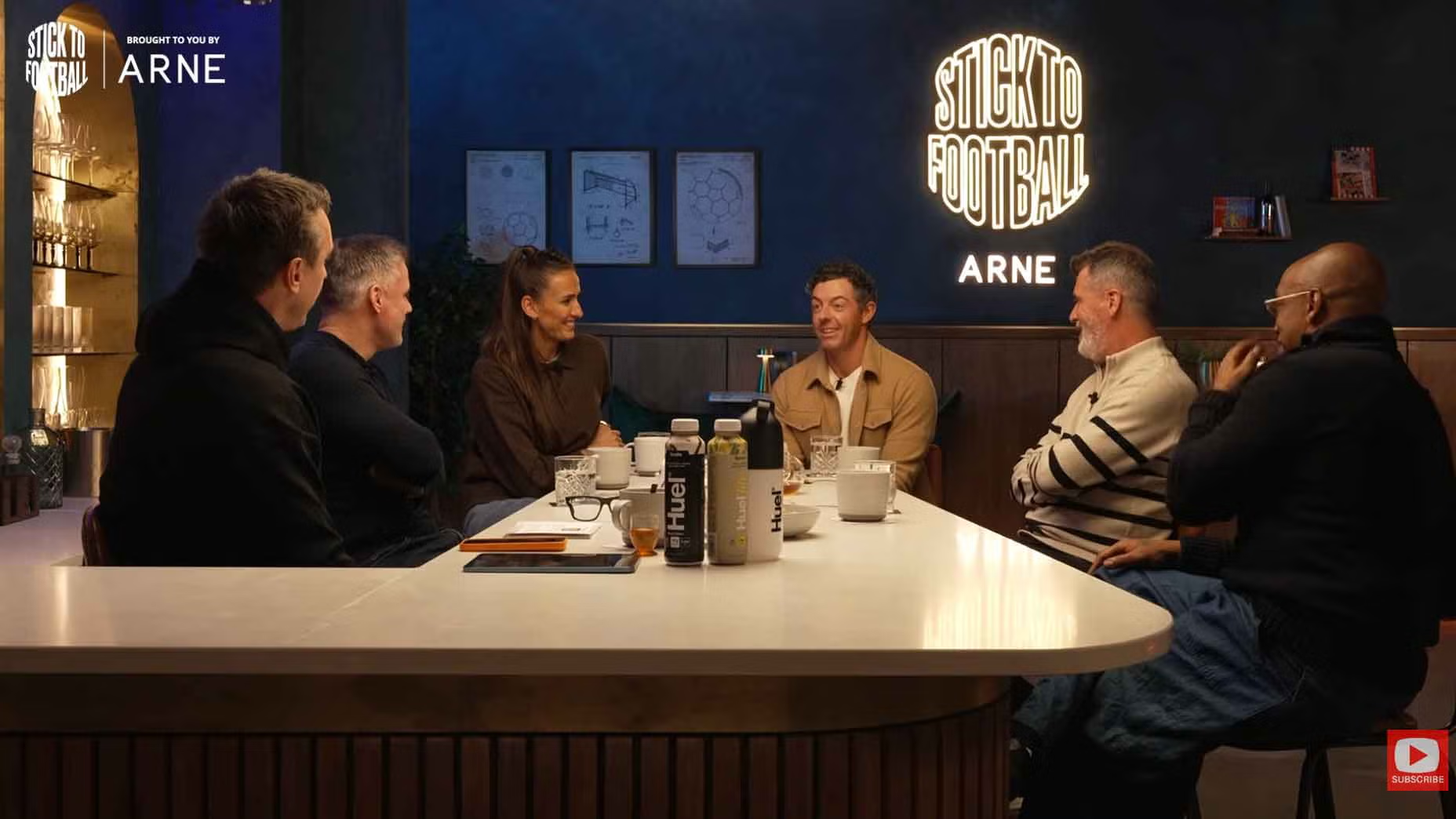
More than three months have passed since Europe clinched a monumental victory at the Ryder Cup held at Bethpage. This bi-annual event continues to generate buzz in the golf community, with Rory McIlroy’s recent interview on the “Stick to Football” podcast shedding new light on the tournament’s dynamics. Within this discussion, McIlroy offered ten intriguing observations that reflect on Europe’s performance, the unique pressures of the Ryder Cup, and the volatile atmosphere at Bethpage.
Understanding Europe’s Continuity
One of the many factors contributing to Europe’s success in the Ryder Cup is team continuity. McIlroy emphasized the importance of a consistent team setup, stating, “We have a lot of continuity within our team.” He contrasted this with the American team, which often experiences significant turnover. According to McIlroy, this continuity allows European players to build cohesive relationships, an essential element for success in team competitions.
The Anxiety of Sunday Singles
The Sunday singles matches evoke a unique blend of excitement and anxiety for players. McIlroy, who faced Scottie Scheffler in the fourth match, described the discomfort of watching the matches unfold without being able to influence the outcome. “As a sportsperson, that 90 minutes is like the worst feeling,” he admitted. This sentiment resonates with many athletes who find it challenging to relinquish control, highlighting the psychological complexities of competitive sports.
Europe’s Quest for Redemption
Heading into the Sunday singles, Europe aimed for a record-matching victory, motivated by a prior loss. “They beat us by a record margin in 2021," McIlroy noted, adding that the team’s goal was to mirror that scoreline in their favor. While the outcome didn’t unfold as planned, this determination signifies the drive and fierce competitive spirit that defines the Ryder Cup.
Navigating Fan Behavior
The tournament was marred by instances of verbal abuse from fans, particularly directed at McIlroy. During his podcast conversation, he revealed that the idea of keeping team partners away from the venue had been discussed. “We knew going to New York that we would get a lot of stick,” McIlroy said. Despite the potential for negativity, his partners chose to support the team on-site, demonstrating a strong sense of camaraderie.
An Unprecedented Atmosphere
Reflecting on the event, McIlroy publicly stated, “The crowds at Bethpage were the worst I’ve ever experienced.” He drew comparisons to the 2016 Ryder Cup in Minnesota, expressing his shock at the intensity of the verbal exchanges. This disclosure not only sheds light on the challenges players face but also prompts discussions about the nature of fan interactions in professional sports.
Expectations of Home-field Advantage
McIlroy expressed disappointment regarding what he viewed as a lack of crowd control from American captain Keegan Bradley. While acknowledging the importance of home-field advantage, he felt that players could have done more to promote a respectful, competitive atmosphere. This sentiment emphasizes the balance between support and sportsmanship, an essential conversation in the world of competitive sports.
The Weight of Ryder Cup Pressure
During the podcast, Jill Scott raised a critical question about the pressure in team events versus individual tournaments. Without hesitation, McIlroy affirmed that the pressure is indeed greater in team formats. “It probably took me until my third Ryder Cup to play freely and not fear letting the team down,” he said. This insight into his journey provides a valuable lesson about coping with pressure in high-stakes situations.
Bridging Divides Post-Competition
After intense competitions like the Ryder Cup, players often navigate complex relationships. McIlroy acknowledged a “coldness” that can linger between competitors. However, he noted that the bi-annual nature of the tournament facilitates healing and communication. “We share experiences; a lot of the bad stuff is forgotten,” he remarked. McIlroy’s approach to maintaining relationships underscores the importance of dialogue and understanding, even in competitive settings.
Strategic Insights into Foursomes
Another noteworthy topic of discussion was Europe’s strategic prowess in the foursome matches. McIlroy praised Luke Donald’s emphasis on analytics, stating, “The most strategic format of golf is foursomes.” With a remarkable record of 13-3 in recent matches, this strategic edge illustrates the importance of thoughtful team dynamics and preparation in achieving success.
Coping with Mental Fatigue
Lastly, McIlroy reflected on his performance, particularly during Sunday singles. Despite a strong overall record of 3-1-1, mental fatigue took its toll in his match against Scheffler. He explained, “I felt like I hit a wall,” showcasing the emotional and physical demands of the tournament. This candid admission serves as a reminder of the mental aspects of athletic performance, where experiences can vary dramatically from game to game.
The Ryder Cup is more than just a competition; it’s a blend of strategy, emotion, and camaraderie. Insights from Rory McIlroy provide valuable perspectives on the dynamics of international competition. As conversations around this year’s event continue, it becomes evident that the lessons learned resonate far beyond the golf course, enriching our understanding of teamwork, resilience, and sportsmanship. For more insights, including McIlroy’s thoughts on his Masters win, check out the full episode of the "Stick to Football" podcast.
