

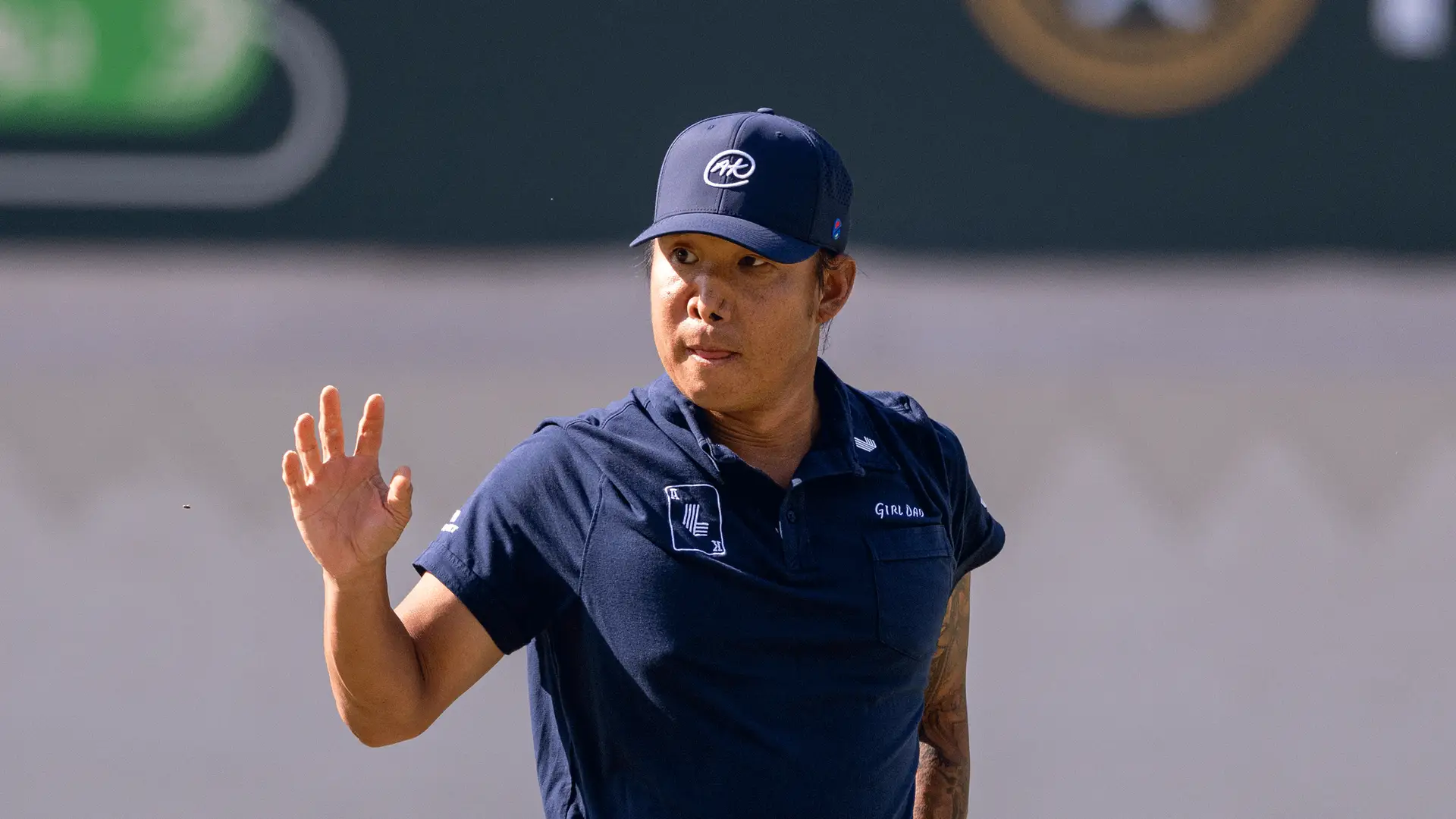

Anthony Kim’s 4Aces Gamble: Why His Choice Matters More Than You Think
I’ve been around professional golf long enough to know that the most interesting stories aren’t always about who wins tournaments—they’re about who decides to show up in the first place. So when Anthony Kim announced he was joining Dustin Johnson’s 4Aces team in LIV Golf, I found myself thinking about something deeper than just team rosters and Saudi money.
This is a guy who, by his own admission, “did not need to join a team at all.” Let that sink in for a moment. After more than a decade away from competitive golf, after rebuilding his entire life and priorities, Anthony Kim—a player who could have easily pocketed a massive LIV contract as an individual competitor—chose the accountability and camaraderie of a team structure. That’s not a small decision, and it tells us something important about where professional golf is headed.
The Evolution of a Prodigal Son
Having caddied in this sport and covered the tour for 35 years, I’ve watched Anthony Kim’s arc with genuine fascination. The fiery kid who burst onto the scene in the late 2000s was electric—talented beyond measure but volatile, a player who swung between brilliance and self-destruction with frightening speed. I remember thinking then that he had all the pieces to win majors. What I didn’t anticipate was the long absence that would follow.
But here’s what strikes me about his return: he’s not trying to recapture that old version of himself. During his Adelaide debut with the 4Aces, Kim shot a solid 67 to tie for third—solid work, nothing explosive. More importantly, he’s talking about maturity and patience in ways the young Kim never would have. Listen to what he said about his younger self:
“I want to be right where I am. I’m very blessed to have an amazing family and be alive. This is awesome.”
That’s not the sound of a player chasing demons. That’s wisdom.
Team Golf in the LIV Era: Connection Over Competition
What fascinates me about Kim’s choice is his reasoning. He specifically cited wanting to spend time with players he genuinely enjoys: Dustin Johnson, Thomas Pieters, and Thomas Detry. He said:
“I didn’t need to join a team if I didn’t like all three of the guys… having teammates to lean on is something he sees as a bonus.”
In my experience, this reveals something that’s been largely overlooked in the LIV versus PGA Tour debate: the human element still matters. A lot. The tour’s been so focused on arguing about money, format, and legitimacy that we’ve missed a crucial truth—professional golfers, like all humans, want to belong to something. They want community.
The 4Aces filled a void left when Patrick Reed departed, initially bringing in Miguel Tabuena as a substitute for the Riyadh opener. But Kim’s full-time arrival represents something more stable, more committed. And that matters for team cohesion in ways that casual fans might underestimate.
A Player Choosing Family and Patience Over Ego
Here’s what really impressed me about Kim’s comments at Adelaide: his self-awareness about how he’s changed.
“I’m more patient out there… I’m playing smarter. I’m staying more patient. I really want nothing to do with that 20-something-year-old kid.”
In three decades of covering this game, I’ve learned that this kind of reflection—genuine, honest introspection—is rarer than eagle-3s. Most players, if they talk about their mistakes at all, frame them in ways that protect their ego. Kim’s doing something different. He’s acknowledging arrogance without making excuses for it.
And he’s making a point that deserves more attention: he has his family with him on tour. His daughter. His wife. That’s not incidental detail—that’s the entire point of his comeback. Golf, for him, is no longer the obsession. It’s the vehicle for a better life.
What This Means for the 4Aces and LIV’s Future
Patrick Reed’s departure created a ripple effect that’s worth monitoring. Reed was abrasive, polarizing, but undeniably talented. Kim brings something different: humility paired with ability. He’s going to be hungry to prove himself without being desperate about it—a surprisingly rare combination in professional sports.
The 4Aces now have a captain in Johnson surrounded by three players who seem genuinely invested in each other’s success. That’s not guaranteed to win tournaments, but it does create the kind of stable foundation that teams need to build chemistry over a season.
What I think matters most is that Kim’s choice validates something LIV has been arguing but struggling to prove: that their model can attract players for reasons beyond paychecks. Team golf, if it’s genuine and not just a corporate structure imposed from above, can actually appeal to competitive athletes.
The Patience Player
After 15 Masters, countless tournaments, and a decade watching how players respond to second acts, I’ve learned that comebacks aren’t really about proving doubters wrong. They’re about proving something to yourself. Anthony Kim seems to understand that. He’s not here to show the golf world what he’s made of. He’s here to show his daughter what her dad does for a living, to play alongside guys he respects, and to see if he can still compete.
That’s not just a nice story. In a sport that’s been consumed by controversy and division, it’s quietly radical. It’s a reminder that golf, at its best, is about something simpler than we’ve made it: the game, the people you share it with, and the opportunity to keep getting better.
If Anthony Kim keeps playing like he did in Adelaide while maintaining that patience and perspective, the 4Aces might just have found exactly what they needed.
