

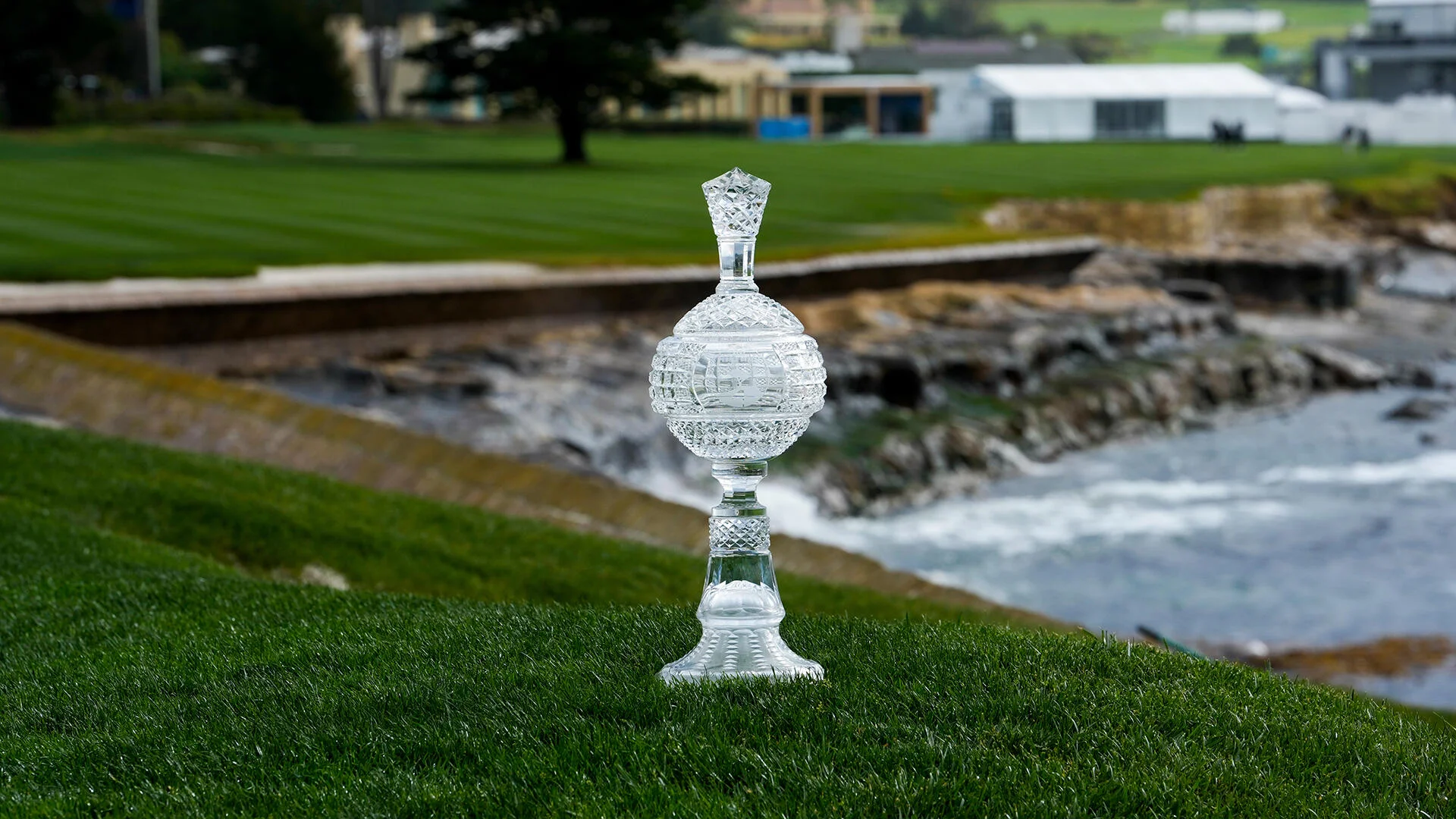

Parity is King: What Collin Morikawa’s Pebble Beach Win Tells Us About Golf’s New Era
There’s a moment that happens maybe once every decade in professional golf when you realize the sport has fundamentally shifted. I had one of those moments watching Collin Morikawa seal his first PGA Tour victory since 2023 at Pebble Beach this past Sunday, emerging at 22-under par and one shot clear of the field. It wasn’t the win itself that got me—it was what it represents about where professional golf is headed.
Having spent 35 years covering this tour, and having walked 18 holes as a caddie for Tom Lehman back when the game moved differently, I can tell you with some confidence: we’re living through something genuinely new.
The Dominance Era is Over
Let’s start with the headline that should make every golf fan sit up and pay attention. After 2024, when Scottie Scheffler claimed half of the PGA Tour’s signature events, we’ve now seen all eight signature events in 2025 won by different players. Eight different winners. Eight different ceremonies. Eight different stories.
What strikes me most about this trend isn’t that Scheffler didn’t win—he’s still Scottie, still finishing T4 at Pebble Beach—but that nobody could. In my experience covering 15 Masters tournaments alone, I’ve seen stretches where one player or two dominant personalities defined entire seasons. Jack’s era. Tiger’s era. Even the Rory-era we thought we were entering five years ago.
The current moment feels different. “Parity was the name of the game as winner’s checks worth $3.6 million and $4 million for the player invitationals were doled out to a variety of names, including not only Scheffler but Rory McIlroy and Justin Thomas, among others.” This isn’t a weakness in the field. It’s actually a sign of profound strength across the entire tour.
The Money Changed Everything
I’d be remiss if I didn’t address the elephant in the room: the financial structure of these signature events has completely reordered professional golf’s incentives. Morikawa’s first-place check of $3.6 million isn’t just life-changing money—it’s a statement that the PGA Tour has fundamentally restructured how it competes for attention and talent.
Consider the payout distribution for this week at Pebble Beach:
- 1st Place: $3,600,000 (Morikawa)
- 2nd Place: $2,160,000 (Min Woo Lee, Sepp Straka)
- Top 10: Every player clears at least $500,000
- Top 20: Every player earns north of $250,000
- Total Purse: $20 million
When you’re putting $3.6 million on the line for a single victory, you’re not just attracting the best players—you’re creating an environment where anyone in the field legitimately believes they can win. That’s the psychological shift nobody’s talking about enough.
A Curious Subplot: Where’s McIlroy?
Here’s something that caught my eye, and I think it matters more than the casual observer might realize. Rory McIlroy, the reigning Pebble Beach champion, entered this week as the “reigning champion after kicking off a memorable spring last year, not only winning at Pebble Beach but adding The Players Championship and his first Masters green jacket to three early season wins.”
Yet he finished T14. A Masters champion and defending Pebble Beach winner finishing 14th in a signature event. Five years ago, that would’ve been the lead story. Today, it barely registers because we’re so accustomed to elite players finishing in mid-pack.
I don’t say this to knock Rory—the man won a green jacket and has resurrected his spring game. But it illustrates something I’ve been thinking about since covering my third Masters: the margin between first and 14th has compressed dramatically. The skill gap hasn’t disappeared; it’s just that tournaments now come down to a few shots where execution matters more than raw talent.
The Next Generation Makes Its Move
What genuinely excites me about Morikawa’s win is the narrative it creates. A player in his late twenties, coming off a three-year drought without a tour victory, returning to the winner’s circle at one of golf’s most iconic venues—that’s the kind of story that keeps the game healthy and engaged.
The field that finished around him—Scheffler, Fleetwood, Min Woo Lee, Sepp Straka—reads like a highlight reel of golf’s present and future. These aren’t names fighting over scraps. They’re legitimate threats who will each have their moment in the sun.
The Bigger Picture
After 35 years of watching patterns emerge and fade, I think parity is actually what the tour needed. Yes, it’s less dramatic than watching one titan dominate. No, it doesn’t create the same narrative arc as a Scheffler or a prime McIlroy era. But it does something maybe more valuable: it makes every signature event genuinely unpredictable.
And unpredictability, my friends, is what brings people back week after week.
