


Tiger’s Masters Door Stays Open: What His Cryptic Comments Really Mean for Golf in 2026
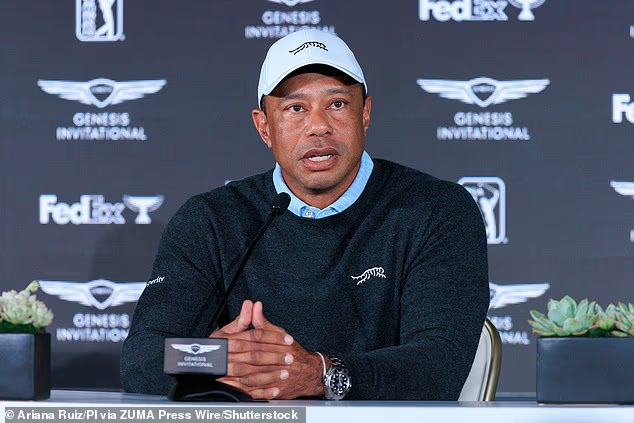
After 35 years covering professional golf—and having walked 72 holes as Tom Lehman’s caddie back in the day—I’ve learned to read what players *don’t* say as carefully as what they do. So when Tiger Woods was asked Tuesday if a Masters appearance in April is “off the table,” and he simply answered “No,” I sat up straighter in my chair.
That single word carries the weight of 50 years of living, seven back surgeries, a torn Achilles, and the kind of medical mountain that would have most of us accepting a quiet retirement. But Tiger Woods has never been most of us.
The “I’m Trying” Standard
What strikes me most about Woods’ recent comments isn’t the hint of a Masters return—though that’s certainly tantalizing for Augusta patrons and television networks alike. It’s his remarkably honest assessment of where he actually stands physically:
“I’m trying, put it that way. The disc replacement has been one thing. I’ve had a fused back and now a disc replacement, so it’s challenging.”
In my three decades around tour players, I’ve heard plenty of corporate speak—the kind of sanitized, approved messaging that tells you nothing. This isn’t that. This is Tiger acknowledging that he’s genuinely uncertain about his body’s capabilities, while simultaneously refusing to close any doors.
There’s a crucial distinction here that casual fans might miss. Woods said he’s “back to hitting full golf shots.” That’s meaningful progress. But he’s also been careful not to put a timeline on returning to official competition. That’s wisdom. That’s a man who understands the difference between being able to swing a club in a practice facility and competing against the world’s best over 18 holes.
Augusta National Holds a Different Kind of Magic
The Masters isn’t just any tournament for Tiger. He’s won it five times. He knows every blade of grass, every slope, every wind pattern. In my experience covering 15 Masters tournaments, I’ve watched how course familiarity can be the great equalizer for aging competitors. You don’t need to be in peak physical condition to navigate a course you could play blindfolded.
That’s not cynicism—that’s respect for Augusta National’s design and what it means for a player of Woods’ stature and experience.
But here’s what I think really matters: if Tiger shows up at the Masters in April, even if he misses the cut, it reshapes the entire narrative around his career. Not as a comeback story—we’ve done that one before. Rather, as a testament to human resilience and the particular grip that golf maintains on those who’ve dedicated their lives to it.
The Ryder Cup Plot Thickens
Woods’ comments about potentially captaining Team USA for the 2027 Ryder Cup in Ireland deserve equal attention, though they’ve received less fanfare. Here’s a player who’s already contributed enormously to American golf, and now he’s being asked to lead the charge in one of sport’s most intense competitions.
“Yeah, they have asked me for my input on it, and I haven’t made my decision yet. I’m trying to figure out what we’re trying to do with our tour.”
Notice what he didn’t say: he didn’t immediately accept. In fact, Woods seems genuinely conflicted about whether he can give the role the attention it demands. That’s integrity. Many players would jump at such an honor without fully considering the obligations. Tiger’s clearly thinking about whether he can “do it justice with my time.”
The Ryder Cup captaincy, combined with potential Masters appearances, suggests Tiger is envisioning a different kind of role in professional golf. Not as a player chasing wins, but as a steward and leader. At 50, after everything his body has endured, that’s actually a beautiful narrative arc.
What This Means for the Game
From a practical standpoint, Woods’ openness to a Masters appearance is significant for Augusta National’s business interests and for television ratings. But beyond the commerce, there’s something deeper happening here.
Golf has struggled in recent years to capture mainstream attention the way it did during Tiger’s prime. The emergence of LIV Golf, the PGA Tour’s ongoing identity crisis, and generational shifts in sports consumption have all taken their toll. The idea that Tiger might walk Augusta’s grounds again—that he might compete, however briefly—is the kind of narrative that transcends golf’s core audience.
It’s also worth noting what he’s *not* saying. Woods made clear he won’t play in a cart on the PGA Tour, despite his physical limitations, because he doesn’t believe in it. But he’s open to the Champions Tour model, which allows carts for older players. That’s a player protecting his competitive integrity while being realistic about his body’s constraints.
“Each and every day I keep trying, I keep progressing, trying to get it to a level that I can play at the highest level.”
After 35 years covering this game, I’ve seen plenty of comeback attempts. Most fade quietly. Some generate headlines. But the truly remarkable ones—the ones that matter—are about players being honest with themselves and their fans about what’s actually possible.
Tiger’s “No” when asked if Masters is off the table? That’s the sound of a door staying open. Whether he walks through it in April remains to be seen. But the fact that he hasn’t closed it speaks volumes about the man and the game he loves.
