

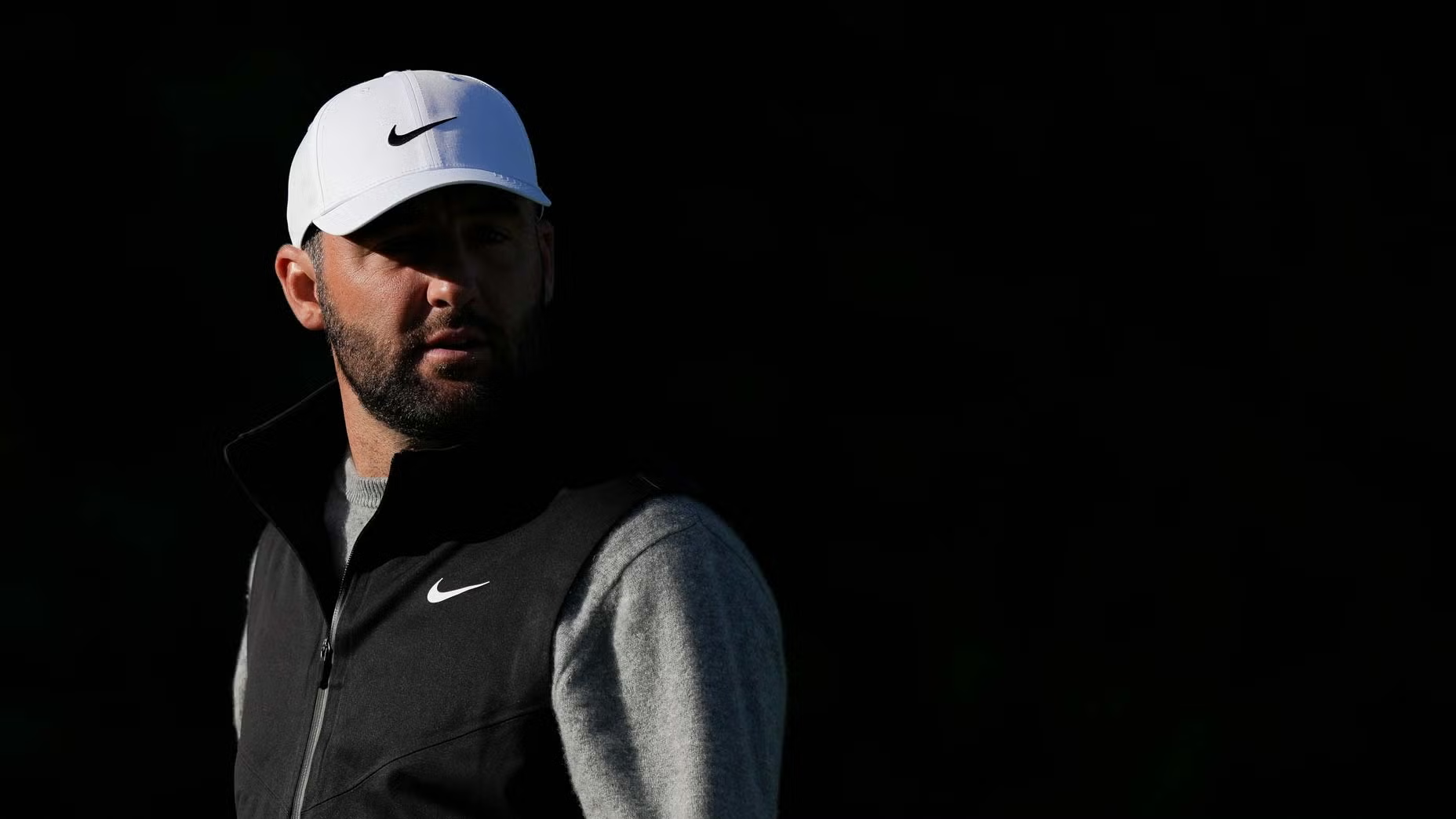

Scottie Scheffler’s Genesis Struggle Reveals Something We Shouldn’t Take for Granted
There’s a scene from Friday morning at Riviera that’ll stick with me for a while. Scottie Scheffler, the World No. 1, standing in 42-degree weather with a sparse gallery of coffee-clutching diehards, playing his way out of last place in a 72-player field. Not exactly the stuff of highlight reels or viral moments. And yet, it might’ve been one of the most revealing stretches of golf we’ve seen from him all season.
In my 35 years covering this tour, I’ve learned that what matters most often happens when nobody’s really watching. Friday morning at Riviera fit that bill perfectly. Here’s what struck me most: Scheffler’s fist pump when that par putt fell on 18 wasn’t the celebration of a man putting the finishing touches on inevitable victory. It was the genuine relief of a player who’d just clawed back from the abyss.
The Real Story Isn’t the Comeback
Look, we’ve all gotten comfortable watching Scheffler do impossible things. He’s won majors as a heavy underdog. He’s shot 64 on championship Sunday at Augusta. He’s turned career-threatening moments into career-defining ones with such regularity that it’s almost become background noise. But I think what’s actually happening with Scheffler right now—across these last three weeks—tells us something deeper about the state of elite golf.
Consider the actual numbers. In three consecutive tournaments, Scheffler has posted opening rounds of 73, 72, and 74. That’s not a trend; that’s a pattern. A pattern of someone who isn’t quite dialed in on arrival. What’s remarkable isn’t that he’s finished those tournaments well—it’s that he’s *had* to. Having caddied in the ’90s, I saw plenty of great players go through stretches like this. Some weathered it. Some didn’t. The difference between the two groups was usually mental resilience, not raw talent.
“I may not be, like, the flashiest player, but I feel like my mind has always been my greatest tool, and I just try to use that to my advantage.”
That’s vintage Scheffler self-awareness right there. And he’s right. His mind IS his greatest tool. The question worth asking is whether he’s having to lean on it more than usual.
The Relentlessness We Take for Granted
Here’s something that got buried beneath the comeback narrative, and it deserves more attention: Scheffler hasn’t missed a cut since summer of 2022. We’re talking about a streak spanning multiple seasons, multiple courses, multiple conditions. That’s not luck. That’s not even just talent. That’s a commitment to never accepting failure, even when failure is staring you in the face.
On Friday at Riviera, when Scheffler was sitting at four over par with one player left to beat in the entire field, he didn’t pack it in. He didn’t coast through his second round hoping to sneak inside the number. He went to work. The specifics matter: birdie at 9, birdie at 10, birdie at 11, birdie at 17. Four birdies in his final 10 holes to salvage a 74 and keep that cut-miss streak alive.
“This place and I have a weird relationship. I feel like I can play so well out here and I just haven’t yet.”
There’s honest self-assessment in that quote. Riviera, we should remember, never let Tiger Woods win either. It’s a course that seems to demand something just slightly different from what even the most dominant players naturally provide. For Scheffler, that’s proving frustrating. But frustration is data. It’s information. And Scheffler’s shown throughout his career that he knows how to process it.
What This Actually Means
I think what we’re watching is a moment where Scheffler’s dominance is being tested not by other players, but by conditions, by courses, by the vagaries of a game that refuses to be fully conquered. In 15 Masters I’ve covered, I’ve seen how the greatest players respond when things get sideways. Some get tighter. Some get worse. Scheffler? He gets quiet. More focused. Less theatrical. More Ted Scott conversations in 30-second huddles where every word matters.
The comeback narrative is easy. It’s clean. It’s what we expect from the World No. 1. But the real story is how he’s *managed* these two-week stretches where he’s had to claw his way back. Because in my experience, that’s where championships are actually won. Not in the moments when everything clicks—those are easy. They’re won in moments like Friday morning at Riviera, when the gallery is small, the temperature is brutal, and you’re playing for your professional life against a field of 71 other competitors.
Scheffler still probably won’t win this week. The Genesis might not fall his way. But what he’s shown across these three tournaments—that willingness to work harder when things go sideways, that refusal to accept the easy out—that’s the stuff that actually separates the great ones from the merely excellent.
We should probably stop taking that for granted.
