

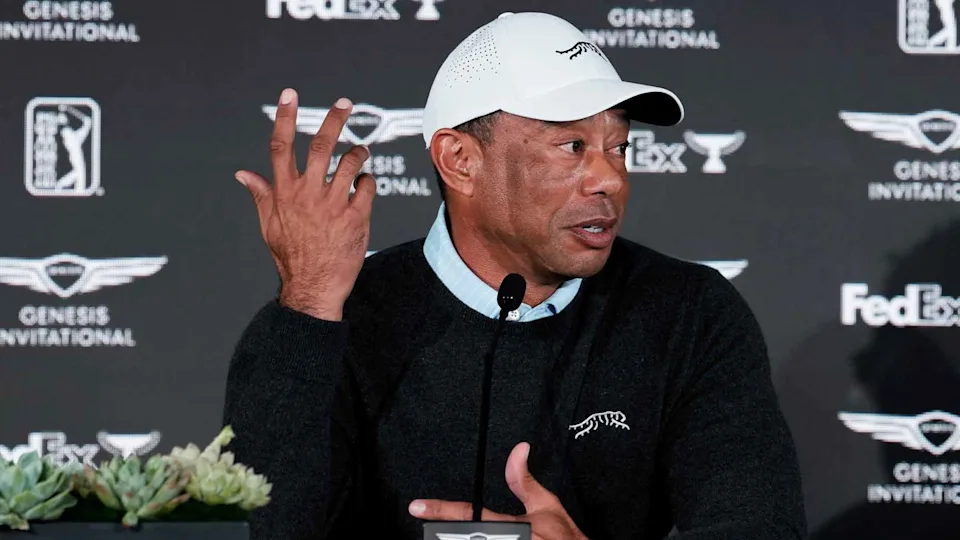

Tiger’s Masters Mystery: The Real Story Isn’t Whether He’ll Play
After 35 years covering this tour, I’ve learned that what Tiger Woods *doesn’t* say is often more revealing than what he does. And right now, he’s not saying much about Augusta National in seven weeks—which tells us everything we need to know.
Look, the headline writes itself: “Will Tiger Play the Masters?” It’s catnip for the golf media. But having caddied for Tom Lehman and watched Woods navigate the pressures of professional golf for three decades, I think we’re asking the wrong question entirely. The real story isn’t about Tiger’s physical readiness or his playing schedule. It’s about what his current role reveals about the future of professional golf—and how a 50-year-old legend is choosing to spend his endgame.
The Masters Decision: Credible, But Not the Point
Let’s address the elephant first. Yes, Tiger gave Jim Nantz the opening we all wanted to hear:
“There is,” Woods said with a smile.
When asked if playing the Masters was a real possibility. That’s real. That’s not him closing the door. But here’s what I found more interesting than whether Tiger will tee it up: the deliberate vagueness about his prep. PGA Tour? Senior Tour? Member-guest? He genuinely doesn’t know—and that’s oddly refreshing in an era of hyper-scheduled, micromanaged comeback narratives.
The man hasn’t played competitively since last summer’s Open Championship. He’s still rehabbing from lumbar disc replacement surgery. He can hit full shots now, but he freely admits he’s not ready for tournament golf at the highest level. That’s honest. In my experience, when an athlete starts parsing their words about comeback timelines, it usually means they’re either (a) not being truthful, or (b) genuinely uncertain. Tiger sounds like the latter, which I actually trust.
But here’s my take after covering 15 Masters: the Masters will happen with or without him. What matters far more is what he’s doing *instead*.
The Real Legacy Play: Reshaping the Tour
This is where the story gets interesting. While everyone’s focused on whether Tiger will make a ceremonial tee shot at Augusta, he’s quietly chairing the Future Competitions Committee—a role with implications that will echo long after his playing days are done. And unlike the endless debate about his physical conditioning, this is something we can actually assess right now.
In my three decades covering the tour, I’ve watched the PGA Tour navigate crisis and stagnation more times than I can count. The LIV Golf split shook everyone. The media landscape shifted. Sponsorship dynamics changed. The tour needed someone with credibility, institutional knowledge, and—let’s be honest—enough cultural weight to shape conversations at the highest levels. That’s Tiger.
“Jack and Arnold actually created the PGA Tour when we broke off. We were in a very difficult time when I came on the board and trying to reshape the Tour and get it to where our Tour had the best players in the world playing here.”
That’s not hyperbole. Woods is drawing a direct line from Palmer and Nicklaus building the modern tour to his own responsibility today. And what strikes me most is his framing: he’s thinking about the 16-year-old kid teeing off at the 1992 LA Open—himself—and ensuring the next generation has that same opportunity.
“I’m single-minded for that little kid who teed off in 1992 in the LA Open. I’m single-minded for the opportunity for them to play the PGA Tour.”
Having spent countless hours around the tour, I can tell you that’s not standard billionaire-athlete rhetoric. Woods is legitimately grappling with stewardship. The restructuring of the tour schedule, conversations with sponsors and media partners, mapping changes that won’t take effect until 2027—this is the work that will define his post-playing career far more than any final Masters appearance.
McIlroy’s Moment, Tiger’s Perspective
There was also something telling in how Woods discussed Rory McIlroy’s recent career Grand Slam completion at the Masters. After years of heartbreak at Augusta, McIlroy finally won. Woods understood the weight of that moment—not just for McIlroy, but for what it means about Augusta’s singular power in golf.
Woods completed his Grand Slam at 24. McIlroy needed another decade-plus. Now McIlroy returns as defending champion, trying to join Woods, Nicklaus, and Faldo as the only back-to-back Masters winners. Woods was honest about the difficulty: “It’s not easy. But once you’ve done it, you understand that you can win and you know what it takes to get it done.”
That’s not commentary about his own playing prospects. That’s perspective earned through 15 major championships.
What Actually Matters Here
I think we’re living in a moment where Tiger’s greatest work might not happen on a golf course anymore. Yes, he could play the Masters. His body has surprised us before. But whether he does feels almost secondary to the fact that he’s genuinely engaged in shaping the tour’s next era.
The Masters will be played. It will be brilliant. Rory will be trying to repeat. The greens at Augusta will be their typical treacherous selves. And if Tiger shows up, we’ll all watch closely. But the real story—the one that lasts—is happening in boardrooms and FCC meetings where a 50-year-old legend is trying to leave the game better than he found it.
That’s a legacy that doesn’t require a scorecard.
