

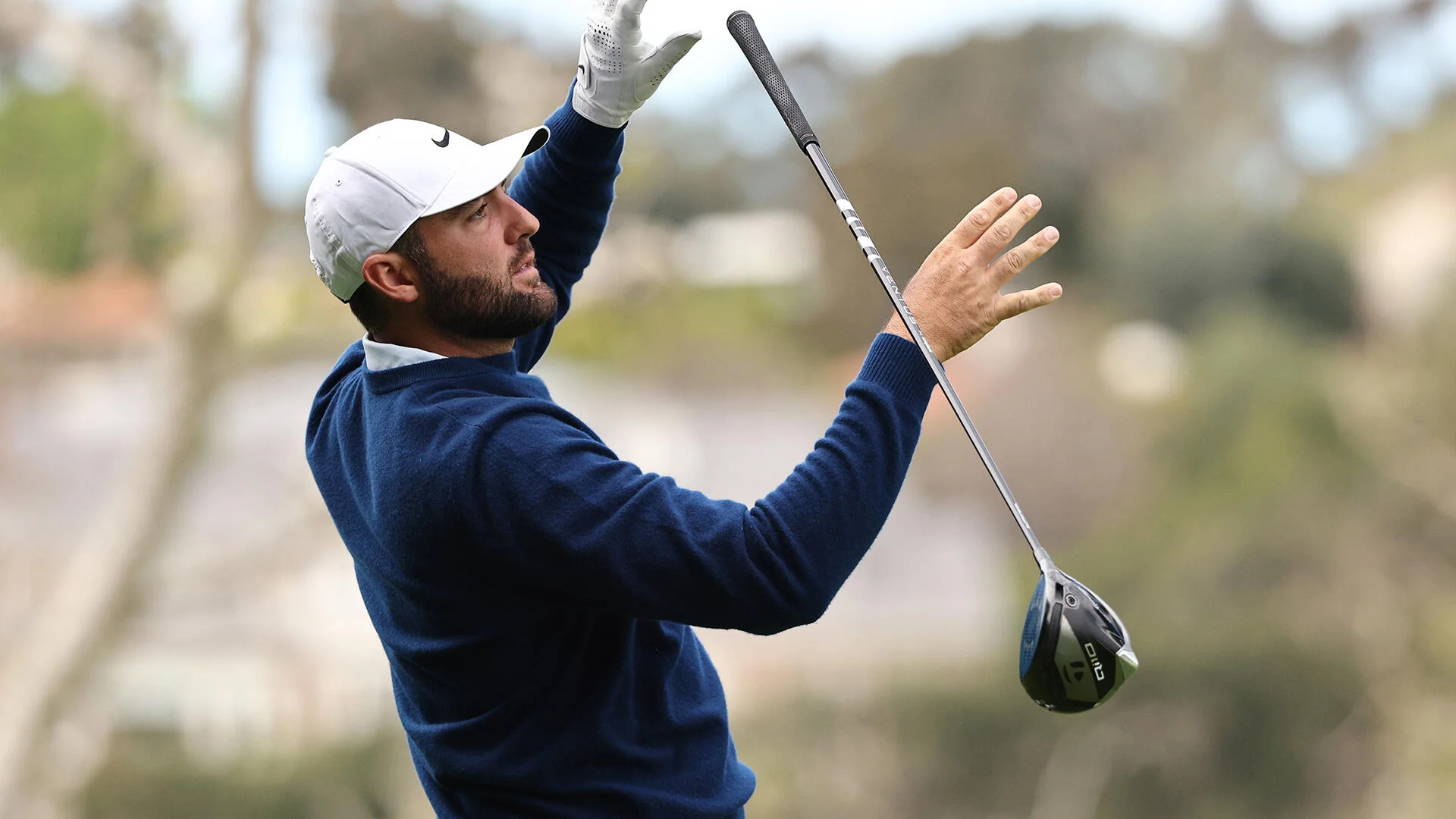

The Scottie Scheffler Paradox: Why Slow Starts Might Be the Best Thing for Golf
Listen, I’ve been covering professional golf for 35 years, and I’ve learned that context is everything in this game. So when I read that Scottie Scheffler—the world’s No. 1 player, a 20-time PGA Tour winner before age 30—finished T12 at the Genesis Invitational while somehow nearly extending a 18-tournament top-10 streak, my first instinct wasn’t to panic. My second instinct was more interesting: I wanted to understand what we’re actually witnessing here.
Because that’s the thing about covering a generational talent. The narrative can flip on its head depending on which lens you’re looking through.
The Slow Start That Isn’t Really a Slow Start
Let me be clear about what Scheffler’s early 2026 season actually represents. The man won his season debut at the American Express. He finished one stroke outside a playoff at Phoenix. He closed with a 63—featuring three final-round eagles—to nearly win Pebble Beach. At Riviera, he shot 62 over his final three rounds while the tournament winner managed 63 total.
And yet the headline is: "slow starts."
Here’s what strikes me about this framing, and I think this is important for fans to understand: we’ve allowed our expectations of Scheffler to become so impossibly high that a T12 finish at a signature event—where he was literally fighting to make the cut through 36 holes—reads as a disappointment. That’s not a critique of Scheffler. That’s a reflection of how dominant he’s become.
In my three decades watching the tour evolve, I’ve seen dominant players before. I caddied for Tom Lehman during his peak years. I covered Tiger’s entire run. But there’s something almost unsettling about how quickly Scheffler has reset the baseline for what we consider "acceptable" performance at his level.
The Actual Problem—And Why It Matters
Now, don’t misread me. The slow starts are real, and they do matter, but not for the reasons you might think. Scheffler opened the Genesis at 5-over through 10 holes. He needed to make an 8-foot par putt on hole 36 just to avoid missing a tournament with no cut. That’s not normal, even for someone of his caliber.
The question worth asking—and one the article frames beautifully—is whether these rough openings cost him something meaningful. At Riviera specifically, Scheffler’s 18-under over the final 62 holes actually outpaced champion Jacob Bridgeman’s 18-under winning total. Had Scheffler not played those opening holes like a handicapper, we’re not having a conversation about a missed cut scenario; we’re talking about another trophy at Tiger’s tournament.
"Scheffler played his final 62 holes in 16 under, while Bridgeman won the tournament at 18 under. Over the last three rounds, Scheffler clipped the winner by a shot."
That’s the frustrating part for someone like me who appreciates precision in golf. Because what it reveals is that Scheffler’s problem isn’t long-term consistency or overall quality—it’s these isolated, inexplicable windows of poor play that are costing him.
The Big Three Conversation Nobody Expected
Here’s where I think this gets really interesting from a legacy standpoint. Before this season, Scheffler had already won at two of what I call the "Big Three"—the player-hosted invitationals that carry genuine historical weight. He’s won at Arnold Palmer’s place (Bay Hill). He’s won at Jack’s place (Muirfield Village). But Tiger’s place—Riviera—continues to elude him.
The numbers tell you everything about how rare it is to conquer all three:
Players to win at least two of the big three:
- Tiger Woods: 13 titles
- Fred Couples: 4 titles
- Ernie Els: 4 titles
- Kenny Perry: 4 titles
- Scottie Scheffler: 4 titles
- Tom Watson: 4 titles
Only Fred Couples and Ernie Els have won all three. That’s it. In the modern era. At the most prestigious non-major tournaments on the PGA Tour schedule.
Scheffler is sitting at 4 combined wins, which puts him in rarefied company already. But the Genesis Invitational represents something different. As the article notes, Tiger’s tournament is Tiger’s tournament in a way that carries historic weight beyond mere tournament wins.
The Grit We’re Actually Watching
What I keep coming back to—and what I think casual fans might be missing—is the competitive character this early season is revealing. Scheffler’s ability to shoot 16-under over his final 62 holes after starting so poorly isn’t just impressive golf. It’s a statement about mental toughness that reminds me of the very best players I’ve covered.
"While these rough starts have put Scheffler in holes, they have allowed us to see his true competitive grit. That no-quit attitude is reminiscent of a boxer who has taken punch after punch to the point that he can’t see out of one eye, but he still manages to stay on his feet and go another round."
That metaphor resonates because it’s accurate. When you’re five-over through ten holes in a tournament with no cut, you’ve got a choice: accept it or fight through it. Scheffler keeps fighting.
What This Means for 2026
Here’s my take: Scheffler’s slow starts haven’t hindered his season yet because they haven’t cost him tournaments he should’ve won. The American Express was his. Phoenix was a play away. Pebble Beach was close. But Riviera? That one stings differently because of what it represents historically.
The positive development here is that we’re getting a clearer picture of what Scheffler needs to work on. It’s not his ability to close tournaments. It’s those opening windows where his game occasionally abandons him. If he can solve that—even incrementally—we’re looking at a player who could establish himself as the most dominant force in golf since Tiger’s absolute peak.
He remains the betting favorite at all four majors this year. That tells you everything you need to know about where the golf world actually stands on Scheffler’s abilities. The T12 at Riviera wasn’t a referendum on his talent. It was a reminder that even the best players occasionally have to earn their way back into tournaments.
And watching him do that? That’s the real story.
