

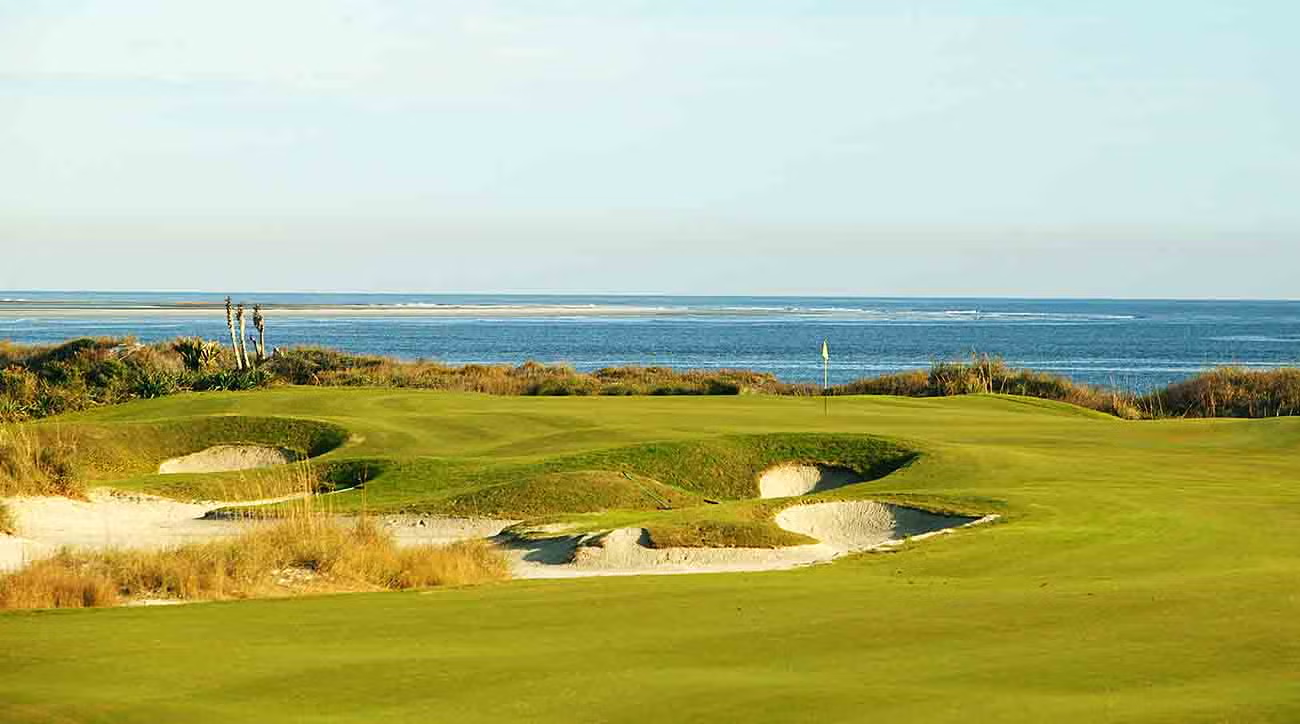

Ah, the Ocean Course at Kiawah Island. Just the name conjures images of windswept dunes and the relentless roar of the Atlantic. I’ve been fortunate enough to walk its hallowed grounds, feel the salt spray on my face, and yes, succumb to the exquisite torture Pete Dye so masterfully inflicted. This isn’t just a golf course; it’s an experience, a raw, elemental duel between man, nature, and the mischievous genius of one of golf’s most iconic architects.
My first impression, driving along the low-lying coastal road as the course slowly reveals itself, was one of understated grandeur. There are no towering clubhouses or elaborate flourishes; just pure, unadulterated links golf stretching as far as the eye can see. The Dyes – Pete and his equally talented wife, Alice – didn’t just build a course here; they sculpted a canvas for drama, a stage purpose-built for the crucible of competition.
A War by the Shore & Dye’s Philosophy
The course was conceived with a singular, ambitious goal: to host the Ryder Cup. In 1991, it delivered in spades, giving us “The War by the Shore.” This wasn’t some gentle parkland setting; this was a battleground, where every shot felt consequential, every gust of wind a strategic variable. It’s hard to imagine another course rising from scratch to such prominence so quickly, but then again, Pete Dye wasn’t just any architect.
Dye, often dubbed the “Marquis de Sod” by pros, had a unique philosophy, one that reveled in the mental game as much as the physical. He understood that golf, at its highest level, is as much a test of nerve as it is of skill. And nowhere is this more evident than in his closing holes.
“Exquisite torture was a Pete Dye specialty. Not for nothing did the pros call him the “Marquis de Sod.” Among his sadistic markers: a penchant for particularly penal closing holes.”
He didn’t just want you to hit a good shot; he wanted you to *think* you had to hit a perfect shot, often playing on visual deception. This is a hallmark of his work, and it’s on full, glorious display at Kiawah. The Ocean Course pulls inspiration from the great links courses of Scotland and Ireland, with its natural contours, fierce winds, and the ever-present threat of the Atlantic, yet it maintains its distinctly American, Dye-isk personality.
The Ever-Changing Beast
What truly sets Kiawah apart is its incredible adaptability. The Dyes, recognizing the unpredictable nature of coastal winds, designed a routing with unparalleled flexibility.
“With no prevailing breeze to design around, the Dyes built enough flexibility into the routing to play as two distinct courses depending on the conditions. On any given hole, there can be an eight-club difference from one day to the next.”
Imagine standing on a tee, assessing a 400-yard par-4. One day, it’s downwind, urging you to unleash a driver and potentially reach the green. The next, a staunch headwind transforms it into a beast requiring a heroic 3-wood and a long iron just to sniff the putting surface. This isn’t just challenging; it’s an intellectual puzzle, forcing you to adapt and strategize with every swing. This dynamism ensures that no two rounds ever feel the same, a quality I deeply appreciate in a course.
The 18th: “Kick you in the knickers”
Of course, I can’t talk about Kiawah without dwelling on its infamous 18th hole. It’s a par-4 that stretches nearly 490 yards for the pros, and it manages to live up to its reputation as a mind-bending closer.
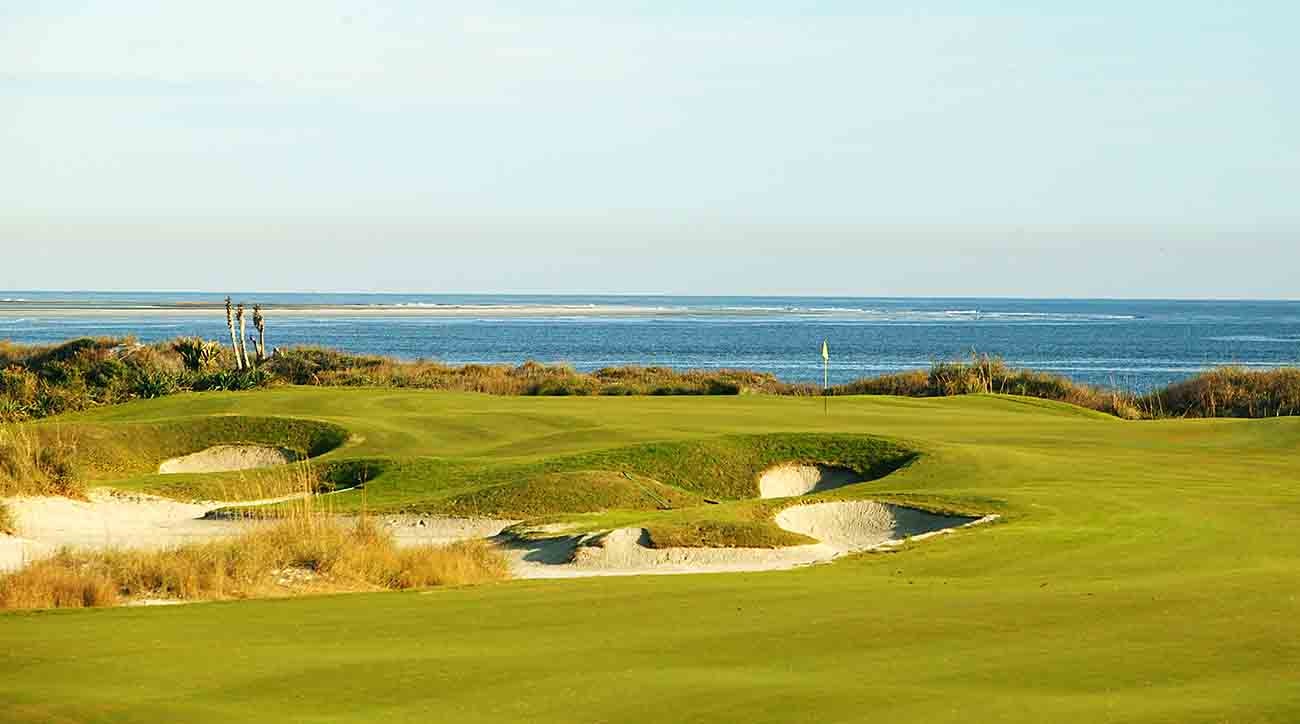
“The 18th at the Ocean Course at Kiawah Island belongs in that dastardly canon — a par-4 purpose-built to kick you in the knickers.”
From the tee, it appears almost impossibly narrow, with dunes on either side seemingly closing in on a sliver of fairway. This visual intimidation is pure Dye. While the fairway is indeed slender, its true menace lies in the mental pressure it exerts. The prescribed tee shot is a gentle left-to-right fade, but any deviation, any pulled hook or pushed slice, and you’re in the treacherous sand. The green, tucked precariously amongst the dunes, offers little respite, demanding precision even after a solid approach.
We’ve seen legends falter here. Hale Irwin in ’91, with a snap-hook that ended his Ryder Cup hopes. Bernhard Langer, needing a mere six-foot putt for victory, watched it graze the edge and stay out. It’s a testament to Dye’s design that even the game’s best can be humbled so profoundly. These weren’t just bad shots; they were moments where the immense pressure of the moment, amplified by Dye’s diabolical design, manifested directly into the outcome.
Playing the Ocean Course
If you’re a serious golf architecture aficionado, or simply someone who appreciates a genuine challenge, playing the Ocean Course is an absolute must. Located on Kiawah Island, South Carolina, it’s a resort course, meaning it’s accessible to the public, though reserving a tee time and staying on the island is highly recommended. Be prepared for a walk; it’s one of the few courses you can still play without a cart. And embrace the wind – it’s as much a part of the experience as the meticulously crafted bunkers and unforgiving waste areas.
Before you go, understand that this isn’t a course designed to make you feel good. It’s designed to test every facet of your game – your power, your precision, your creativity, and most importantly, your nerve. But for a golf architecture enthusiast like myself, that’s precisely what makes it great. It’s a masterclass in strategic design, a symphony of challenge and beauty, and a lasting monument to Pete Dye’s audacious vision.
