

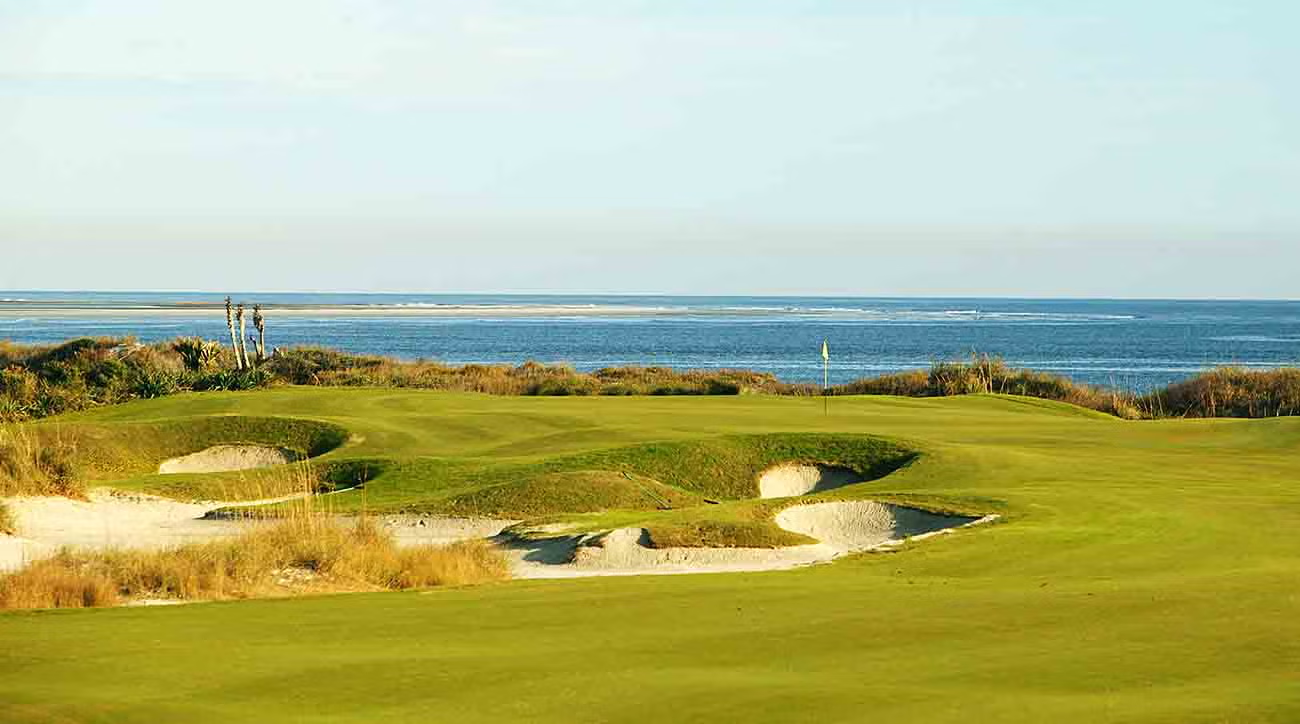

There are courses you play, and then there are courses that play you. Pete Dye, that mischievous maestro of linksland, had a particular knack for the latter. And nowhere is his genius, or perhaps his gleeful sadism, more apparent than at the Ocean Course at Kiawah Island. It’s a place I’ve been fortunate enough to walk, club in hand, feeling the wind whip off the Atlantic and the grit of the sand beneath my spikes. It’s not just a golf course; it’s a profound experience.
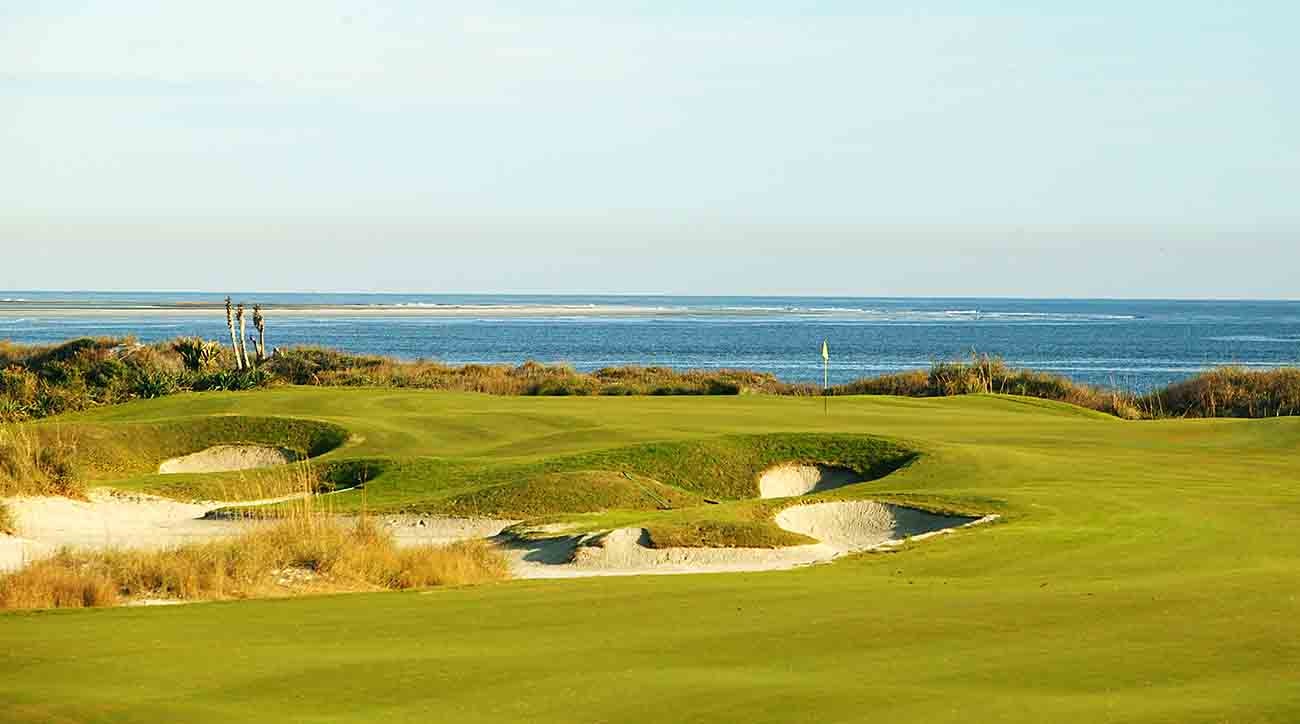
My first impression of Kiawah was of raw, untamed beauty. The course unfurls along the South Carolina coastline, a stark, mesmerizing canvas of dunes, salt marsh, and the boundless ocean. You can practically taste the salt in the air, and the roar of the waves is a constant companion. It’s truly a course born of its environment, a testament to Pete and Alice Dye’s ability to bend nature to their will while simultaneously celebrating its fierce independence.
The Dyes, masters of strategic design, built the Ocean Course for one singular, monumental occasion: the 1991 Ryder Cup. This wasn’t a course that evolved over decades; it was conjured into existence to host one of golf’s most dramatic spectacles. This purpose-built philosophy permeates every inch of the design. The course’s routing is a masterclass in adaptability. With no prevailing breeze to rely on, the Dyes ingeniously crafted a layout that can transform with the wind.
“Drawing on the traditions of Scottish and Irish links, the Ocean Course unfolds along the Atlantic coast of South Carolina, at the mercy of winds that never behave the same way twice. With no prevailing breeze to design around, the Dyes built enough flexibility into the routing to play as two distinct courses depending on the conditions.”
I can attest to this shapeshifting nature. I’ve played it on a calm, almost serene morning where the flags drooped lazily, and then again when a stiff onshore gale turned a seemingly benign par-4 into an all-out battle against the elements. This variability is what makes it so endlessly fascinating and, at times, infuriating. The article perfectly captures the dramatic shifts, stating, “On any given hole, there can be an eight-club difference from one day to the next.” That’s not hyperbole; that’s the Dye reality.
The Marquis de Sod’s Signature Finish
Pete Dye earned the moniker “Marquis de Sod” for a reason, and if there’s one hole that encapsulates his philosophy of “exquisite torture,” it’s the 18th at Kiawah. It’s a beast, plain and simple, a near 490-yard par-4 that demands both power and precision, but more than anything, it demands mental fortitude. Its purpose, as the article so aptly puts it, is “to kick you in the knickers.”
From the tee, the 18th is a visual intimidation. The fairway appears impossibly narrow, squeezed between towering dunes. Your eye, instinctively drawn to the hazards, perceives the landing area as far smaller than it actually is. This is classic Dye – playing mind games before you even swing. He wants you to think about what you *could* lose, rather than what you *can* gain. The ideal shot, a gentle left-to-right fade, must be threaded between these psychological walls. Miss either way, and you’re in the sand, likely facing an awkward stance and a perilous recovery shot.
And then there’s the green. Tucked majestically into the dunes, it’s a testy target, often exposed to the relentless winds. Even after navigating the tee shot and a long approach, there’s no guarantee of an easy finish. Pete Dye had little patience for players who griped about his punishing finales. His perspective was always one of opportunity:
“He framed such holes as opportunities — a chance at the kind of lasting fame Ben Hogan achieved with his iconic 1-iron on the 72nd hole of the 1950 U.S. Open at Merion, which earned him a place on the cover of LIFE magazine.”
Yet, at Kiawah in ’91, the 18th proved to be a stage not for Hogan-esque glory, but for gut-wrenching drama and missed opportunities. Hale Irwin’s ill-fated snap-hook and Bernhard Langer’s agonizingly close miss for the Ryder Cup underscore the hole’s ability to humble even the game’s best. That’s the beauty and the brutality of a Dye finish; it’s designed to extract every last ounce of nerve and skill, and sometimes, it just extracts heartache.
A Destination Like No Other
Visiting Kiawah Island is an experience in itself. The resort offers more than just golf, though for golf architecture enthusiasts like myself, it’s the primary draw. The Ocean Course is open to resort guests and Kiawah Island Club members. It’s a course that demands respect, offers immense challenge, and provides some of the most breathtaking coastal views you’ll ever encounter on a golf course. Each hole feels distinct, a chapter in a grand narrative that only the wind and the ocean could truly tell.
So, if you’re looking for a golf destination that tests every club in your bag and every fiber of your being, that wraps you in natural beauty, and offers a deep dive into the strategic mind of one of golf’s greatest architects, then Kiawah’s Ocean Course should be at the very top of your list. Just be prepared for a fight, especially when you step onto that treacherous 18th tee. It’s a fight you won’t soon forget, win or lose.
