

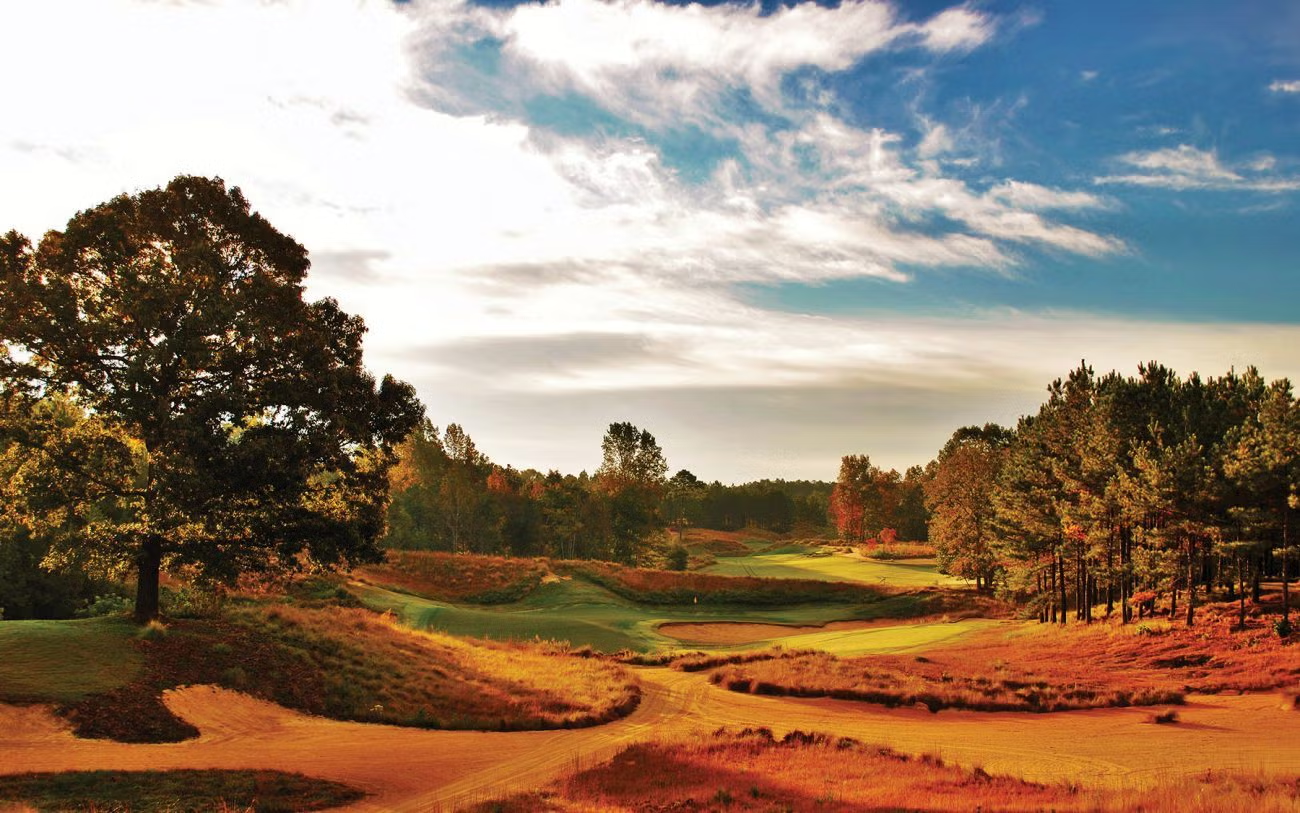

The Sandhills of North Carolina are hallowed ground for golf architects. It’s a region where the pines hum a history whispered by Donald Ross, and sandy soil beckons the most visionary of designers. But amidst the classical elegance, there exists a wild, unbridled spirit, a course that dares to defy convention and challenges every preconceived notion of what golf should be. I’m speaking, of course, of Mike Strantz’s iconoclastic masterpiece, Tobacco Road. 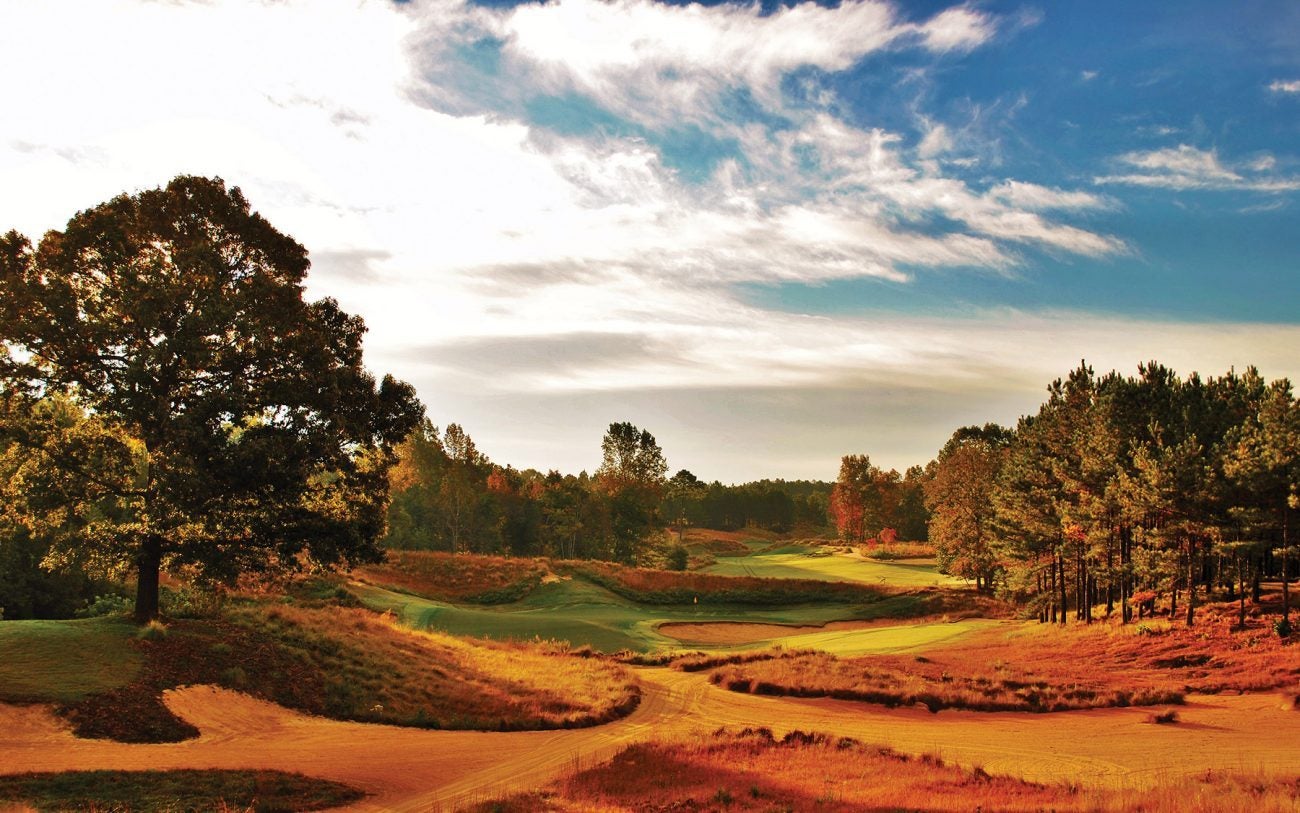
Having traversed fairways across six continents, I’ve developed an acute appreciation for the truly unique, for those courses that etch themselves into your memory not just for their beauty, but for their sheer audacity. Tobacco Road has always been one of those. It’s a golf course designed with a gleeful disregard for traditional expectations, a roller-coaster ride of blind shots, towering dunes, and greens that twist and contort with a mind of their own. It’s a funhouse mirror reflecting the very best of golf’s adventurous spirit, and it’s a design philosophy I’ve long admired.
Strantz, a true maverick who learned under the meticulous eye of Tom Fazio before blazing his own trail, sadly left us too soon. Yet, his legacy, particularly at Tobacco Road, continues to inspire and evolve. So, when I heard rumblings about a new, short-form addition to this legendary property, my ears perked up. And what’s emerging from the sandy pine forest near the 12th and 13th fairways sounds like a perfectly fitting homage to Strantz’s unconventional genius: The Matchbox.
A Fitting Companion: The Matchbox Arrives
In an era where short courses are popping up like wildflowers on a links course, Tobacco Road owner Mark Stewart isn’t merely following a trend; he’s interpreting it through a distinctly Strantzian lens. The Matchbox, a 12-hole par-3 course, is set to be a playful “Mini-Me” of its big brother, scaled down but certainly not tamed in spirit. It’s a concept that resonates deeply with the spirit of innovation that Strantz championed.
“The late, great architect Mike Strantz never hewed to convention. So it’s only fitting that a side project spawned by his most iconoclastic creation skips a few conventions of its own.”
The course, routed through a mere five acres with 40 feet of elevation change, is a testament to clever design and resourcefulness. What truly fascinates me, from an architectural standpoint, is the choice of materials. The Matchbox will integrate synthetic turf blended seamlessly into the natural landscape. Now, I’m a purist when it comes to golf courses, revering the natural feel of earth and grass. But Stewart’s reasoning here is pure genius, reflecting a deep understanding of maintaining the Strantz legacy without compromise.
“The Matchbox will be built with synthetic turf blended into the natural landscape, allowing for more consistent conditions without having to clear the tree canopy for sunlight. It will also feature a mix of real-sand and faux bunkers.”
This pragmatic approach allows the course to maintain fantastic, consistent conditions year-round, unburdened by the relentless demands of sunlight, and crucially, without sacrificing the existing tree canopy. It respects the natural environment, working with it rather than against it – a principle I believe Strantz himself would have applauded. It’s a fascinating blend of natural and man-made, promising reliable playability while preserving the Sandhills aesthetic.
Designing for Delight and Deception
The design team, Carlton Marshall Golf Design, featuring Justin Carlton and Chris Marshall, are working alongside Mark White, a former Strantz apprentice and one of Tobacco Road’s original shapers. This connection to Strantz’s initial vision is critical. It ensures that the spirit, the very DNA of Tobacco Road, will be imb. They’re threading the new holes through a rugged landscape that once supplied raw material for Strantz’s initial grand vision (a former gravel mining site) – those very spoil piles and sandy ridges that gave the original course its dramatic contours.
The individual holes themselves promise plenty of Strantzian theatrics. We’re talking about a blind 60-yard shot from an elevated tee on the 3rd hole – pure Strantz in its delightful deception. The 7th demands a 40-yard carry over a cove, adding a touch of drama to a compact space. And the 9th, designed to channel the “in-your-face opening” of the main course, will play through two large mounds. This is not just a collection of short holes; it’s a distillation of Strantz’s architectural philosophy, scaled down for maximum fun and strategic thought.
It’s also intriguing to hear that a part of the Matchbox routing will play along a pond that even many Tobacco Road regulars didn’t know existed. Stewart mentioned that this pond was considered by him and Strantz for a par-3 during the original design process, but didn’t make the final cut. Now, years later, it finds its moment in the sun, a full-circle moment that adds another layer of narrative to the property.
The Name: A Stroke of Genius
And what of the name? “The Matchbox.” It’s brilliant. Stewart, who says he’s had the name in mind for over two decades, explains that it not only subtly nods to tobacco (the matches for lighting), but playfully embraces the idea of a golf match, and even winks at the intimate scale, like a matchbox car.
“I think he’d be thrilled,” Stewart said, referring to Strantz. “It goes along with his whole maverick approach.”
I agree completely. Strantz eschewed the conventional. He created courses that made you think, made you laugh, and sometimes made you curse (in the best possible way). He wasn’t afraid to be different. The Matchbox embodies that spirit of playful rebellion. It’s an affirmation of the principle that golf should be fun, accessible, and thought-provoking, regardless of the yardage.
Tobacco Road, a “wild statement piece,” began by perplexing some critics but quickly drew a massive following, cementing its status as a Sandhills must-play. The Matchbox is poised to extend that legacy, offering a fresh, yet distinctively familiar, experience. For those visiting the Sandhills, whether tackling the intimidating beauty of Tobacco Road or exploring the region’s more classical layouts, The Matchbox will be an essential stop. It offers a quicker, perhaps more whimsical, way to engage with the unique architectural vision that Mike Strantz left behind, a vibrant echo of his unforgettable genius.
