



There are some courses where the very name evokes a sense of history, of a bygone era where golf was a raw, strategic battle against the land. Yale University Golf Course is undoubtedly one of them. For years, this New Haven gem, sculpted by the legendary hands of Charles Blair Macdonald and Seth Raynor, has been a whispered legend among golf architecture enthusiasts like myself – a course revered for its audacious design, yet mourned for its fading luster. But the whispers have now turned into a roar of anticipation, as Yale emerges from a monumental restoration by Gil Hanse and Jim Wagner, ready to reclaim its rightful place.
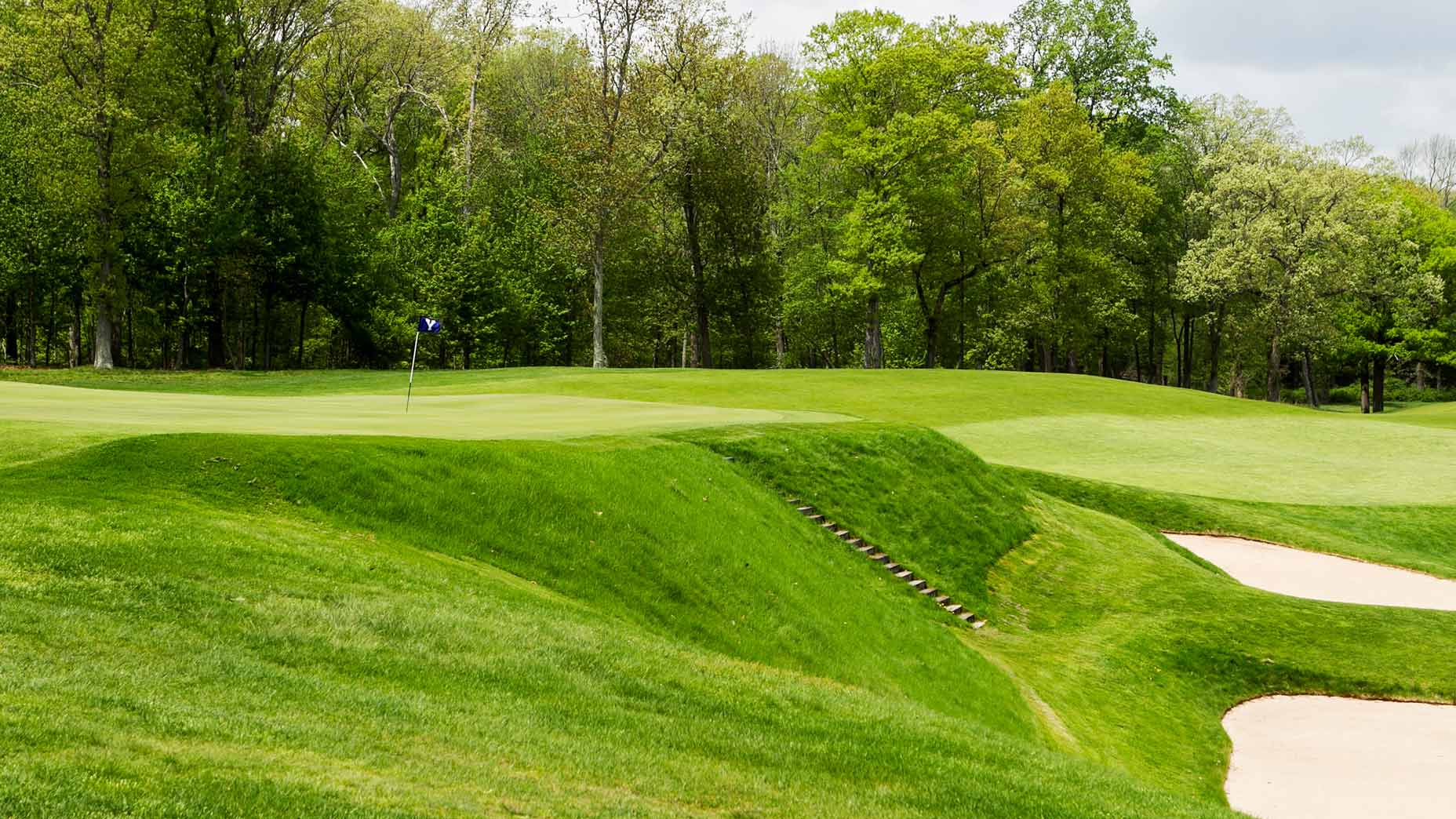
My mind immediately goes to the architects. Macdonald, the father of American golf architecture, brought the strategic principles of St. Andrews to the New World, and his protégé, Raynor, was a master at transplanting these templates with remarkable spatial economy. The Yale property, an expansive, undulating canvas, must have been thrilling for them. It’s the kind of terrain that allows for grand statements, for greens that feel like natural amphitheaters and bunkers that demand respect.
For quite some time, however, Yale was more a ghost of its former grandeur. I’ve heard the stories, and sadly seen the pictures – once vibrant lines obscured by encroaching trees, greens that had lost their bold contours, and a general air of faded glory. It once graced GOLF’s Top 100 Courses in the World, a testament to its original brilliance, but eventually, conditioning issues led to its regrettable departure from that prestigious list.
“Long revered by design buffs, Yale had become something of a tarnished gem. Though it retained the bones of a design that Macdonald himself declared unmatched by any inland course in America or Europe, tree encroachment had narrowed playing corridors, accumulated alterations had muted the original strategic intent, and maintenance struggles — which peaked during the pandemic — left the course a shadow of its former self.”
Macdonald, a man not prone to hyperbole, once called this design “unmatched by any inland course in America or Europe.” That’s a bold declaration, and it speaks volumes about what he and Raynor achieved here. To imagine such genius being slowly eroded by time and neglect is disheartening for any design purist.
A Return to Original Grandeur
The Hanse-Wagner restoration, which began in late 2023, is nothing short of a revival. Having followed Hanse’s work at places like Pinehurst No. 4 and Oakland Hills, I know his reverence for classic architecture. His approach isn’t about imposing a new vision, but rather meticulously unearthing and restoring the original intent of the masters. This isn’t just a facelift; it’s a deep dive into the architectural soul of the course.
And what souls they are! Macdonald and Raynor are renowned for their use of “template holes” – strategic concepts derived from the Old World’s finest. To hear that these templates have been brought back to life at Yale sends shivers down my spine. The par-5 3rd, for instance, now boasts a rebuilt Double Punch Bowl green. Imagine approaching this green, where the putting surface dips dramatically in the center, creating an exhilarating and often maddening dilemma. This isn’t just a green; it’s a strategic puzzle demanding precision and courage.
Then there are the rare inverted bunkers on the 6th hole, now restored. These aren’t your typical scooped-out hollows; they often rise above the playing surface, creating bold, intimidating features that truly test your nerve. And the fabled double fairways on Nos. 3 and 18 – what a magnificent strategic decision! These aren’t just redundant strips of grass; they offer distinct paths to the green, each with its own risks and rewards, forcing players to think critically from the tee.
“The Hanse-Wagner restoration was meant to be a faithful one, returning features that had been softened, muted or simply overgrown.”
The course has been closed since late 2023 for this monumental undertaking, and the scope of work was extensive. Tree removal, a hallmark of many modern restorations, has reopened critical sightlines and re-established the original width that Macdonald and Raynor intended. This isn’t just about aesthetics; it’s about reintroducing the strategic options that were lost when fairways narrowed and strategic angles vanished behind walls of foliage. New championship tees, pushing the course beyond 7,000 yards, will ensure that this historic layout can challenge the long-hitting modern professional, while still offering a delightful experience for the everyday golfer.
Crucially, the greens have been rebuilt to USGA specifications for the first time in the course’s history, alongside a new irrigation system. This addresses the “conditioning issues” head-on, ensuring that the ground game, so vital to classic golf courses, can be played as intended. No longer will a magnificent green complex be let down by inconsistent conditions.
“For the first time in the course’s history, the greens have been rebuilt to USGA specifications, and a new irrigation system has been installed throughout.”
Planning Your Visit
The anticipation is palpable, and the reopening on April 28th, coinciding with the course’s centennial, feels incredibly significant. It’s more than just a golf course; it’s a living museum of golf architecture, brought back to life.
So, can you play it? Yes, but plan ahead. Reservations for outside play will open 10 days in advance, a clear indication of the anticipated demand. Prepare for the rates: $150 for Yale students and faculty, $250 for university affiliates, and $350 for non-affiliated golfers. While it might seem steep, given the historical significance, the architectural pedigree, and the comprehensive restoration, it’s an investment in a truly unique golfing experience.
Having studied and played many of the world’s great courses, I can confidently say that places like Yale, with their rich history and profound architectural statements, offer something truly special. It’s not just a round of golf; it’s an education in design, a journey through time, and a strategic duel with the minds of masters. I’m already checking my calendar, eager to walk those hallowed fairways and experience this magnificent restoration firsthand.
