



Ah, Yale. The very name conjures images of hallowed halls and intellectual pursuits. But for the discerning golf architect enthusiast, it whispers of another kind of genius – the foundational artistry of Charles Blair Macdonald and Seth Raynor. For too long, the Yale Golf Course in New Haven, Connecticut, a grand dame of American golf, had been like a beloved, antique tapestry, its once vibrant colors dulled by time and neglect. But Mac Nation, it is with immense pleasure that I bring you news of its glorious reawakening.
I’ve walked the grounds of many courses that claim a connection to Macdonald and Raynor, often finding their original brilliance diluted by well-meaning but ultimately misguided alterations. Yet, Yale held a special place in the pantheon of courses, a design that, even in its tarnished state, hinted at the sheer audacity and strategic depth of its creators. The news of its comprehensive restoration by Gil Hanse and Jim Wagner, coinciding perfectly with its centennial, has been the most anticipated revival in recent memory for anyone who truly appreciates golf course architecture.
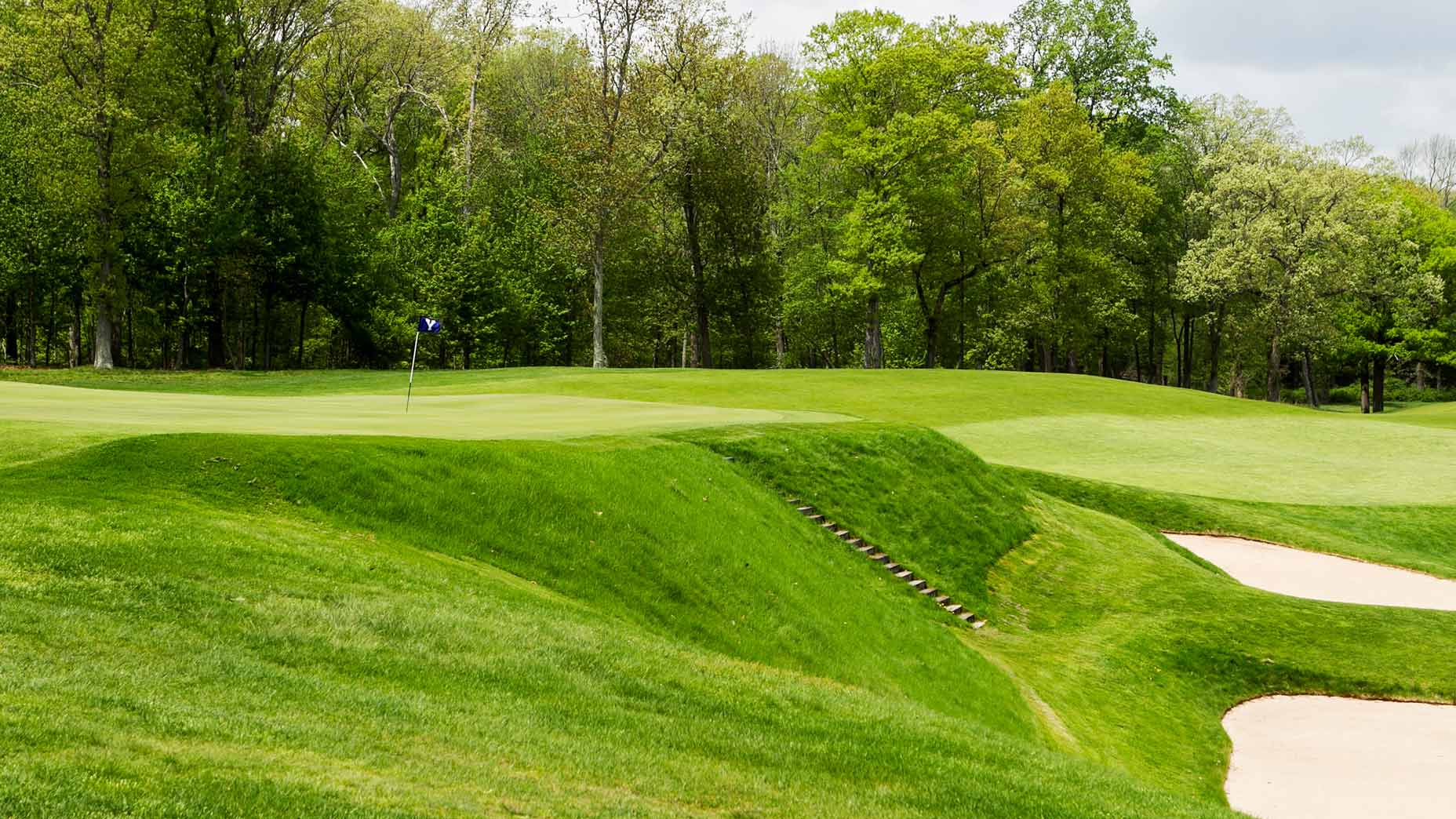
A Phoenix From the Greens
For years, this landmark design, once a steady presence on GOLF’s ranking of Top 100 Courses in the World, had sadly slipped from those coveted lists. The reasons were clear to anyone who visited: encroaching trees that choked playing corridors, subtle alterations that eroded the original strategic intent, and maintenance challenges that, particularly during the pandemic, left the course a shadow of its former self. It was, as the source article aptly puts it, a “tarnished gem.”
“Though it retained the bones of a design that Macdonald himself declared unmatched by any inland course in America or Europe, tree encroachment had narrowed playing corridors, accumulated alterations had muted the original strategic intent, and maintenance struggles — which peaked during the pandemic — left the course a shadow of its former self.”
Macdonald, a man rarely given to understatement, made significant pronouncements about his favored courses, and his praise for Yale was particularly high. To hear that such a course, once deemed superior to any inland course, had fallen on hard times was disheartening. But the Hanse-Wagner restoration aimed for nothing less than a faithful resurrection. This wasn’t about imposing new ideas, but rather meticulously peeling back the layers of time and neglect to reveal the original masterpiece.
The Art of the Template
What makes a Macdonald/Raynor course so compelling is their masterful application of “template” holes, iconic designs borrowed from the great links courses of the British Isles, then reimagined for American landscapes. Yale, even in its compromised form, always showcased glimpses of these brilliant concepts. The recent restoration, however, has brought them roaring back to life. Think about the fabled Double Punch Bowl green on the par-5 3rd. This isn’t just a green; it’s a topographical wonder, rebuilt to its original specifications, promising an exhilarating and often maddening putting experience. The source article highlights this, and for good reason – it’s a hallmark of the Macdonald aesthetic.
The restoration didn’t stop there. Rare inverted bunkers on the 6th hole, a subtle yet devilish feature, have been meticulously restored. And perhaps one of the most visually striking and strategically fascinating elements of Yale – its memorable double fairways on Nos. 3 and 18 – are once again clear and in play. These bifurcated fairways offer compelling strategic choices right from the tee, forcing players to consider risk and reward, a hallmark of truly great design. Tree work, a critical component of any thoughtful restoration, has reopened vital sightlines, re-establishing the sense of expansive space and strategic options that define the original intent.
Beyond the architectural details, the physical infrastructure has also received a much-needed overhaul. For the first time in the course’s history, the greens have been rebuilt to modern USGA specifications, ensuring consistency and quality of putting surfaces. A new irrigation system has been installed throughout, addressing one of the core issues that led to its decline. These are not merely functional upgrades; they are foundational elements that allow the architectural integrity to shine through consistently.
Playing the Centenarian
The course now stretches beyond 7,000 yards from the new championship tees, ensuring it remains a formidable challenge for the modern game. This restoration isn’t just about preserving history; it’s about making it relevant and exhilarating for today’s golfer, while honoring the genius of its creators.
“The Hanse-Wagner restoration was meant to be a faithful one, returning features that had been softened, muted or simply overgrown.”
The reopening on April 28th marks not just a centennial celebration but a triumphant return. While I haven’t yet had the opportunity to walk the newly restored fairways, the anticipation is palpable. Based on the meticulous work Hanse and Wagner have done on other classic restorations, I expect a course that not only respects its heritage but truly sings with its original glory.
For those eager to experience this architectural gem, reservations are naturally tight. Yale students and faculty receive priority with 14-day advance bookings at a rate of $150. University affiliates can book 10 days in advance for $250. And for the rest of us architecture aficionados with no school affiliation, preparing to shell out $350 for a round, the window for 10-day advance bookings opens when their reservation system is fully online. Given the significance of this restoration and the pedigree of its designers, that price tag will undoubtedly be seen as a worthy investment in a profound golf experience.
Yale Golf Course isn’t merely a place to play 18 holes; it’s a living museum of golf architecture, a masterclass in strategic design, and now, thanks to this thoughtful restoration, it stands ready to reclaim its rightful place among the world’s elite courses. I, for one, cannot wait to witness its brilliance anew.
