

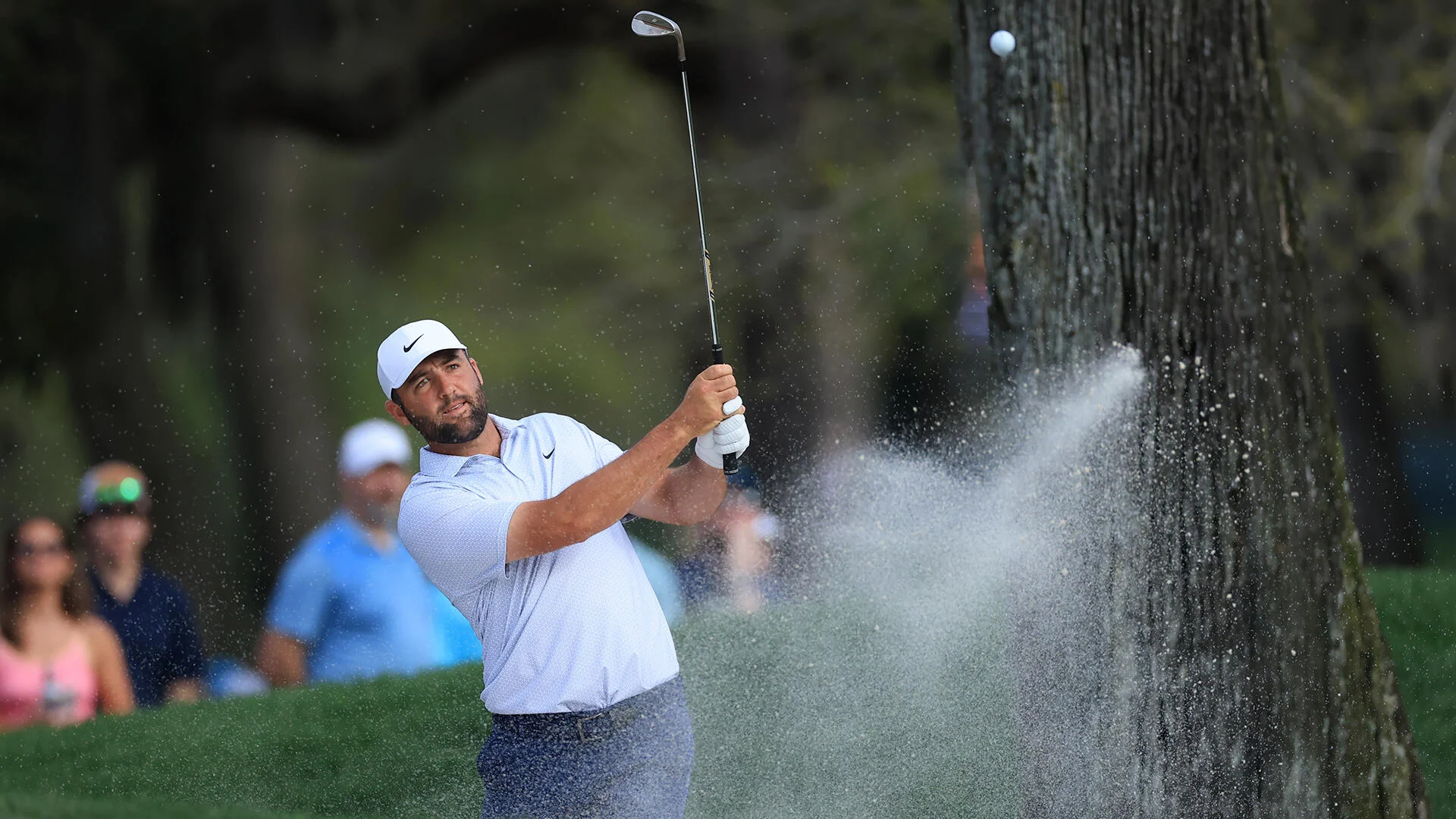

The Commitment Question: Why Scottie’s Self-Doubt Might Be Golf’s Best Sign
I’ve been around enough world-class golfers to know when something’s genuinely wrong versus when a champion is simply being a perfectionist. After 35 years on the beat, I can usually spot the difference in about five minutes. What I saw in Scottie Scheffler’s comments at TPC Sawgrass this week falls squarely in the latter category—and frankly, it’s oddly reassuring.
Here’s a guy sitting atop the world rankings, fresh off his 20th PGA Tour victory before turning 30, with a lifetime tour membership already secured. By any rational measure, Scottie Scheffler is having a career season. But he’s troubled. Not by external pressures or tour politics—this isn’t about LIV or the merger drama. He’s troubled by himself, which in my experience, is exactly when elite players are most dangerous.
When the World No. 1 Questions Himself
I watched Ted Scott and Randy Smith work with Scottie on the range Wednesday morning, and what struck me wasn’t the technical precision—everyone expects that from his team. What caught my attention was the repetition of commitment checks. The left-hand grip examination. The re-grip to confirm placement. The alignment shuffle and reexamine. Ball position secured in the middle of his stance. Every. Single. Club.
This isn’t obsessive-compulsive behavior. This is problem-solving from someone who knows he’s slightly off but can’t quite locate the throttle.
“When it comes to my golf game and my expectations of myself, my expectations all are based around what I want for me mentally on the golf course as being committed to what I can do, and controlling that aspect. And so far, throughout this season, I’ve been really good in some spots and then some other spots I feel like I can improve in terms of my commitment to the shot.”
Notice what he’s not blaming: equipment failures, course setup, bad luck, or the pressure of being world No. 1. He’s owning it. Specifically, he’s identifying inconsistency in mental commitment, which is the kind of variable only a truly elite player can even perceive, let alone articulate.
The Driver Switch and the Bigger Picture
Yes, Scheffler swapped driver models this week—moving away from a two-year setup to something he trusted in his major championship runs. That’s headline fodder for some outlets. But let me tell you what that actually represents: a player removing distractions. Having spent three decades watching the tour, I’ve learned that when your equipment becomes a mental anchor point rather than a tool, it’s time to change it. Not because the old equipment was better—it probably wasn’t—but because your confidence isn’t where it needs to be.
His T24 at Bay Hill was his worst finish in more than a calendar year. His driver was a factor. But here’s what matters more: he identified the problem, tested half a dozen heads, and made a decisive move. That’s not panic. That’s precision.
The Commitment Conundrum
What fascinates me about Scheffler’s self-analysis is how honest it is. He’s essentially saying: “I know what I’m supposed to do. I know how to do it. But sometimes I’m not fully locked in on the execution.” That’s a rare admission from any player, let alone one ranked No. 1.
“I think you work on [commitment] through your practice. I think it’s pretty easy to sit up there and, like, after you hit a bad shot, I think there’s always something you can learn. And I guess it’s hard, I mean, it’s silly to say it’s just a feel thing, but it really is.”
In my years caddying for Tom Lehman and watching the greatest players operate, I learned that what separates the elite from the merely excellent isn’t talent or work ethic—it’s this exact thing Scheffler’s chasing. It’s the ability to make every decision from a place of absolute conviction, then execute without hesitation or second-guessing. Miss? Fine. But you missed fully committed to a plan, not caught between two thoughts.
The Hours Nobody Sees
Here’s what casual fans don’t appreciate about that Wednesday morning scene: Scheffler’s warmup. The short-game work. The putting drills. The afternoon practice session. The autographs signed for the youngsters crowding the ropes afterward. That’s not a player coasting on No. 1 ranking. That’s someone treating every practice round like he’s chasing the number for the first time.
I’ve covered 15 Masters. I’ve seen Tiger Woods at his peak. I’ve watched Rory McIlroy navigate expectation. The common thread among all of them? They never stopped asking harder questions of themselves than anyone else could ask.
“I want to be able to tell myself that I’m fully committed to what I was trying to do, and maybe there’s some little things I could do either in my preshot routine or in my visualization that will help me to become more committed.”
Why This Matters
Scottie’s recent results—strong finishes mixed with some surprising outside-the-top-10s—might look like a slump to some observers. I see something different. I see a champion recognizing that championship-level performance requires constant recalibration, not coast management.
The Players Championship this week will tell us whether he’s found what he’s seeking. But regardless of the outcome, I’m not worried about Scottie Scheffler. Worried players don’t work this hard at problem-solving. Worried players make excuses or swing radical changes. Scheffler’s doing the harder thing: looking inward and demanding more commitment from himself.
In 35 years, I’ve learned that’s usually when the really great ones pull away from the field. The question answers itself soon enough.
