


The Weight of the Moment: Why Ludvig Åberg’s Players Championship Quest Tells Us Everything About Modern Tour Golf
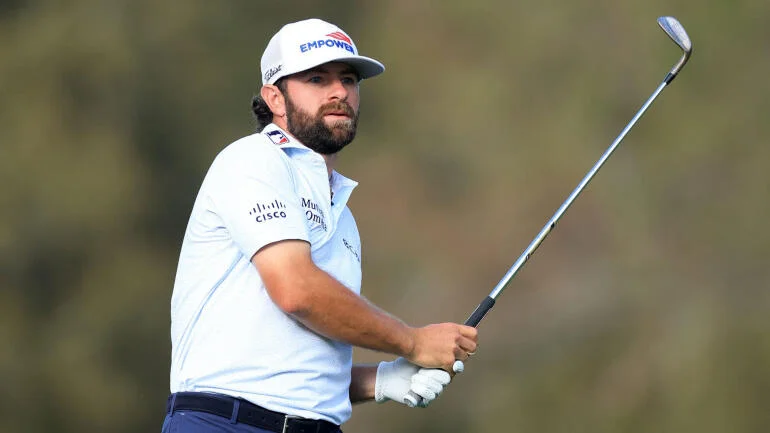
I’ve been covering professional golf for 35 years now, and I can tell you with certainty that Sunday at TPC Sawgrass this week represents something we don’t see often enough anymore—a genuinely compelling narrative arc where a young talent gets to prove whether he belongs among golf’s elite. Ludvig Åberg, the Swedish sensation who’s been turning heads since he arrived on the PGA Tour, will tee off at 1:40 p.m. ET against Michael Thorbjornsen as the leader, and what he does in the next four and a half hours will matter far more than just collecting a trophy and a massive paycheck.
"Only one round remains in the PGA Tour’s flagship event as Ludvig Åberg aims to convert his leads at the 36- and 54-hole points into the largest victory of his young career at The Players Championship."
That sentence might sound simple enough on the surface, but having spent my caddie years working in the pressure cooker of professional golf, I know exactly what Åberg is feeling right now. He’s slept on this lead for a second consecutive night, which is its own special kind of torture. You can’t turn your brain off. You’re replaying shots, imagining scenarios, wondering if you should have attacked that par-5 differently on Friday. It’s the loneliest part of tournament golf.
What strikes me most about this particular moment is how Åberg’s position exposes a fundamental tension in modern PGA Tour golf. Yes, he’s got a lead. Yes, he’s playing well. But the field behind him includes Scottie Scheffler, Xander Schauffele, and Rory McIlroy—essentially a murderer’s row of talent. In my day, having a four-shot lead going into Sunday felt more decisive. Now? It feels almost precarious. The quality of play has elevated so dramatically that any of three or four players in pursuit could realistically go out and shoot 63 to your 69 and win this thing.
"Scottie Scheffler starts his final round at 11:35 a.m. alongside first-round leader Maverick McNealy. The immediate chasing starts at 1 p.m. with Xander Schauffele hoping to rebound from his third-round 74 with Robert MacIntyre, who fired the lowest round of the day on Saturday."
Here’s what nobody’s talking about: the pairing and tee time structure tells you everything about what PGA Tour officials think about these players’ chances. Scheffler gets the prime real estate at 11:35 a.m.—late enough to see what Åberg does, early enough to finish before the evening shadows take over. Schauffele, a guy who shot 74 on Saturday, gets paired with MacIntyre, who played brilliantly. That’s not coincidental. That’s the Tour trying to set up narrative possibilities for the final hour.
In my three decades watching this sport evolve, I’ve learned that tee times are never random. They’re chess moves. The Tour wants Åberg to feel the pressure of knowing what’s happening behind him. They want the broadcast to be compelling. And with a $25 million purse sitting there—a figure that frankly blows my mind when I think about what we were playing for in the ’90s—every player in contention is going to leave everything on that golf course.
What I find genuinely encouraging about this scenario is that we’re potentially witnessing something increasingly rare: a young player getting a genuine opportunity to win a major championship-caliber event. The Players Championship exists in that strange space between a major and a regular tour event, and if Åberg closes this out, it legitimizes everything people have been saying about his talent. If he doesn’t, well, he gets another shot at it next year with even more experience under his belt.
But here’s the uncomfortable truth I’ve observed: not every player who leads going into Sunday wins. Sometimes the weight of the moment becomes too much. Sometimes a player like Schauffele, despite a poor third round, channels some inner competitive fire and simply plays better golf than the leader. That’s why these final rounds fascinate me more than almost any other sports spectacle.
The early tee times—starting at 7:35 a.m. with Takumi Kanaya—mean we’ll get a full day of golf context before Åberg and Thorbjornsen even hit their opening drives. Low scores posted throughout the day create pressure. A -15 total by early afternoon could make Åberg’s current position feel vulnerable in ways the scoreboard alone doesn’t reflect. This is the psychological warfare of tournament golf that television cameras can’t quite capture but that every professional competitor feels viscerally.
Looking at the complete tee sheet, I notice McIlroy going off at 8:35 a.m., very early for a defending champion only six shots back. That’s either a vote of confidence by the Tour that he won’t catch up, or… actually, no, that can’t be right. McIlroy’s got to feel like he’s still very much in this. Eric Cole, Kevin Roy, Patrick Cantlay, J.T. Poston—these aren’t household names in the way Scheffler or Schauffele are, but they’re accomplished pros who understand how to win.
The honest truth is this: Sunday at The Players Championship will be decided by nerves as much as skill. And Ludvig Åberg, for all his prodigious talent, is still relatively new to this particular pressure cooker. That’s not a criticism—it’s just the reality of his position. The guy who handles the weight of the moment best on Sunday will hold that trophy in the evening light.
That’s what I’ll be watching for, and that’s what makes this worth your time.
