

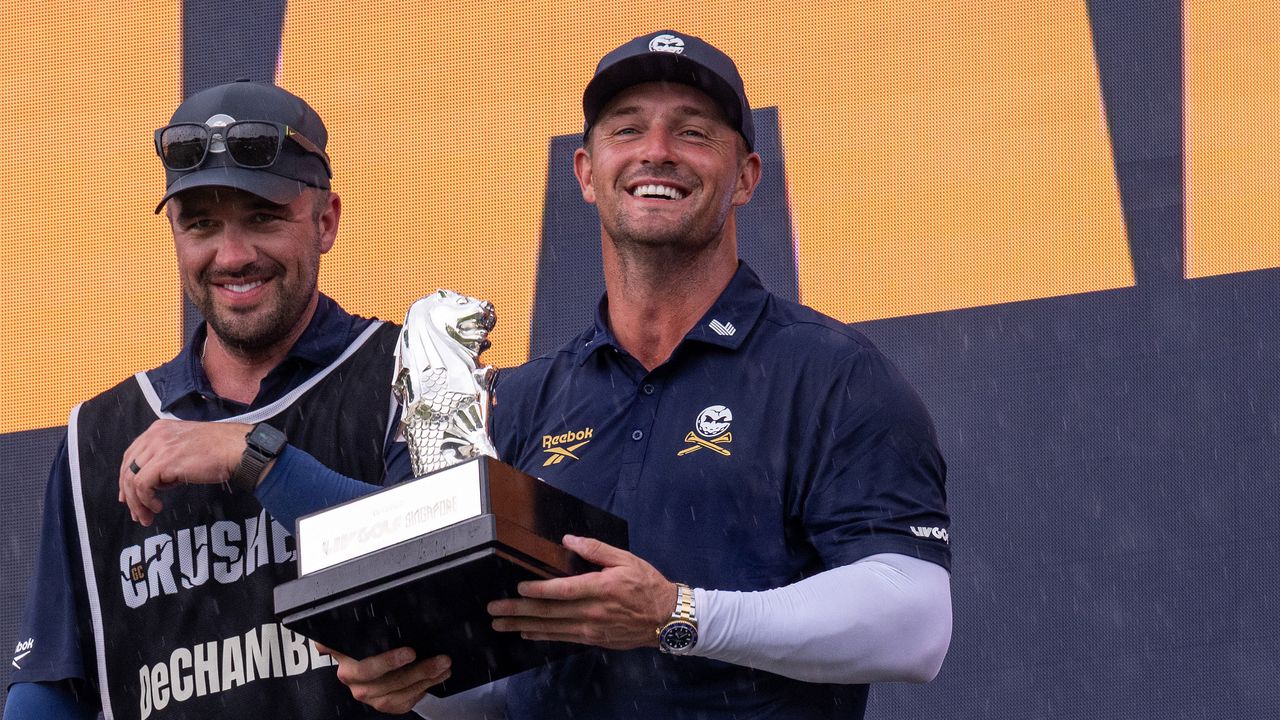

The Cruel Geometry of Golf: What Bryson’s Singapore Victory Reveals About LIV’s True Test
I’ve been around professional golf long enough to know that tournament victories often tell you more than the final scorecard suggests. Bryson DeChambeau’s fourth LIV Golf title at Singapore is one of those wins—not because it was particularly dominant, but because of how it was won and, more importantly, what it cost the man who nearly won it.
Let me be clear: this was championship golf at its most unforgiving. And that’s actually good news for LIV, even if Richard T Lee doesn’t feel that way this morning.
When Momentum Meets the Cruelest Miss
Richard Lee had done everything right. The Canadian wildcard staged a superb late charge with four birdies in his final six holes to post 14-under par, setting what looked like a winning target. He’d beaten the overnight leader. He’d forced a playoff. He’d gotten DeChambeau into trouble—a loose drive into the water on the first extra hole. And then he missed an 18-inch putt.
In 35 years covering this game, I’ve learned that these moments define careers more than they define tournaments. That putt will follow Lee for a while, but here’s what I think matters more: he made it matter in the first place.
“I mean, there’s some slick putts out there. It’s a short putt, and I wanted to just hit it hard. I hit it a little too hard. I think the adrenaline was pumping a little bit.”
That’s a golfer who understands what just happened. The adrenaline comment isn’t an excuse—it’s self-awareness. Having caddied for Tom Lehman back in the ’90s, I saw plenty of guys crumble after a moment like that. Lee didn’t. He took his $2.25 million, made history as the first wildcard to finish top-10 in an LIV season, and qualified for 2026. That’s not nothing.
DeChambeau’s Character Moment
What struck me most, though, was DeChambeau’s reaction. When he embraced Lee after the match, he appeared genuinely troubled by how it ended. His postgame comments weren’t the boilerplate victory speak:
“I absolutely hated it for Richard. He’s been playing some unbelievable golf. He’s beaten me in a few of the rounds I’ve played with him, and he’s a stellar player. I wanted to go another hole with him.”
In my experience, champions show their character not in celebration, but in how they handle winning ugly. DeChambeau could’ve simply pocketed the W. Instead, he acknowledged the quality of the competition and expressed genuine disappointment in the manner of victory. That matters more than people realize, especially for a league still building its credibility narrative.
The Deeper Story: Lee Westwood’s Quiet Disappointment
But let’s not forget Lee Westwood finishing third, two shots back. Westwood had said victory would be “probably the biggest win of my career”—a stunning statement from a player with over 40 international titles and nearly three decades at the highest level. That tells you something about the psychological weight these LIV tournaments are beginning to carry.
Having covered 15 Masters and watched how that tournament reshapes narratives, I recognize the pattern. When a player of Westwood’s pedigree talks about a specific tournament like that, it means something’s shifted in how they’re valuing their legacy. Westwood didn’t get it done this time, but the fact that he was in position and playing for it speaks to the field quality LIV’s assembling.
The Wildcard Precedent
Here’s what really interests me about Lee’s runner-up finish: it validates LIV’s wildcard experiment. Promotions events generating legitimate competitive pathways isn’t just good optics—it’s good golf. Lee wasn’t given anything. He earned his spot and proved he belongs in the room with the world’s best. That’s the kind of narrative that actually strengthens the league’s foundation.
The field strength was real. Joaquin Niemann, Jon Rahm, Westwood, DeChambeau—that’s not a second-tier field, no matter what critics want to argue. When those competitors go down to the wire with a qualifier getting $2.25 million and a playoff spot, that’s a tournament worth watching.
What This Victory Means
DeChambeau’s fourth LIV title positions him as the circuit’s most consistent elite performer—something that doesn’t get enough attention in the broader golf conversation. Four wins across different events shows adaptability and range. He’s not dominating through one skill; he’s winning through complete golf.
I think what struck the hardest about Singapore, though, is that it reminded us why we love this game. Richard Lee didn’t get robbed by luck—he got tested by circumstance, and he nearly passed. He’ll be back. Westwood will hunger for that major validation. DeChambeau gets another piece of hardware and another story about scrambling through pressure.
That’s not a LIV Golf event. That’s just golf—the sport we’ve been watching for centuries, proving once again that outcomes matter less than how they’re determined.
The only difference is DeChambeau’s bank account got $4 million heavier for it.
