


25 Years Later, Annika’s 59 Remains LPGA’s Perfect Storm – And We Should Ask Why
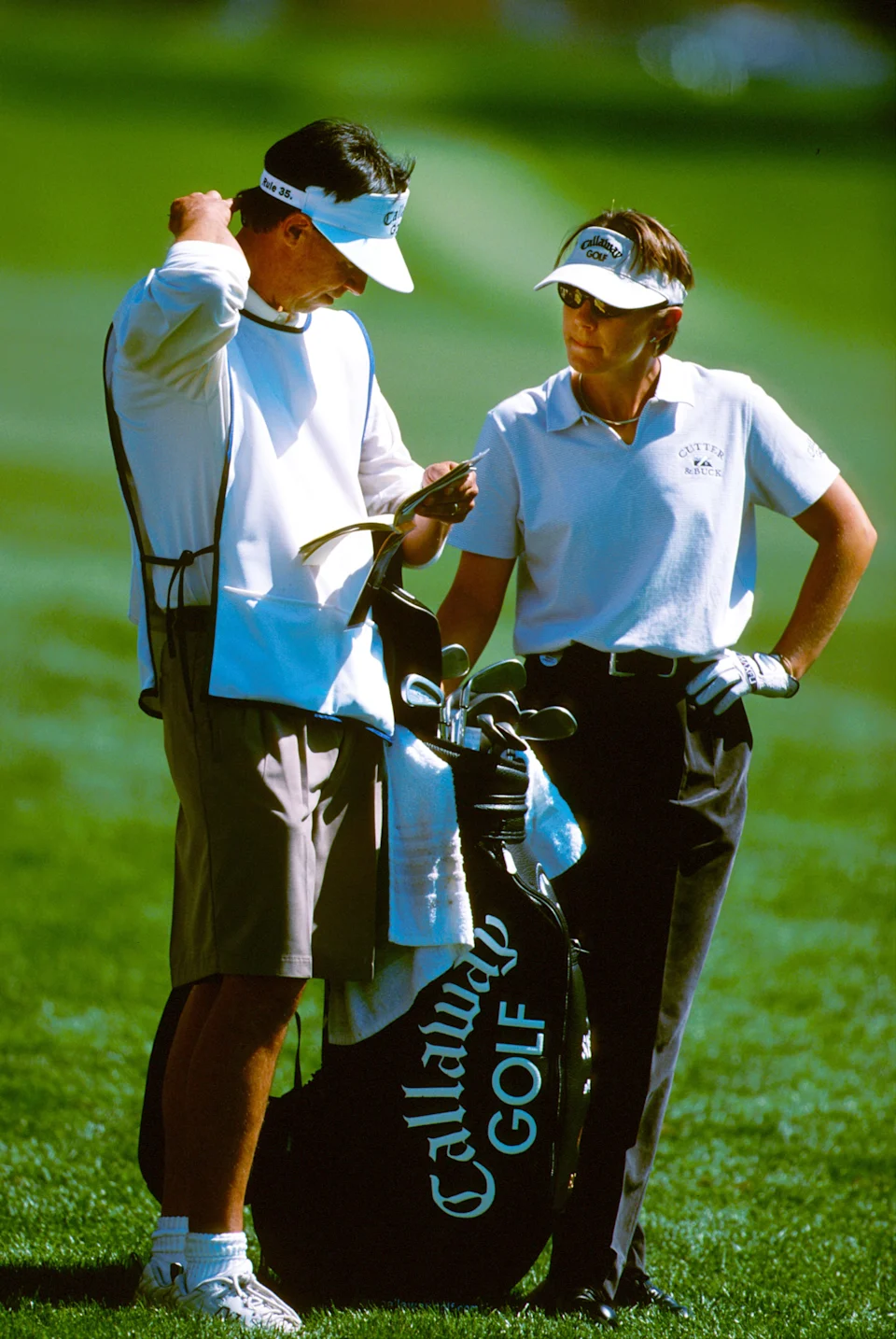
There’s a photograph I keep in my desk drawer from the 2001 Standard Register Ping at Moon Valley Country Club. It’s Annika Sorenstam, mid-stride, walking toward another birdie putt. Her caddie Terry McNamara trails slightly behind, and you can see it on both their faces – they know something special is happening, even if the rest of us didn’t yet.
A quarter-century has now passed since Sorenstam shot the only 59 in LPGA Tour history. Let that sink in for a moment. In 25 years – with modern equipment, better course conditioning, sports science that would make 2001 look like the Stone Age, and purses that have attracted the deepest talent pool women’s golf has ever seen – nobody has matched what Annika did that day.
I’m not here to say the women’s game has stalled. That would be nonsense. But this statistic – this one stubborn, resistant number – tells us something fascinating about excellence, pressure, and the peculiar nature of historic achievement.
The Setup: Lightning in a Bottle
Let me set the scene for those who might not remember. Sorenstam was running late that March morning in Phoenix, stuck in traffic, rushing through her warmup. She started on the back nine with sister Charlotta and Meg Mallon. Nobody in that group expected history.
What followed was what Mallon – a Hall of Famer in her own right – called
“As pure and perfect as you can get”
Thirteen birdies. Zero bogeys. Thirteen-under par. The kind of round that makes other professionals feel like they’re playing a different sport.
Mallon herself shot one-under that day at Moon Valley. She later said it felt like an 80.
Here’s what strikes me most about reading McNamara’s recollection decades later: the nervousness. After eight straight birdies, Sorenstam told her caddie she was so nervous she actually needed to make a par. She did, at the ninth hole. Then the birdies started flowing again.
This is the detail that separates greatness from perfection. It’s not the absence of pressure – it’s the management of it. In my 35 years covering this tour, I’ve seen countless players with superior ball-striking ability. The ones who make history are the ones who can channel anxiety into clarity.
Why Nobody’s Done It Since
The PGA Tour has recorded 15 sub-60 rounds. Jim Furyk posted both a 59 and a 58. By raw numbers alone, you’d think the LPGA – with seven 60s now recorded – would have produced another 59 by now.
Recent LPGA Milestone Rounds:
- Annika Sorenstam: 59 (2001)
- Meg Mallon: 60 (2003)
- Seven additional 60s in LPGA history
- Fifteen sub-60 rounds on PGA Tour
- Jim Furyk: 59 and 58
But here’s the thing nobody talks about: a 59 isn’t just about skill. It’s about everything aligning. Course setup. Weather. Mental state. Confidence. And frankly, a little bit of that ineffable thing we call “the zone.”
In my experience as a caddie, I can tell you that you feel it before you see it. There’s a frequency to it – a rhythm that’s almost musical. Sorenstam found that frequency at Moon Valley. She sustained it for 18 holes. The odds against that happening again aren’t just statistical; they’re almost philosophical.
The modern LPGA player is arguably more talented, more athletic, more professionally prepared than Sorenstam was in 2001. But preparation doesn’t guarantee transcendence. If it did, we’d see scores like this every few years.
The Belief Factor
What I find myself returning to, even now, is something Sorenstam revealed about her mindset at the ninth hole – her 18th of the day. She was chasing a 58. Most players would be satisfied with 59. Sorenstam had already won the week before. A 59 would have made headlines for life.
But she wasn’t playing away from the flag. She wanted better.
When her 15-foot birdie putt raced past the hole to about three feet, leaving her a par putt for the record, Sorenstam told herself “all the positive things she could think of standing over a par putt.” Then she rolled it in and leaped into McNamara’s arms.
McNamara’s words still echo:
“The place was going nuts. There were 30 or 40 players standing on the putting green getting ready for their rounds, and they just stopped to watch this. It was packed, and it was pretty amazing.”
That’s what 59 feels like to everyone in proximity – like the sport itself stops to witness something.
What It Means Now
Sorenstam went on to win that tournament by two shots over Se Ri Pak. The following week she won the Nabisco Championship – the first major of the season. She’d eventually post 72 LPGA victories, including 10 majors, before retiring in 2008.
But it’s that one round in Phoenix that defines a significant portion of her legacy. And maybe that’s the real story here: not that nobody’s done it since, but that one perfect day – achieved almost by accident, while running late, with traffic still fresh in the memory – has become immortal.
The LPGA Tour has never been stronger. The players have never been more talented or more prepared. Yet Sorenstam’s 59 stands alone, untouched, like a monument. That’s not a criticism of modern golf. That’s a testament to just how rare genuine perfection really is.
After 35 years of watching this game, I can tell you: some records aren’t meant to be broken. Some are just meant to remind us why we fell in love with golf in the first place.
