

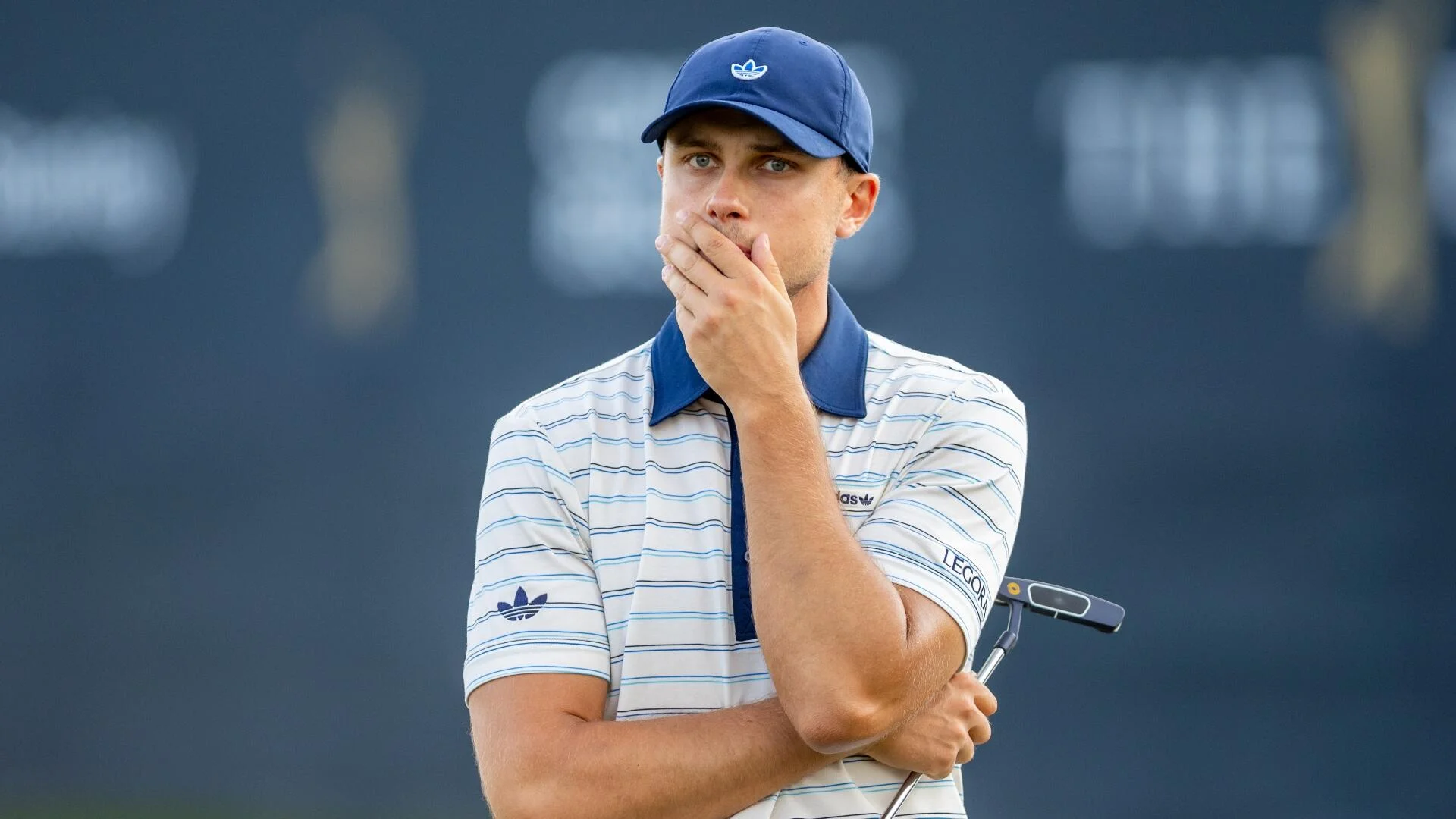

I’ve spent 35 years watching talented young players come to TPC Sawgrass convinced they’re ready to conquer Pete Dye’s masterpiece. Most of them leave humbled. Ludvig Åberg joined that club on Sunday, and while his collapse was painful to watch, it might be the most valuable lesson he learns all year.
The Familiar Pattern of Youthful Aggression
Here’s what struck me most about Åberg’s final round at the 2026 Players Championship: it wasn’t really shocking at all. In fact, I’d predicted something like this might happen before the tournament even started. The kid plays with too much reckless abandon for a course that demands surgical precision, and when things go sideways—as they inevitably do at Sawgrass—his response compounds the problem rather than corrects it.
I know this pattern because I’ve seen it dozens of times. Tom Lehman, who I caddied for back in the late ’90s, used to say that TPC Sawgrass separates the patients from the impatient. Åberg is still learning which one he wants to be.
The sequence on holes 11 and 12 tells you everything. After 64 holes of dominant golf—the kind of rhythmic, aggressive play that makes his swing look like it’s been poured from a bottle—Åberg finally made a mistake. A slicing 7-wood on the par-5 11th found the water. It was the first real punishment he’d suffered all week, and here’s the critical part: instead of accepting bogey and resetting, he let the moment accelerate him.
“Whenever I get in a stressful situation, I have to slow myself down because I get really fast. I start talking fast, I start breathing fast, and I kind of get, like, a little worked up like that.”
Those were Åberg’s own words from Saturday evening—a remarkably self-aware acknowledgment of his kryptonite. Yet on Sunday, knowing exactly what his tendency was, he pulled driver on the 12th hole when virtually every other leader was laying up. A snap hook into the pond. Double bogey. Lead evaporates.
The Paradox of His Greatest Strength
What makes this so frustrating to watch is that Åberg’s aggressive nature is precisely what makes him such a thrilling player. Most young guys on tour play tentatively, trying not to lose rather than trying to win. Åberg plays to win. On a good day, it’s mesmerizing. On a day when his nerves get the better of him, it’s self-destructive.
The question everyone’s asking now—including Åberg himself, I’m sure—is whether that aggression can be refined rather than eliminated. I think it can. But it requires something he doesn’t yet possess in abundance: a working putter he trusts in critical moments.
Look at the numbers. Åberg sits 76th on the PGA Tour in strokes gained putting this season. He was 67th in 2024 and 86th in 2025. That’s not a minor weakness—that’s a ceiling on his potential. And here’s the thing about putting problems: they don’t just hurt you on the greens. They infect your entire game. When a player doesn’t believe the putter will work, they start attacking every pin, taking aggressive lines off the tee to manufacture birdie opportunities. It’s a vicious cycle.
“It got away from me quick there. Yeah, it was just poor swings. I felt like I’ve had that sort of 7 wood right miss a few times this week, on No. 4, especially, twice, and it came up on 11 as well.”
What’s encouraging, though, is that Åberg seems genuinely aware of the problem. And there’s a recent template for solving it: Cameron Young, the player who surged past him to win on Sunday.
The Young Model
Young was worse than 145th in strokes gained putting in both 2023 and 2024. That’s historically bad. Yet he flipped the script last year, finishing 7th in the category—a dramatic improvement that directly enabled his breakthrough win. Notice what happened: once Young could rely on his putter in big moments, it allowed him to play with what I call “conservative aggression.” He could take calculated risks off the tee knowing he could make putts if they were required, but he could also be patient when patience was prudent.
That’s the mindset Åberg needs to adopt. And the pathway is clear: improve the putter enough to trust it, then you can dial back the desperation that drives the reckless play.
Perspective, and Patience
I want to push back gently on something, though. We live in an age where young talent is expected to arrive fully formed, especially when they contend at majors in their first seasons and make Ryder Cup teams. Åberg is in just his third year on the PGA Tour. Yes, he’s exceptional. Yes, he should probably be further along. But even the greats had learning curves.
The fact that he’s aware of his shortcomings, that he can articulate them, that he has a clear pathway to fixing them—these are actually excellent signs. Each time he faces a high-pressure moment going forward, he has another opportunity to make a better choice.
As inevitable as his Sunday struggles felt this week, so is the feeling that eventually it’ll all click. The question isn’t really whether Åberg will figure this out. The question is when. Could be next month. Could take another year. But it’s coming.
That’s worth being patient for.
