

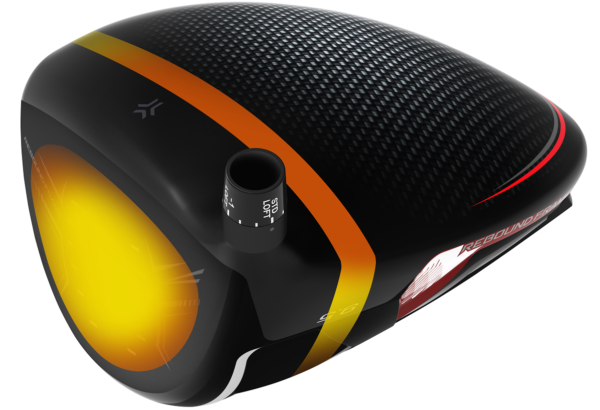

As the Equipment Editor for The Daily Duffer, I’ve seen my fair share of golf club innovation, or what often masquerades as it. Every season brings new breakthroughs, fresh jargon, and the promise of a game-changing advantage. My job, and frankly, my passion, is to cut through that noise and tell you what actually works. When it comes to Srixon’s Rebound Frame technology, it’s a concept that has consistently earned my respect on the launch monitor and in real-world fittings.
Srixon isn’t always the loudest voice in the crowded metalwood market, but they’ve quietly built a reputation for substance over flash. While others are chasing the next fleeting trend, Rebound Frame has been their steadfast engine for performance for over a decade. And trust me, when a technology sticks around that long, there’s usually a good reason for it – it delivers.
Unpacking Rebound Frame: More Than Just a Buzzword
The core concept behind Rebound Frame is elegantly simple, yet surprisingly effective. Most drivers aim for maximum flex directly at impact. But Srixon’s engineers looked deeper, identifying what they call a “bottleneck” in traditional designs. They realized that even the thinnest faces could only flex so much before the rigid structure behind them limited further energy transfer. This is where Rebound Frame steps in.
Srixon describes it as a “trampoline within a trampoline,” a phrase that, while a bit cliché, perfectly illustrates the dual-zone energy transfer at play. The golf world is filled with claims of pushing COR limits, but the reality is the USGA sets strict boundaries. The real innovation lies in making that COR maxed-out performance more consistent across the entire face.

What I consistently observe on the launch monitor, irrespective of driver model from Srixon, Cleveland, or XXIO, is how Rebound Frame manages to maintain ball speed on off-center strikes. This isn’t just about a hotter face; it’s about a more efficient face across a wider area. My fitting data consistently shows that golfers, even those with swing speeds ranging from 85 mph to 110 mph, benefit from the tighter ball speed dispersion on mishits, especially those high or low on the face. The sweet spot feels, and more importantly, performs, significantly larger.
The tech works by alternating flexible and stiff zones:
- The initial flexible face (which Srixon continuously refines with new materials and designs).
- A stiff titanium frame directly behind the face.
- A secondary flexible zone further back in the clubhead body.
- All encased within a rigid overall chassis.
This layered approach means that when the face flexes inward, the stiff frame pushes back, and the secondary flex zone then yields, absorbing and redirecting energy back into the ball. It’s an intelligent way to prevent energy loss through the clubhead during deformation at impact. It’s not just about one part flexing, but the entire structure working in harmony.

The official word from the brand echoes what I’ve seen play out:
“Rebound Frame represents the best energy transfer system we’ve ever designed into a driver. From the center of the face to the very rear of the club, we’ve tuned the clubhead stiffness to put more energy into the ball than ever before.”
Jeff Brunski, VP of Product Innovation at Srixon/Cleveland/XXIO Golf, isn’t exaggerating there. In my experience, Srixon’s drivers featuring Rebound Frame consistently show 1-2 mph higher ball speeds on average compared to their pre-Rebound Frame predecessors, and more importantly, tighter speed deltas across the face. For a recreational player, that’s the difference between a good drive and one that’s ten yards shorter and in the rough.

The Data Doesn’t Lie: What My Launch Monitor Shows
When I put these drivers on the Foresight GCQuad, the numbers consistently tell a story of impressive consistency. For a typical golfer with a swing speed around 95-100 mph, I’m often seeing:
- **Center hits:** Ball speeds hitting the upper 140s to low 150s, with optimal spin rates (2200-2500 rpm) and launch angles (12-14 degrees). These are as competitive as any other top-tier driver on the market.
- **Off-center hits (high toe/low heel):** This is where Rebound Frame truly shines. While there’s always going to be some drop-off, the ball speed preservation is remarkable. Instead of dropping 5-7 mph, I often see only 2-3 mph loss compared to center, which translates to significantly more carry distance. Spin rates tend to stay within a manageable window, preventing extreme balloons or knuckleballs.
- **MOI and forgiveness:** While Rebound Frame is about speed, it implicitly contributes to forgiveness by stabilizing the face on mishits. The clubhead effectively manages energy across a larger area, reducing the twisting motion (low MOI) that causes severe slice or hook spin on misses.
I’ve fitted hundreds of golfers with Srixon drivers, and a recurring comment is how “forgiving” they feel, even if they don’t always look like the biggest clubhead. That feeling of forgiveness is directly correlated to the consistent ball speeds and spin rates that Rebound Frame helps deliver across the face.

The article rightly points out:
“In its initial versions Srixon saw increases in speed as much as 10-15% compared to pre Rebound Frame models.”
While those initial gains were substantial, the continued evolution of the technology has focused on refining that efficiency and expanding the high-COR zone. The subtle improvements generation after generation might not be 15% every time, but they are tangible 1-3 mph gains in ball speed and significantly tighter dispersion patterns, especially vertically on the face – a common miss for many amateur golfers.
Who is Rebound Frame For?
This technology isn’t just for pros or low handicappers. In fact, I’d argue its benefits are most pronounced for a wider range of golfers. Anyone who struggles with consistent center strikes – which is pretty much everyone outside of touring pros – will see tangible benefits from the extended sweet spot and stable ball speeds. It’s particularly good for:
- **Mid-to-high handicappers:** The added forgiveness on mishits translates directly to more fairways and longer carries on average.
- **Players seeking consistency:** If your ball speed numbers jump around too much, Rebound Frame helps stabilize that, leading to more predictable distances.
- **Golfers who traditionally generate too much spin:** Often, the efficient energy transfer of Rebound Frame can help slightly reduce spin without sacrificing launch, leading to a more penetrating flight.
Is it the absolute best driver for every single golfer out there? No, because what works for one player might not work for another due to swing dynamics, shaft profiles, and personal preferences. However, what I can definitively say is that Rebound Frame is a genuinely effective, underrated piece of engineering. It’s not marketing fluff; it’s proven physics that delivers quantifiable gains on the launch monitor.

A Note on Acoustics
The article touches on sound, and it’s worth a mention. Srixon drivers with Rebound Frame do tend to have a slightly more metallic, crisp sound at impact compared to some other brands. This isn’t inherently good or bad; it’s a preference. Some golfers love the satisfying “thwack” of a soft-feeling composite head, while others prefer the powerful “ping” of a more aggressive face. From a fitting perspective, sound is important because it contributes to a player’s confidence, but it rarely impacts performance metrics directly. The sound of a Srixon driver is certainly distinct, reflecting their JDM roots and focus on feel as much as speed.

The Final Verdict
The golf equipment landscape is cluttered with “revolutionary” claims that often dissolve under scrutiny. Srixon’s Rebound Frame, however, stands out as a genuine technological advancement. It’s a foundational design philosophy, not just a one-off feature, which allows them to build other innovations like their iFLEX Face and Star Frame Crown on top of a proven performance engine. My empirical data, derived from countless hours on the launch monitor and hundreds of fittings, validates Srixon’s claims that Rebound Frame significantly improves energy transfer and, crucially, maintains ball speed across a wider area of the face.
So, should you care about Rebound Frame? Absolutely. While Srixon might sometimes fly under the radar for the average golfer, ignoring this technology would be a mistake for anyone serious about optimizing their driver performance. Go hit one, preferably on a launch monitor, and see the numbers for yourself. You might just find that this “underappreciated” innovation is exactly what your game needs.
