

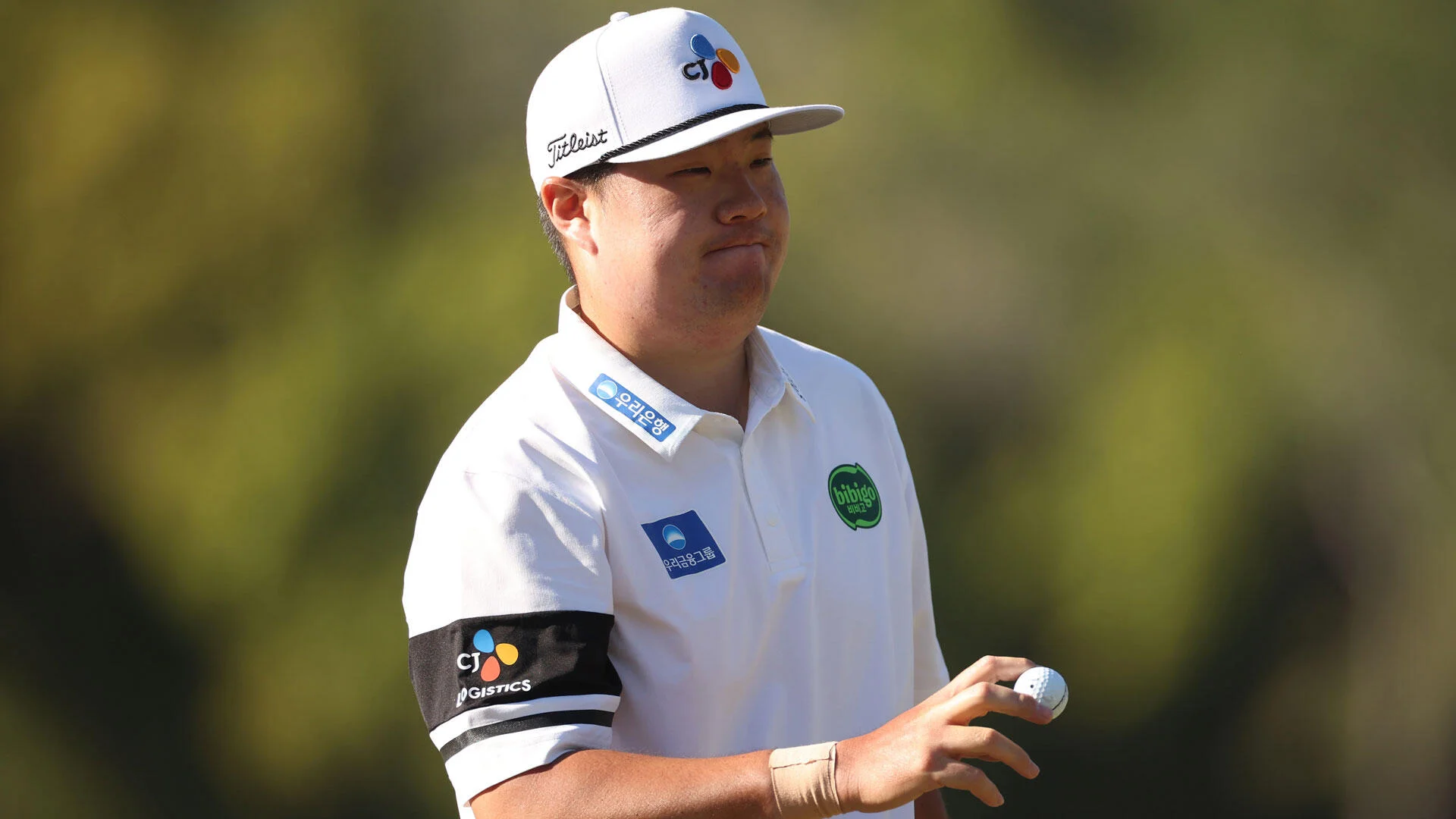

Sungjae Im’s Wrist Is Healed, But His Real Challenge Awaits Sunday at Innisbrook
There’s something quietly powerful about watching a young player fight his way back from injury. After 35 years covering this tour, I’ve seen enough comebacks to know that the physical recovery is often the easier part—it’s the mental battle that separates those who return to form from those who quietly fade.
That’s what Sungjae Im is navigating right now at the Valspar Championship in Palm Harbor, and frankly, what I’m witnessing is encouraging.
Im holds a two-stroke lead heading into Sunday’s final round at Innisbrook, sitting at 11-under after 54 holes. On paper, that sounds like the setup for another Im victory—he’s got two PGA Tour wins already on his resume, and he’s playing well. But there’s nuance here that matters, especially given what he’s been through.
The Comeback That Almost Wasn’t
Let’s be honest: Im’s return from that wrist injury could have gone sideways quickly. He missed two straight cuts when he came back. That’s the kind of sequence that can spiral into doubt, particularly for a young player still building his tour resume. In my experience as a caddie, I saw how easily that mental momentum can evaporate. One bad tournament becomes two, and suddenly you’re questioning whether your body’s really ready.
What Im said on Saturday tells you everything about where his head is:
“I wasn’t able to practice for two months,” Im said. “So I think a lot of my shots that I didn’t like from last year I was able to, once I started practicing, I was able to correct and it’s just been consistently getting better.”
That’s not the sound of a player making excuses. That’s someone who used his enforced time away to actually improve his swing. He didn’t just get healthy—he got better. He’s shooting 64-69 on the Copperhead course under firm, fast conditions. Those aren’t accidental numbers.
The Front Nine Says Everything
What struck me most about Saturday’s action was Im’s front nine: three-under with birdies on the 1st, 7th, and 8th holes. That’s controlled aggression. He didn’t force anything. He played his game, took his opportunities, and when things got sticky on the back nine—bogeys on 12 and 13—he didn’t panic. He stayed composed and then nailed a sweeping 13-footer on 18 to extend the lead.
Im himself acknowledged the significance:
“I was really happy that my play was good on the finishing stretch, 16 through 18,” Im said. “And I’m really thrilled about the birdie on the final hole, and to have a two-shot lead going into tomorrow.”
That’s the kind of closing stretch that wins tournaments.
The Snedeker Variable
Now, I’d be remiss if I didn’t address what’s brewing just two shots back. Brandt Snedeker—the 45-year-old U.S. Presidents Cup captain playing on a sponsor exemption—carded a 67 with birdies on three of his first four holes. More importantly, he’s rolling a new mallet putter with real confidence.
Here’s what I find fascinating about Snedeker: this is a guy who won the last of his nine PGA Tour titles back in 2018. He’s had a tough recent run with only two top-10 finishes over the last year. But equipment changes can be real catalysts on this tour, and putter changes especially. I’ve seen it happen countless times.
“Rolling the ball so good, chipping the ball so good, if I can kind of get my long game under control a little bit we’re going to have a good chance tomorrow.”
Snedeker’s honesty about what he still needs to do is refreshing, but it also tells you he knows he’s got work to do off the tee. For Im, this is actually good news—Snedeker at his best is dangerous, but Snedeker fighting his driver is beatable.
The Field Beyond the Leaders
David Lipsky sits in third at nine-under, just one back of Snedeker, and he’s quietly having a solid week. Matt Fitzpatrick, who finished second at The Players Championship last week, is at eight-under alongside Marco Penge. These are serious players, but none of them have the momentum that Im carries into Sunday.
What’s notable is how compressed this leaderboard remains—this is the kind of tournament where things can shift quickly if the leader stumbles. That’s what makes Sunday so compelling.
What Sunday Will Reveal
Here’s what I think matters most about this situation: Im said something on Saturday that reveals the real challenge ahead.
“It’s been awhile since I’ve been in the lead like this,” Im said. “I’m sure I will be nervous, but the best I can do is just to play my own game.”
That’s wisdom beyond his 27 years. And it’s also the moment where injury comebacks get decided. Technical ability brought him here—his golf swing is clearly sound, his wrist is holding up. But tomorrow is about the mental side of the game. It’s about whether he can embrace the nerves rather than fight them.
In my three decades covering this tour, I’ve learned that the difference between winners and runners-up at this point often comes down to that exact quality: the ability to stay present, trust your preparation, and execute under pressure.
If Im can do that Sunday, we’re not just looking at a Valspar Championship victory. We’re looking at a comeback story that matters—a young player who turned a setback into something stronger.
First tee is at stake.
