


Fitzpatrick’s Comeback Win Signals Real Return—But Questions Remain for Tour’s Other Stars
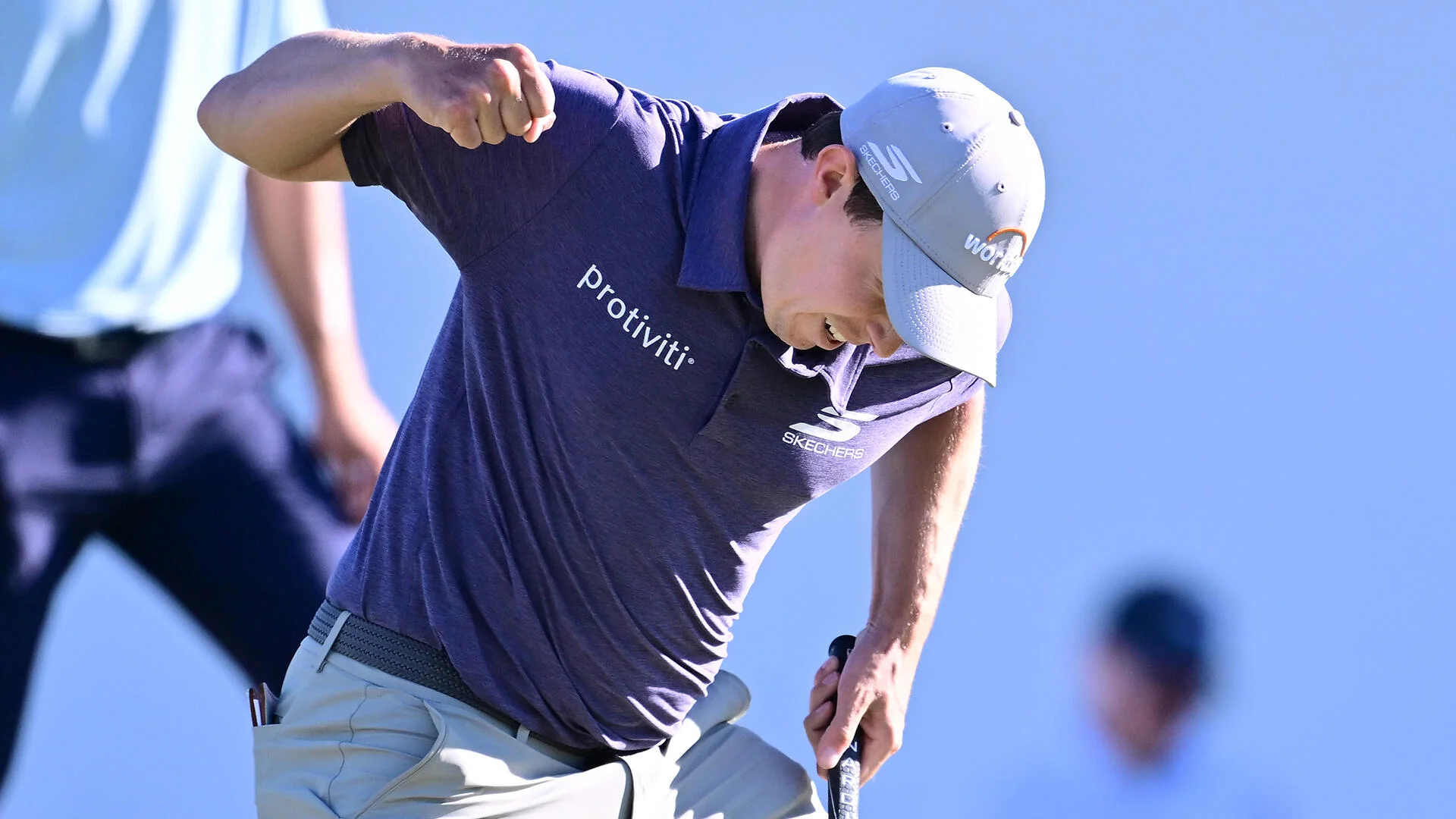
Matt Fitzpatrick needed that win more than most people realize. Not because he was playing poorly—he wasn’t—but because in professional golf, narrative matters as much as scorecard. After nearly three years since his last victory, watching him thread the needle at Innisbrook on Sunday felt like watching a puzzle finally complete itself.
In my 35 years covering this tour, I’ve learned that comeback victories are rarely accidents. They’re the product of months of grinding, mental fortitude, and the kind of uncomfortable conversations players have with themselves in the hotel room at night. Fitzpatrick’s one-shot victory over David Lipsky came exactly one week after he played brilliantly at The Players Championship only to fall short. That matters. That’s not bad luck—that’s a player whose game is sharp enough to finish the job when it matters most.
"Fitzpatrick was able to finally break free from the pack to take the solo lead at 10 under with a 30-foot birdie on the par-3 15th."
What impressed me most wasn’t the final round 68, though that was solid in difficult conditions. It was the composition. Fitzpatrick came from three shots back on a Sunday with Sungjae Im holding the lead—the exact position where most players panic. The 2022 U.S. Open winner didn’t panic. He executed.
The Real Story: Momentum and Maturity
Here’s what strikes me about where Fitzpatrick stands heading forward: he’s no longer a player trying to prove something—he’s a player remembering who he is. After that lean 2024 and slow start to 2025, there was legitimate concern about whether his game would ever return to the level that produced a U.S. Open.
"After a lean 2024 and a slow start in 2025, Fitzpatrick started to turn his game around in the middle of last year and kept that momentum going with a terrific start to 2026."
The progression has been methodical. He’s not suddenly the flashiest player on the tour. He’s not putting up 65s from nowhere. But he’s doing something harder: he’s consistently putting himself in positions to win, which means he’ll eventually win more. Having caddied for Tom Lehman back in the day, I learned that this kind of steady climb is often the mark of a player who’s truly figured out how to manage his game over 72 holes.
The Winners and the Lessons Unlearned
Jordan Smith’s T3 finish is genuinely encouraging for the Englishman. His career has been a series of "what-ifs," and a top-10 finish at a meaningful PGA Tour event with some real competition is the foundation he needed. Xander Schauffele’s 65 on Sunday was one of the rounds of the day, yes—but I kept thinking about what the graders noted: "he’ll mostly be kicking himself for not playing well enough on Friday and Saturday to put himself in a better position."
That’s the conversation I want to have with Schauffele. His ballstriking is among the tour’s elite. His short game is sharp. But he’s still searching for that complete 72-hole tournament where everything clicks. At some point, that winless drought starts to weigh differently on a player’s psyche. I don’t think it’s affecting him yet, but it will if it stretches much further.
The Uncomfortable Sungjae Im Question
Sungjae Im’s collapse—five bogeys in his first 10 holes with no birdies in that span—was brutal to watch, and here’s why it matters: Im had already captured the 54-hole lead, which means he was in control of his own destiny. That’s a different kind of pressure than chasing. Some players thrive with a lead to protect. Others lose it.
"All Im needed on Sunday was an even-par performance in the final round to win, but he imploded early with five bogeys in his first 10 holes."
In my experience, this is the inflection point for many tour players. How do they respond the next time they hold a lead going into Sunday? Do they get tentative? Do they overthink the mechanics? Or do they trust what got them there? Im showed positive signs the first three days, which suggests his game is fine. It’s the mental component that needs examination.
Brandt Snedeker and the Bittersweet Reality
I can’t grade Brandt Snedeker’s week easily, and frankly, the B-grade in the article might be generous—not for his play, but for what it represents. At 45, making your first cut of the year is genuinely impressive. Playing competitively on Sunday with a shot at a 10th PGA Tour win? That’s the kind of week that keeps a veteran fighting.
But here’s the hard truth: he probably won’t have a better opportunity than this one again. That’s not me being cynical; that’s mathematics and biology. The scrambling finally caught up to him when it mattered most. It’s a tough pill, but that story—even the sad ending—is one he should treasure.
The Bigger Picture
Looking at the leaderboard holistically, I see a tour that’s still searching for its next dominant force. Fitzpatrick’s win is meaningful because it suggests he’s back in the conversation, but we need to see consistency. One win doesn’t erase questions—it raises the bar for the next one.
Brooks Koepka’s C+ represents progress, which matters more than people think. Justin Thomas’s C represents work still needed. These aren’t stories of decline so much as players in transition, which is different.
Matt Fitzpatrick’s A+ win at Innisbrook wasn’t just about the trophy. It was about a player remembering exactly what he’s capable of when the moment arrives. Now we get to find out if he makes it a pattern.
