

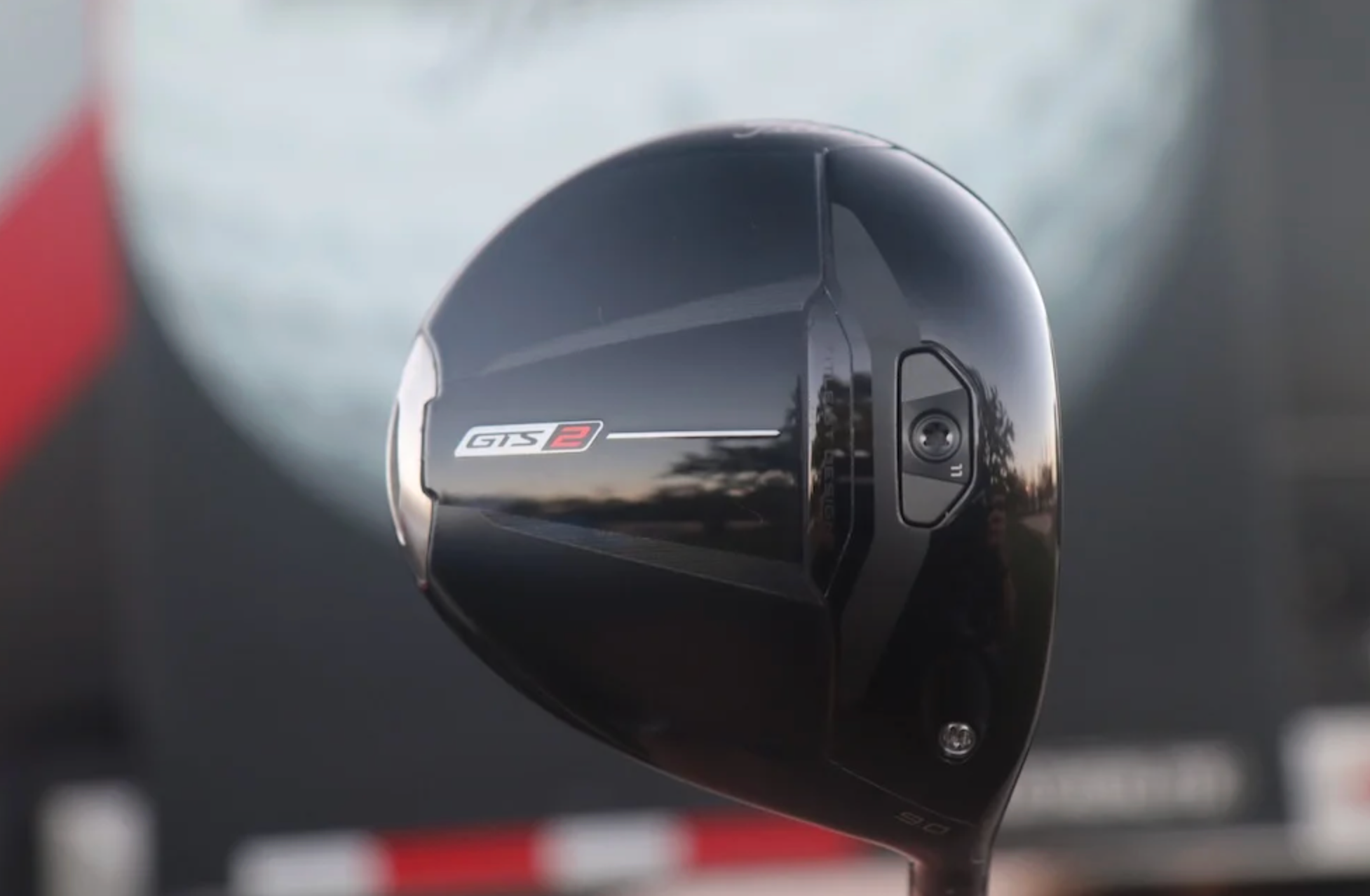

Hello, Daily Duffer readers! Sarah Chen here, and I’m thrilled to be back with you, talking about one of my favorite topics: how equipment can truly elevate your game. We all know that feeling when a new club just *clicks*, right? Well, today, we’re diving into some exciting news from Titleist that has the professional golf world buzzing – and it has direct implications for how you approach your game and potentially enhance your driving performance.
You see, while top pros might make golf look effortless, a massive part of their success comes from meticulous equipment selection and understanding how each club fits their swing. Titleist has just announced their new GTS drivers, undergoing tour seeding with the GTS2, GTS3, and GTS4 models. This isn’t just about a new paint job; it’s about pushing the boundaries of technology to help you hit the ball farther and straighter. The buzz is that these are “faster than the GT family,” which immediately tells us they’re engineered for speed and distance.
Understanding Your Driver’s Role: Not Just About Power
Before we get too caught up in the shiny new toys, let’s talk about what a driver should do for *you*. It’s not just about raw power. It’s about optimizing launch, spin, and ball speed to maximize your carry distance and control. A well-fitted driver can transform your tee shots, shave strokes off your game, and boost your confidence from the first hole.
When I work with my students, whether they’re aiming for a tour card or trying to break 90, the driver is often the most impactful club to fine-tune. Why? Because a good drive sets up everything else. A bad drive can lead to recovery shots, lost strokes, and spiraling frustration. The right driver, matched to your swing, helps you find more fairways and closer approaches.
What We’re Seeing with the New Titleist GTS Drivers
Our tour photographer was on site at the Houston Open, and the images of the new GTS drivers are intriguing. It’s always exciting to see new equipment emerge, and the pros are often the first to put them to the test.
Here’s a look at what they’re testing:
GTS2


The GTS2, GTS3, and GTS4 models suggest different performance characteristics, likely catering to various swing types and preferences – something Titleist has done expertly in the past. Typically, a “2” model might be forgiving, a “3” more workable, and a “4” potentially ultra-low spin. This variety is crucial because *your* perfect driver isn’t necessarily your playing partner’s perfect driver.
GTS3


Alistair Cameron from WRX made an interesting observation:
“Interestly, @Titleist had a standard GTS model for woods on the USGA Conforming List, along with a GTS2 and GTS3. The GT1 is a Tour favourite but came in a later launch. Is this the newer version for the first launch?”
This highlights the careful, often multi-stage release strategy that manufacturers employ, and it underscores that even within a new line, there can be subtle differences catering to very specific needs.
GTS4


The excitement around gear like this is infectious, even for an instructor like me! It reminds us that golf is constantly evolving, and so should our understanding and application of techniques and technology.
Interestly, @Titleist had a standard GTS model for woods on the USGA Conforming List, along with a GTS2 and GTS3. The GT1 is a Tour favourite but came in a later launch. Is this the newer version for the first launch? pic.twitter.com/E4HHPNH41Z
— Alistair Cameron (@ACameronWRX) March 23, 2026
Your Path to Better Driving: Swing Meets Science
While new equipment is fantastic, it’s not a magic bullet. The real magic happens when you understand your own swing and how to maximize the club’s potential. If you’re looking to improve your driving, here’s how you can approach it, inspired by what we learn from tour pros constantly seeking that extra edge.
1. Understanding Your Launch Conditions
When you hear “faster than the GT family,” that translates to higher ball speed. But ball speed is only half the equation. You also need optimal launch angle and spin rate. A higher launch with less spin often equals more distance for most amateur to mid-handicap golfers. Pros fine-tune these with every club change.
“Billed as being ‘faster than the GT’ family, we’ll be keeping an eye on the Titleist staffers that put a driver straight into the bag at the Houston Open.”
This pursuit of “faster” isn’t just about pure power; it’s about a more efficient transfer of energy from the clubface to the ball.
Try this: The “Tee High, Swing Up” Drill
- Why it works: Many golfers hit down on the driver, creating too much spin and a lower launch. Hitting slightly up on the ball is crucial for maximizing carry distance with a driver.
- How to do it: Tee the ball slightly higher than usual (about half the ball above the crown of the driver at address). Focus on feeling like you are hitting the ball slightly on the upswing. Imagine tracing a shallow arc that scoops the ball off the tee. Don’t try to hit it harder, just focus on the upward contact. Use a launch monitor if you have access to see the difference in launch and spin.
- Goal: Achieve a positive angle of attack (AOA), leading to higher launch and lower spin for more distance.
2. Consistent Center-Face Contact
Even with the fastest driver, if you’re not hitting the center of the face, you’re losing ball speed and accuracy. Modern drivers have incredible forgiveness, but the sweet spot is still king for maximum performance. This is why pros spend countless hours on the range, not just swinging hard, but focusing on precise contact.
Here’s a drill: The “Drill Spray” Check
- Why it works: This simple drill gives you immediate feedback on where you’re striking the ball on the clubface.
- How to do it: Before your range session, spray a light, even layer of foot powder spray (or dry erase marker) on your driver face. Hit 5-10 balls, then check the face. You’ll see exactly where you made contact. Adjust your setup or swing path based on the feedback. Are you consistently heel or toe striking? This instantly tells you what to work on.
- Goal: Consistently find the sweet spot, leading to maximum ball speed and straighter shots.
3. Understanding Your Equipment’s Adjustability
Many modern drivers, including the new Titleist models in previous iterations, feature adjustability in loft and weighting. This is not just for the pros; it’s a powerful tool for *you*. Adjusting loft can significantly impact your launch and spin. Moving weights can help with draws or fades.
“Titleist’s new GTS drivers have begun tour seeding with the GTS2, GTS3, and GTS4.”
The fact that Titleist is offering these multiple models right from tour seeding suggests different characteristics designed to suit varying needs. Don’t be afraid to experiment when these hit the market!
Try this: The “Adjustable Loft Experiment”
- Why it works: Many golfers play with too little or too much loft for their swing speed and angle of attack. This drill helps you discover your ideal loft setting.
- How to do it: If your current driver has an adjustable hosel, use it! Start at your standard loft. Hit 5-10 balls, noting your ball flight (height, distance, shape). Then, adjust the loft up by 0.75-1 degree and repeat. Then, adjust it down by 0.75-1 degree and repeat.
- Goal: Identify the loft setting that gives you the best combination of carry distance and roll, usually indicated by a high, penetrating ball flight with minimal side spin. This might require a trip to a qualified club fitter to get precise data!
Golf is a journey of continuous improvement, and that includes staying open to how both your technique and your equipment can work together. Keep an eye on those Titleist staffers at the Houston Open; their choices will tell us a lot about these new GTS drivers. In the meantime, focus on your fundamentals, practice with purpose, and always remember that every swing is an opportunity to get better. I believe in you!
