

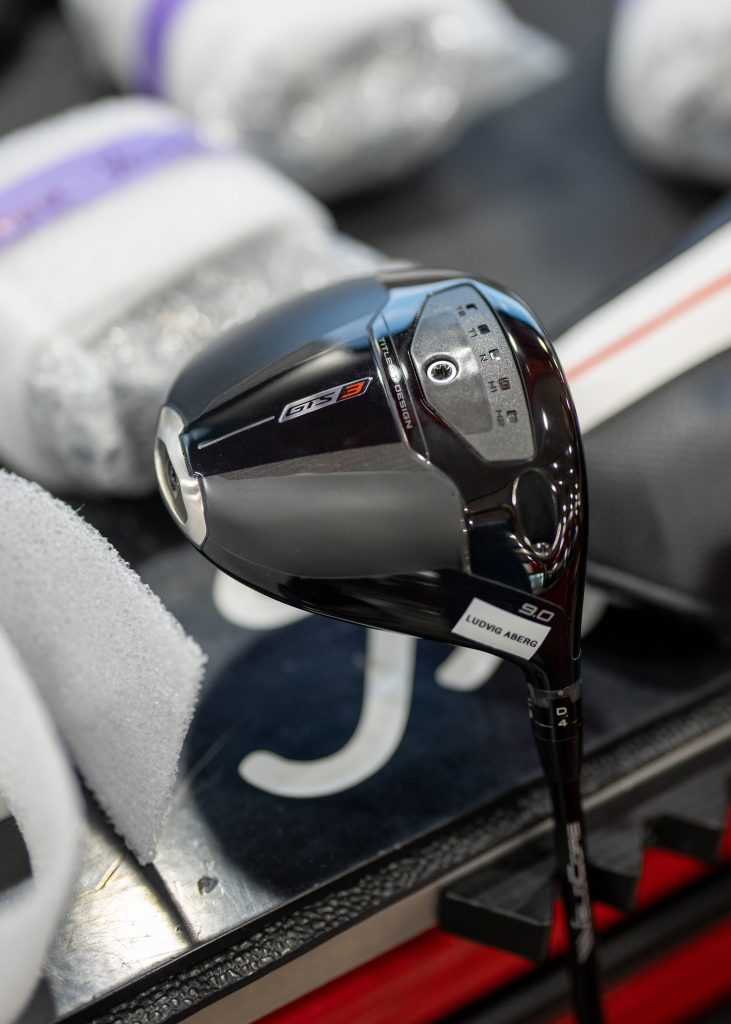

Alright, fellow duffers, gather ’round. It’s that time of year again. The air gets crisp, the leaves turn, and the equipment manufacturers start teasing us with their next generation of gear. This year, it’s Titleist’s turn to step into the spotlight with their new GTS drivers. A recent leak from the PGA Tour gives us our first peek, and as the Equipment Editor for The Daily Duffer and a certified club fitter who’s seen it all, I’m ready to weigh in.
First things first, we’ve got to acknowledge the tried and true product cycle. As the source aptly puts it:
“While many products have already been released for 2026, it is that time of year where new things start to show up on the PGA Tour. If you have followed along with timelines over the last several years, you would know that the latest from Titleist is is lurking somewhere in the shadows.”
And ‘lurking’ they certainly were. Now, thanks to the eagle eyes on Tour, we’re getting a sneak peek at the GTS2, GTS3, and GTS4. While the official deep dive into the technology is still under wraps, the images of the soles give us enough to start peeling back the layers and making some educated guesses, or as I like to call it, data-driven speculation.


The Return of Movable Weight: A Fitter’s Perspective
The most striking feature visible from the sole shots is the unmistakable return of movable weight. The article notes:
“The GTS2, GTS3, and GTS4 offers what appears to be some movable weight like we have seen previously in the GT lineup.”
This is significant. In my fitting bay, movable weight is not just a gimmick; it’s a powerful tool. While many manufacturers tout big MOI numbers and then offer a single fixed head, Titleist seems to be re-embracing the versatility that movable weights provide. For the average golfer, this means adjustability for shot shape bias – helping to mitigate a slice or draw, which can translate directly into more fairways hit and better consistency. For skilled players, it’s about fine-tuning launch and spin to maximize carry and total distance.
Looking at the soles, it appears there might be different track configurations or weight cartridge designs across the GTS2, GTS3, and GTS4 models. Traditional Titleist naming conventions would suggest:
- GTS2: Likely the most forgiving, highest MOI offering, probably with weight further back for higher launch and more stability. This is often the prime candidate for golfers seeking maximum forgiveness and higher launch angles to optimize carry distance, particularly for those with moderate swing speeds or a tendency to slice.
- GTS3: The “player’s driver” – a balance of forgiveness and workability. The visible movable weight could be more centrally located or in a track that allows for significant heel-to-toe adjustment, influencing both spin and trajectory. My initial thought is this will be the most fit-friendly offering, capable of being dialed in for a wide range of players.
- GTS4: Typically, the lower spin, more forward CG option. This would appeal to higher-swing-speed players who generate too much spin and need to bring their launch conditions down for optimal distance. The movable weight could be more focused on front-to-back adjustment for spin or perhaps a subtle heel-toe bias without sacrificing too much spin reduction.
From a launch monitor perspective, movable weight can genuinely alter key metrics. Shifting weight to the heel *can* reduce spin by a slight amount and encourage more draw bias by closing the face at impact. Moving it further back *will* increase MOI, leading to tighter dispersion on off-center strikes, and often translates to a slightly higher launch and more spin. These aren’t hypothetical gains; they’re measurable differences in ball speed retention on mishits, changes in launch angle, and crucially, adjustments to spin rate that can unlock significant distance and accuracy.
What Does “GTS” Mean for Performance?
The “GTS” moniker itself is intriguing. Previous generations had “TS” (Titleist Speed) and “GT” (Game Target, perhaps?). Without official word, it’s tough to say, but “GTS” could signify “Game Target Speed” or something similar, suggesting a blend of optimization for both playability (game) and raw ball speed (speed). With the USGA’s CT limits always a factor, manufacturers are constantly seeking marginal gains in speed without sacrificing launch and spin optimization. This often means thinner, lighter crowns, strategic weight placement for better CG, and improved aerodynamics.
I’ll be looking for improvements in ball speed across the face, especially on those less-than-perfect strikes. A truly optimized driver isn’t just fast center; it maintains ball speed effectively when you catch it slightly out on the toe or low on the face. That’s where real-world distance gains come from for the majority of golfers, not just tour pros.
The Tour Adoption Buzz: Fact vs. Fiction
“it will be a safe bet that the early buzz coming from tour adoption will be rather high.”
This is a classic marketing strategy, and it works. When players like Ludvig Åberg (seen in the image) put new gear in play, it generates hype. However, it’s crucial to remember that Tour players operate within incredibly fine margins. A minuscule improvement in spin or dispersion that might translate to 5 yards for them could be negligible for a 15-handicapper. Their equipment choices are also heavily influenced by their sponsorships and specific launch window testing needs.
That said, if a large number of Titleist staffers *and* non-staff players are quickly adopting these new GTS drivers, it’s a strong indicator that Titleist has genuinely found something that produces measurable, repeatable gains. I’ve spent thousands of hours analyzing launch monitor data, and trust me, if the numbers don’t lie for the pros, there’s a good chance they translate to real benefits for recreational players, albeit with different magnitude.
Practical Advice for the Average Golfer
So, what does this mean for your bag? Based purely on this initial peek and Titleist’s track record:
- If these GTS drivers offer meaningful movable weight, it makes them excellent candidates for a proper fitting. Adjusting CG can be far more impactful than tinkering with loft.
- Expect Titleist’s typical premium feel and sound. They rarely miss on that front.
- Don’t blindly chase the Tour pro’s model. The GTS2 or GTS3 will likely be the sweet spot for the vast majority of amateur golfers. Only the fastest swingers who struggle with excessive spin should immediately look at the GTS4.
- Wait for the comprehensive reviews. Once I get my hands on these and put them through the paces on the launch monitor – measuring ball speed, launch angle, spin rates, and most importantly, dispersion data – I’ll be able to give you a definitive breakdown of who stands to benefit most.
For now, consider this a promising first look. Titleist rarely disappoints in the driver category, and the re-emphasis on adjustability through movable weight suggests they’re serious about providing tools for precise fitting and real-world performance gains, not just marketing sizzle. I’m keen to see if the data backs up the buzz.
