

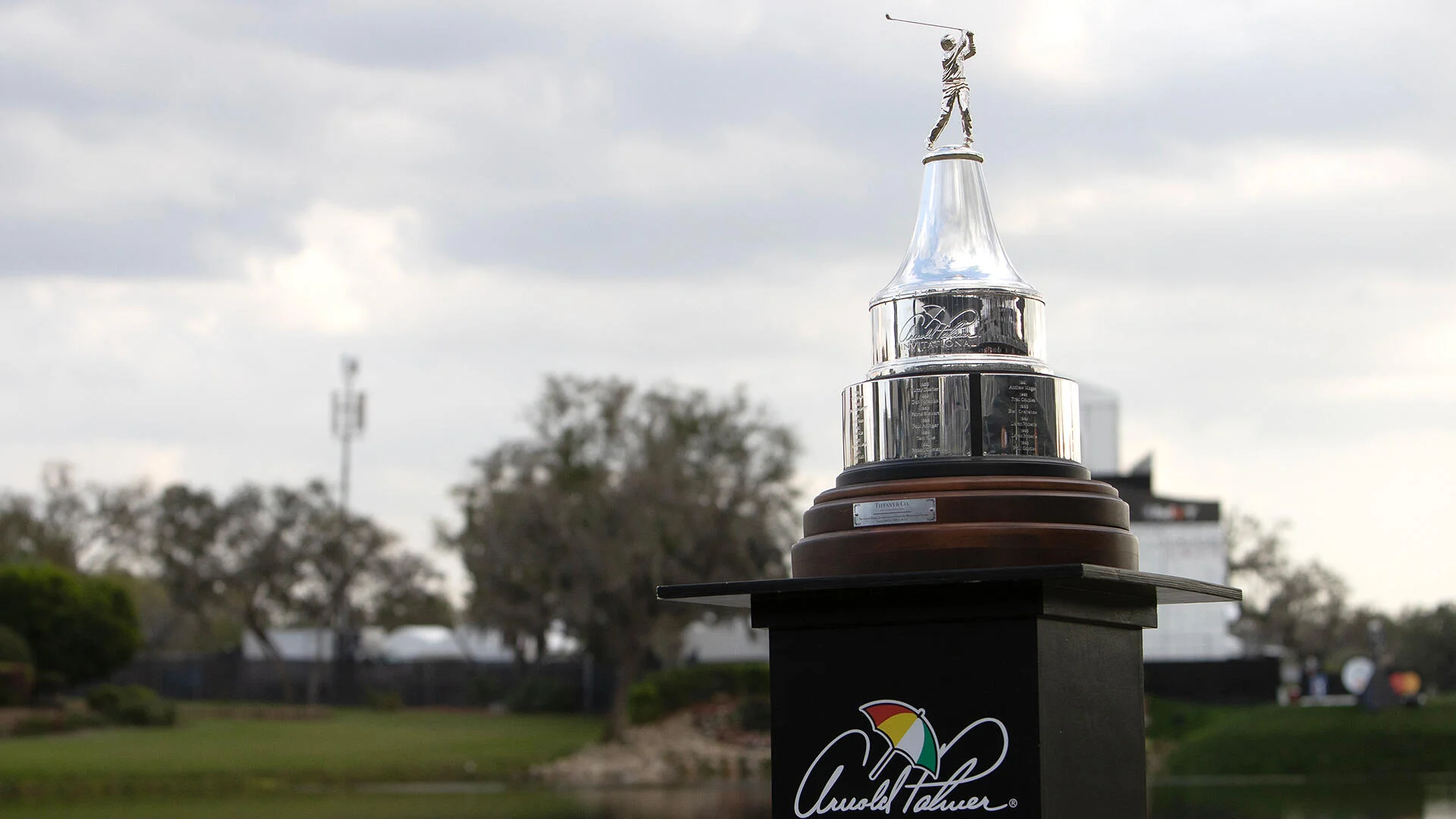

Bhatia’s Bay Hill Breakthrough: What the Tour’s Playoff Phenomenon Really Tells Us
By James "Jimmy" Caldwell
Senior Tour Correspondent, The Daily Duffer
Akshay Bhatia walked away from Bay Hill with $4 million in his pocket this week—and honestly, that number doesn’t even tell you the real story of what happened at the Arnold Palmer Invitational. Sure, the prize money is staggering. Sure, Bhatia’s victory was impressive. But what struck me watching this unfold is something more curious about the state of professional golf in 2026: we’re witnessing the most competitive era I’ve covered in 35 years, and the playoff format might be telling us exactly why.
Let me be direct about what I’m seeing. Bhatia became "the eighth man in history to win his first three tournaments in playoff competition." Eight men. In history. Think about that for a second. When I was caddying for Tom Lehman in the ’90s, you’d have rookies grinding for years before even sniffing a win. Now we’ve got a kid winning three times before he’s hardly unpacked his tour bag—and he’s doing it in sudden-death situations. That’s not luck. That’s a different breed of competitor emerging on the PGA Tour.
"Every player inside the top 11 this week earned north of $500,000, and those inside the top 24 will all cleared at least $200,000."
Here’s what fascinates me: the purse structure at signature events has fundamentally changed how these tournaments play out. That $20 million pot at Bay Hill, with the winner taking $4 million? That’s not just money—that’s leverage. It’s motivation. And it’s creating a different kind of tournament drama than what I witnessed during my first fifteen Masters.
The New Parity
What really stands out when you look at the 2026 signature event winners so far is the variety:
- Pebble Beach Pro-Am: Collin Morikawa ($3.6 million)
- Genesis Invitational: Jacob Bridgeman ($4 million)
- Arnold Palmer Invitational: Akshay Bhatia ($4 million)
Three different winners in three weeks. In my experience, signature events used to have familiar names atop the leaderboard. You could almost pencil in your favorites. Not anymore. The talent distribution on this tour is spread thinner than a fairway in July, and honestly, I think that’s healthy for the sport—even if it makes my job predicting outcomes considerably harder.
I’ve noticed something else: player-hosted invitationals like Bay Hill, Genesis, and Memorial are paying slightly more than standard signature events. It’s a subtle nod to the importance of these tournaments in the annual calendar. Arnie’s Place deserves that distinction.
The Cut Matters (Differently)
One element that didn’t get enough attention in the coverage: "not all who competed were guaranteed paydays at the Arnold Palmer Invitational, as the field was cut to the top 50 players and ties (as well as those within 10 strokes of the leader) at the 36-hole mark."
This matters more than you might think. The 36-hole cut creates genuine stakes. Miss it, and you’re going home with nothing—no $54,000 check that Bryan Harman picked up for 49th place. In my view, this raises the intensity considerably for Friday golf. There’s no coasting. There’s no "let’s see where we stand going into the weekend." Every shot counts because the financial cliff is real and immediate.
The McIlroy Question
Let’s address the elephant in the room—or rather, the absent elephant. Rory McIlroy withdrew Saturday with back spasms, and while the tour expects him healthy for The Players next week, his absence highlighted something I think about often these days: player load management is no longer fringe thinking. It’s standard operating procedure.
"Not among them was Rory McIlroy, who withdrew on Saturday, citing back spasms. (McIlroy is expected to be healthy enough to participate in The Players next week.)"
Is that smart? Yes. Is it changing how we evaluate the significance of individual tournaments? Absolutely. McIlroy missing Bay Hill wouldn’t have happened fifteen years ago without major injury consideration. Now? It’s a strategic decision, and honestly, I can’t fault the logic.
The Depth We’re Seeing
Looking at the full prize distribution, what jumps out is how far the money extends. Players finishing 44th through 49th are still clearing between $54,000 and $70,000 for a week’s work. That’s not chump change—that’s mortgage payment territory. It incentivizes depth of field and ensures that even mid-pack finishers are competing for meaningful compensation.
I’ve also noticed something encouraging: the distribution doesn’t create a cliff between 11th and 12th place the way older purse structures did. The $514,000 drop from 11th to 12th is significant, sure, but it’s not the 50% haircut we used to see. That’s more equitable, and in my view, it’s better for the health of professional golf.
What’s Really Happening Here
In three decades covering this tour, I’ve seen prize money structures reflect the tour’s priorities and philosophy. The 2026 model—with substantial payouts for signature events, meaningful money down to 49th place, and playoff drama deciding champions—tells me the PGA Tour is investing in competitiveness and player retention.
Akshay Bhatia’s victory is significant not because it’s unexpected, but because it’s emblematic of a tour where any given Sunday (or Monday, in playoff situations) can produce a different champion. That’s good theater. That’s good sport. That’s the tour I still love covering after all these years.
