

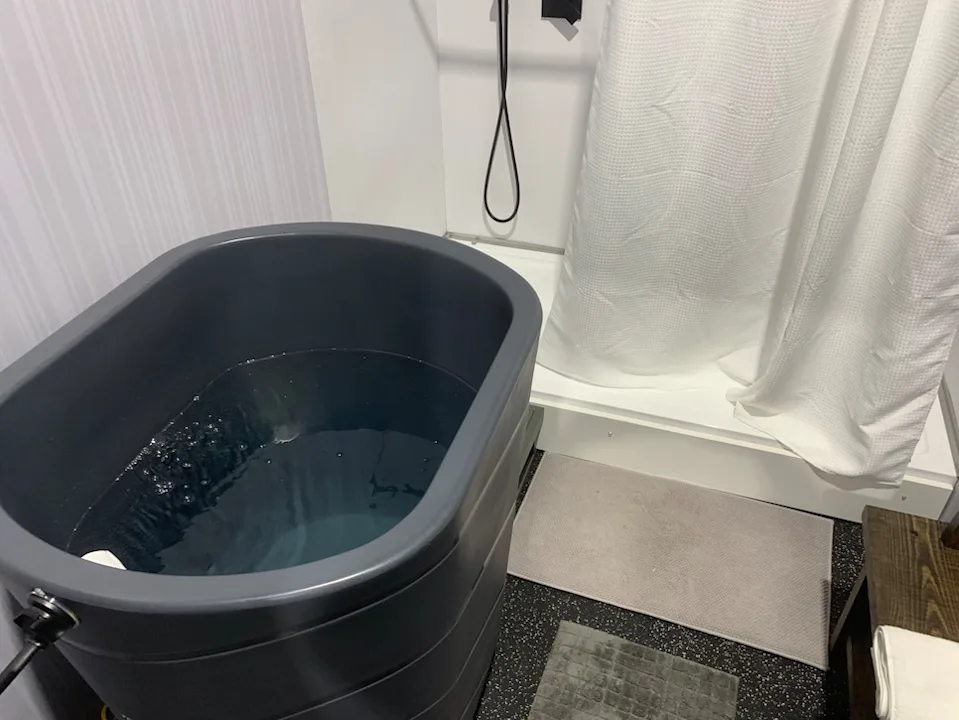

Cold Plunges and Pressure: Why the Tour’s Latest Recovery Trend Actually Matters for Your Game
After 35 years covering professional golf, I’ve learned that the most interesting stories aren’t always about who’s winning tournaments—they’re about how players are preparing to win them. And right now, there’s a quiet revolution happening in player recovery that tells us something important about modern competitive golf: the mental side of the game is finally getting the physical training it deserves.
Alex Myers’ piece on cold-water immersion caught my attention not because it’s novel—tour pros have been doing this for a few years now—but because it crystallizes something I’ve noticed growing on the range and in locker rooms: elite golfers are treating pressure like a trainable skill, the same way they treat their swing mechanics.
The Real Story Behind the Ice Bath
Let me be clear: cold plunges aren’t new to sports. What’s new is how systematically golf is embracing them, and more importantly, why. The physiological benefits—lactic acid clearance, reduced inflammation, faster muscle recovery—those are table stakes at this point. Every serious athlete knows that part.
But here’s what caught my eye after three decades watching tour players evolve: the mental component. When Mario Guerra tells Myers that cold plunges put your body in fight-or-flight mode and that regular exposure helps you manage that same state on the course, he’s describing something I’ve seen transform the game.
“It puts your body in fight-or-flight mode. And the more you get used to that feeling, the better you’ll be prepared to handle it when it happens on the golf course.”
I caddied for Tom Lehman in the ’90s. Tom was a grinder—mentally tough in a way that seemed almost innate. But the truth, which I understood better after years on tour, was that he’d simply practiced being uncomfortable more than his competitors. He’d played in brutal conditions, missed cuts, lost tournaments he should’ve won. That steel in his nerves didn’t come from genetics; it came from repetition.
What’s different now is that players don’t have to wait for tournaments to practice handling pressure. They can manufacture it. Daily. Deliberately.
The Tour’s Quiet Shift
The fact that cold plunges are now part of mandatory “player recovery tents” at all PGA Tour stops beginning in 2024 is the kind of detail that tells you everything about institutional change. This isn’t some fringe biohacking thing anymore. This is tour-sanctioned, normalized, expected.
What strikes me is how this reflects a broader maturation in how we approach professional golf. Twenty years ago, recovery was mostly about rest. Sleep. Maybe some stretching. Now it’s targeted, scientific, and—here’s the key—it’s competitive. If your rival is doing cold plunges and you’re not, you’re potentially leaving recovery on the table.
I’ve watched similar shifts before. When fitness became mandatory on tour, it wasn’t optional—it was table stakes within five years. Same with TrackMan technology, launch monitor data, and biomechanical analysis. The tour evolves by raising the baseline.
Why This Matters Beyond the Pro Level
Here’s where Myers’ piece gets genuinely useful for weekend warriors: he’s honest about the mental-pressure angle. Most golf media treats performance improvement as either technical (swing changes) or physical (strength and conditioning). The psychological component gets lip service but rarely gets integrated into a practical training program.
Myers’ approach—deliberately putting himself in an uncomfortable physiological state and practicing breathing, visualization, and mental resilience while doing it—is textbook performance psychology applied through cold water.
“I’ve been training my mind a little bit trying to take some ice plunges and trying to get in uncomfortable situations and being able to hold in there, just to be able to push, just to be able to know that I’m not as fragile as I may think.”
That’s Sebastian Munoz talking ahead of the Presidents Cup. Not talking about swing mechanics. Not talking about fitness. Talking about toughness. About learning that discomfort isn’t dangerous—it’s trainable.
After spending decades watching players crack under pressure and others thrive in it, I can tell you: that’s half the game right there. Maybe more.
The Balanced Reality
Now, let me offer the counterpoint because it matters: cold plunges aren’t a shortcut. They’re a supplement. Myers had the wisdom to note that after resistance training, cold water can potentially hinder muscle-building gains. The science is still evolving, and there are legitimate medical cautions.
But here’s what I think is true: the players who are most committed to their craft are going to find every legitimate edge. Cold plunges, when done properly and safely, represent one more tool in that toolkit. More importantly, they represent a mindset—the willingness to embrace discomfort as part of improvement.
The encouraging part of Myers’ account is his result: a crucial drive under pressure after months of cold-plunge training, played with steadier nerves than usual. Is it the ice baths? Is it placebo? Is it the act of committing to a discipline that built mental toughness? Probably some combination.
On the tour, that distinction doesn’t matter much. What matters is results. And results, like championships, are built on the small daily decisions—some of them uncomfortable—that separate the committed from the casual.
If you’re serious about improving at golf this year, you don’t necessarily need a cold plunge. But you probably need something that forces you to get comfortable getting uncomfortable. Because that’s the trend I’m seeing on tour, and it’s one worth taking seriously.
