


Anthony Kim’s Major Moment: Why His Adelaide Win Changes Everything—And Nothing Yet
I’ve been covering professional golf for 35 years, and I’ve learned that comebacks make for great stories but rarely translate into sustained success. Anthony Kim’s victory in Adelaide last month is genuinely remarkable—a feel-good narrative wrapped in a bogey-free 63 that beat Jon Rahm and Bryson DeChambeau on the same day. But here’s what I keep thinking about: Is this the beginning of something historic, or is it the perfect exclamation point on an already improbable redemption arc?
Let me be clear—I’m not dismissing what Kim just accomplished. I’ve caddied in the trenches, watched champions emerge from nowhere, and observed the mental fortitude required to climb back from rock bottom. Kim’s journey isn’t just golf redemption; it’s human redemption. The fact that he went from barely walking into rehab to carving a 9-under final round against the tour’s elite should humble anyone quick to judge his future prospects.
But Major championships? That’s where the rubber meets the road in a fundamentally different way.
The Reality Check Nobody Wants to Hear
Here’s what struck me most reading through the various takes on Kim’s Major chances: Everyone’s essentially saying the same thing with different levels of enthusiasm. They believe he *can* win a Major. But there’s a consistent caveat lurking beneath the optimism—he hasn’t actually qualified for one yet.
“At this stage, it would be a tall ask for Kim to even qualify as No.203 in the world. Reaching either the US Open or Open Championship is certainly reasonable via qualifying, but The Masters is invite only and Kim would likely have to make up another 140 spots or so to book his tee time.”
That’s the unsexy truth. We’re talking about a 40-year-old who currently sits outside the world’s top-200, playing in a 57-man field format, being positioned as a potential Major contender. The gap between a LIV victory and sustained performance at Augusta National isn’t just about skill—it’s about consistency, mental durability, and the ability to execute under pressures that are qualitatively different from anything he’s faced in his comeback.
In my experience, this distinction matters more than casual fans realize. I’ve seen talented players win on tour who completely unraveled in Major championship conditions. The pressure isn’t just higher; it’s a different species of pressure. The fields are stronger, the courses are set up more brutally, and the mental gymnastics required to stay composed when you’re in contention for the sport’s ultimate prizes separate the contenders from the also-rans.
The Time Factor Nobody’s Talking About Loudly Enough
One of the more thoughtful analyses in the piece came from Nick Bonfield, who acknowledged Kim’s achievement while laying out what I think is the most important caveat of all:
“The problem is when you compare him to the likes of Scottie Scheffler, Rory McIlroy, and others from the PGA Tour… a win for Kim in a 57-man event, and a top-10 at the Saudi International, doesn’t suddenly warrant a Major-contender tag.”
That’s not cynicism—that’s clarity. And here’s what it implies: Kim needs months, not weeks, of evidence that Adelaide wasn’t a lightning-in-a-bottle moment. He needs to show up at regular PGA Tour events (if he goes that route) or rack up multiple strong finishes on LIV and prove the Adelaide win wasn’t an outlier.
But there’s also a clock ticking. At 40, with a body that’s been through genuine trauma, Kim has maybe three years—maximum—to put himself in legitimate Major contention. That’s not much time in golf, especially when you’re trying to climb from 203rd in the world toward the top 100.
Why the PGA Championship Makes Sense (More Than You Might Think)
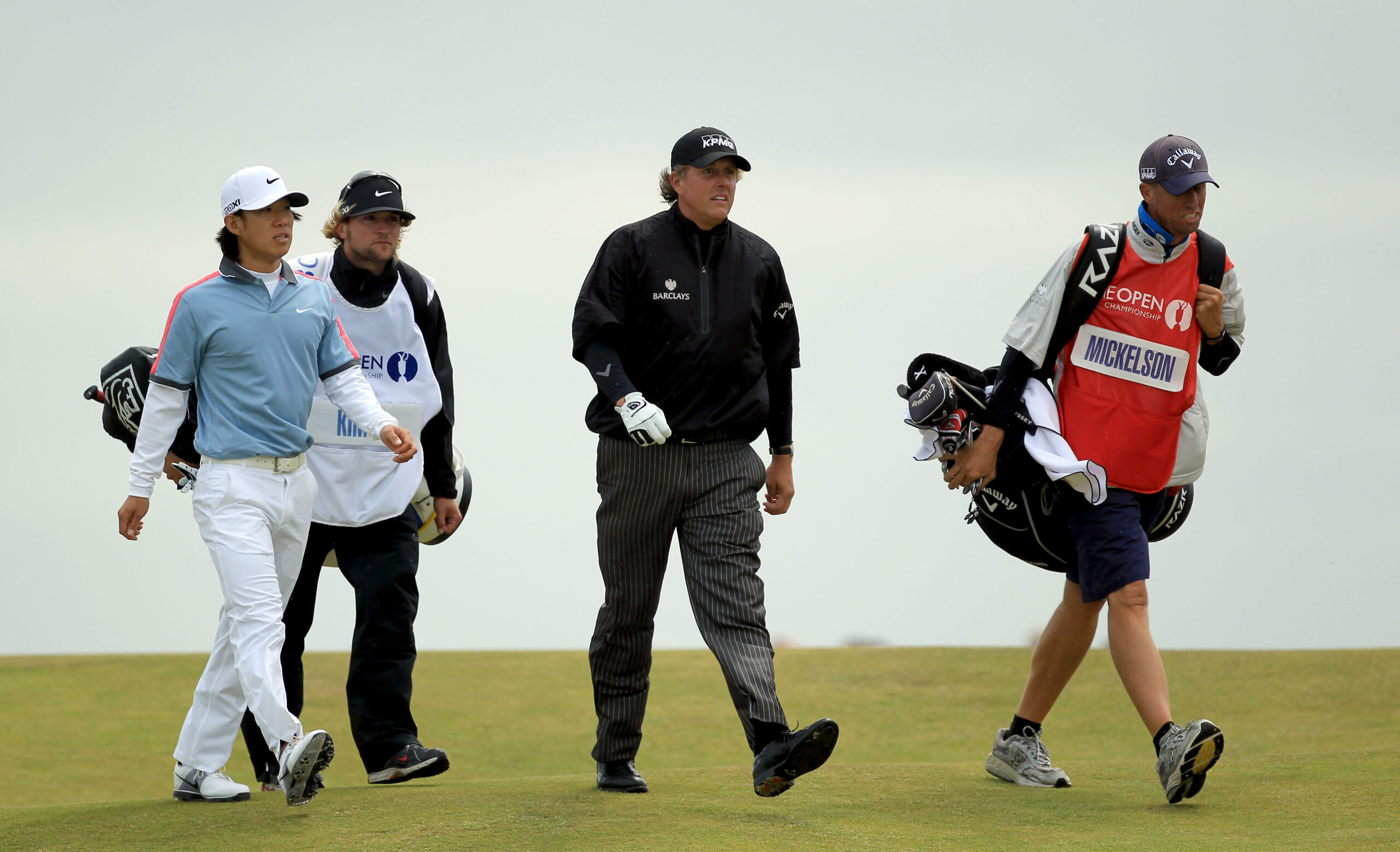
One detail that didn’t get enough attention: Phil Mickelson reportedly said he wouldn’t be surprised to see Kim win a Major. And while Lefty has always been generous with his encouragement, there’s strategic logic here worth examining.
“Kim’s story has been truly remarkable and his comeback win is a moment I’ll likely never forget…The PGA of America, which runs the US arm of the Ryder Cup, has obvious history with AK, and it even sent out a post on X to congratulate him.”
The PGA Championship, if it extends Kim an exemption as a LIV winner, becomes the most realistic Major venue for him in 2026. Unlike the Masters (which requires the invite), the US Open and Open (which require qualifying), the PGA has room in its large field and has already signaled goodwill toward Kim by congratulating him publicly. It’s the path of least resistance and, frankly, makes genuine sense from a storytelling perspective—especially if Kim can add another strong finish or two to his resume before May.
Here’s what I think matters most: Kim doesn’t need to win a Major to validate his comeback. He’s already done the hard part. But if he’s serious about that next chapter, he needs to treat the next 12-18 months like a professional athlete in his prime, not someone coasting on a feel-good narrative.
His Adelaide win proved he still has the game. What happens next will determine whether he has the opportunity.
