



As a self-proclaimed connoisseur of golf architecture, having traversed over 200 courses across the globe, there’s a period that consistently beckons my attention: the Golden Age of golf course design in America. Roughly spanning from 1915 to 1935, and sometimes stretching to 1940, this era was a crucible of brilliance, forging many of the United States’ most revered layouts. Visionaries like Donald Ross, A.W. Tillinghast, George Thomas Jr., William Flynn, and the inimitable Alister MacKenzie were at the peak of their powers, crafting courses that were both strategic and breathtakingly natural. While many of these masterpieces remain elusive to the everyday golfer, guarded by the exclusivity of private clubs, I’m here to tell you about some of the true gems that are, thankfully, accessible to us all. Let’s embark on a journey to the top 10 Golden Age courses you can actually play in the U.S.
Pebble Beach Golf Links—Pebble Beach, Calif. (1919)
There are golf courses, and then there is Pebble Beach. Even if you’ve never set foot on its hallowed ground, images of its dramatic coastline and crashing waves are likely etched into your golfing consciousness. Formed in 1919, Pebble Beach wasn’t designed by a renowned architect at first.
“Pebble Beach founder Samuel Morse figured that the land for his proposed Pebble Beach golf course was so good that an amateur could design it and not mess it up.”
So, he entrusted the task to Jack Neville, a real estate salesman and California State Amateur champion, and Douglas Grant, another top amateur familiar with British links. While the individual holes have seen their share of adjustments over the decades, the genius of Neville and Grant’s figure-eight routing remains. This brilliant design choice allows for an astonishing number of holes to hug the Pacific, delivering views that are, quite frankly, unparalleled. The stretch from the 5th to the 10th hole is a masterclass in combining strategic challenge with spectacular scenery. Imagine standing on the 7th tee, a mere postage stamp of green jutting into the ocean, the salt spray on your face, and having to commit to a shot with the Pacific roaring behind you. And that final, majestic stroll up the par-five 18th, curving gracefully around Carmel Bay? It’s an experience that transcends golf.

Pinehurst Resort (No. 2)—Pinehurst, N.C. (1907)
Stepping onto Pinehurst No. 2 is like entering a golfing sanctuary. Donald Ross’s subtle masterpiece, opened in 1907, flows with a gentle cadence through the towering pines of North Carolina. This course isn’t about brute force; it’s a cerebral challenge, a testament to the power of strategic placement and the angle of attack. The genius lies in those infamous turtleback greens, which are famously unreceptive to anything but the most perfectly struck approach shots. Miss the green, and you’re faced with one of golf’s sternest tests of chipping. I’ve stood over countless chips here, every club in the bag seeming equally plausible and equally terrifying. The beauty of No. 2 is how it subtly tests you without resorting to forced carries or water hazards. It’s a testament to timeless design that even the game’s best are humbled, while the average golfer can often finish their round with the same ball they started with, albeit with a deeper appreciation for Ross’s subtle genius.

Bethpage (Black)—Farmingdale, N.Y. (1936)
If Pinehurst No. 2 is subtle genius, Bethpage Black is an unapologetic declaration of war on your golf ball. Born in the depths of the Great Depression, this public course, an hour east of New York City, was envisioned as a U.S. Open-worthy challenge for the masses. A.W. Tillinghast, aided by Joseph Purbeck, delivered a course that indeed blends elements inspired by architectural titans like Pine Valley and Winged Foot. The famous sign at the first tee doesn’t lie:
“Warning—The Black Course is an extremely difficult course which we recommend only for highly skilled golfers.”
I can attest to its unforgiving nature. This walking-only behemoth throws everything at you: gargantuan bunkers that swallow errant shots, rough so thick it can hide a small wild animal, and glassy greens that demand absolute precision. The uphill climbs, particularly on the par-fours, are relentless. It’s a course where a par feels like a birdie and a bogey is often a win. Yet, having hosted majors won by the likes of Tiger Woods, Lucas Glover, and Brooks Koepka, it proves unequivocally that public golf doesn’t have to be watered down. It’s a national treasure that demands respect and rewards courage.

Pasatiempo—Santa Cruz, Calif. (1929)
Alister MacKenzie, the cunning Scot, gifted the golfing world with Pasatiempo in 1929, arguably his finest public access course. This Santa Cruz masterpiece defies its modest 6,495-yard scorecard with a relentless barrage of strategic challenges. How does such a “pipsqueak in the yardage department” play so difficult? Just ask anyone who has navigated its rolling terrain, crisscrossed by barrancas and framed by slender, tree-lined fairways. I’ve often found myself mesmerized by MacKenzie’s artistry here, particularly the deep, artfully sculpted bunkers that seem to loom large in your peripheral vision on every shot. Add to this the cool Pacific Ocean breezes and greens that are not just fast, but nightmarishly quick and canted, and you have a course that demands your full attention. Even legends like Hogan, Nelson, and Woods couldn’t consistently break 67. A recent restoration by Jim Urbina has further amplified the MacKenzie magic, bringing back many of the architect’s original intentions and ensuring that Pasatiempo continues to bewitch and beguile golfers for generations to come. It’s a testament to strategic design that a relatively short course can possess such profound teeth, proving that yardage is merely one component of a truly great test.

Lawsonia (Links)—Green Lake, Wis. (1930)
While many of the Golden Age architects are household names among golf enthusiasts, William Langford and Theodore Moreau are often overlooked, yet their work at Lawsonia Links in Green Lake, Wisconsin, is a testament to their genius. Opened in 1930, this course is quite possibly the Badger State’s best bargain, offering an architectural experience far exceeding its green fee. Langford and Moreau, at their peak in the 1920s, wove together design elements reminiscent of both Donald Ross and Seth Raynor, creating a rolling, mostly treeless landscape—hence the charming “Links” misnomer, as it’s not a true seaside links. What truly sets Lawsonia apart, in my experience, is its spectacular set of deep, often hidden bunkers and wonderfully elevated greens. You’ll find yourself constantly strategizing your approach, trying to avoid catching one of those sandy behemoths. At a firm and fast 6,932 yards and par 72, it’s a demanding but fair test. However, if you’re not comfortable with those daunting recoveries from the sand, you’re in for a long day. Lawsonia stands as a beautiful reminder that world-class architecture isn’t always found behind guarded gates, and sometimes, the best experiences are discovered off the beaten path.

Omni Homestead (Cascades)—Hot Springs, Va. (1923)
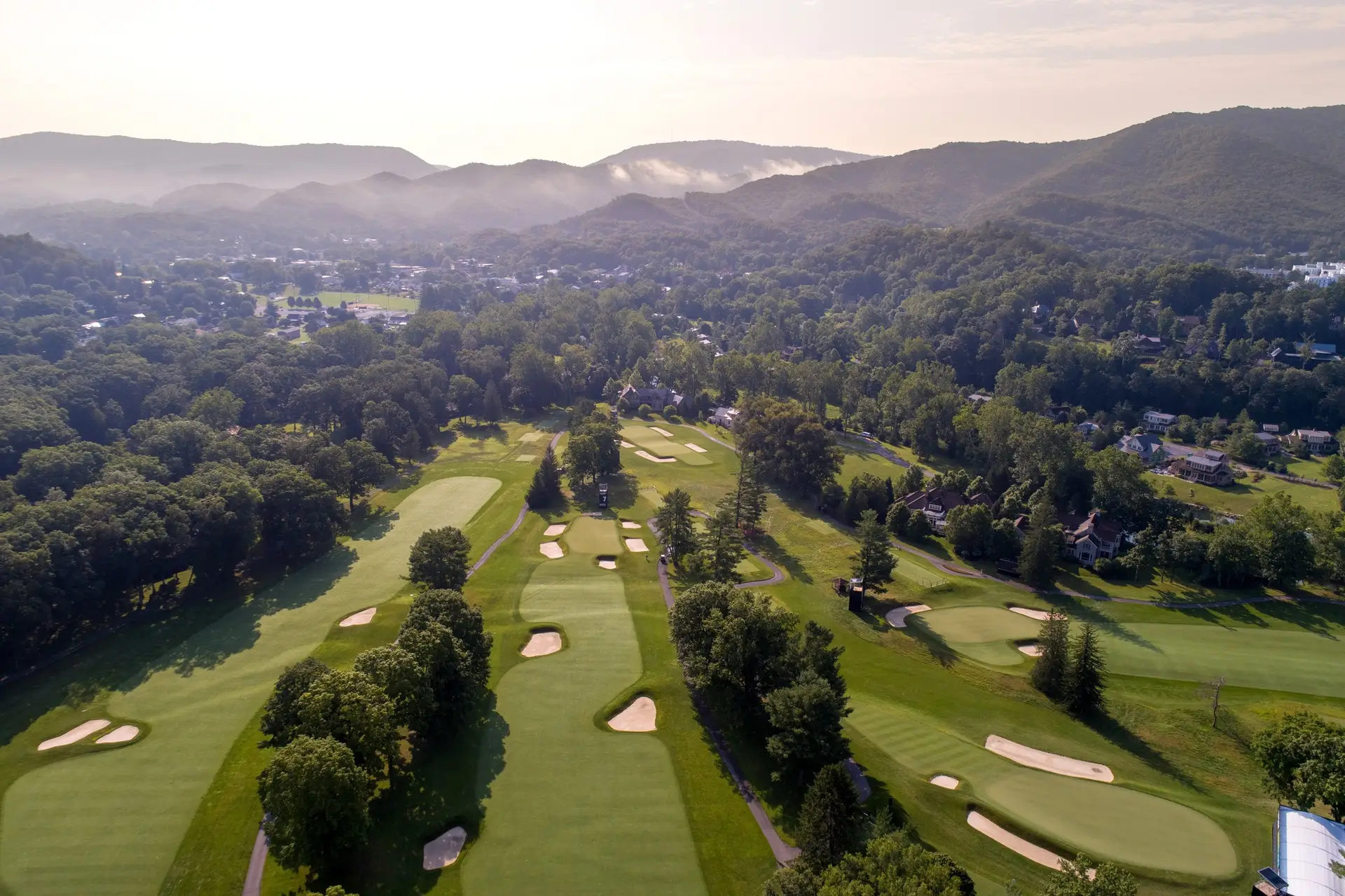
Nestled in the serene embrace of Virginia’s Allegheny Mountains, the Omni Homestead’s Cascades course, a 1923 William Flynn design, is a symphony of natural beauty and strategic brilliance. Playing this course is a step back in time, with its sloping fairways, the gentle murmur of brooks, and the quiet reverence of the tree-shrouded mountain landscape. It demands artistry in shot-making, a trait that the legendary Sam Snead, who grew up here, exemplified. Don’t let the Old-World scorecard yardage of 6,729 yards, par 71, lull you into a false sense of security. The Cascades delivers a dazzling array of lies and stances, forcing you to conjure imaginative shots from every corner of the course. The first 12 holes, tightly framed by thick woods, emphasize precision and control. As you emerge onto the final six, the course opens up, offering more strategic options and a chance to breathe in the expansive mountain vistas. It’s a truly harmonious blend of challenging golf and breathtaking surroundings, showcasing Flynn’s masterful ability to integrate a course seamlessly into its natural environment.

Mid Pines—Southern Pines, N.C. (1921)
Venturing further into the heart of North Carolina’s Sandhills, we arrive at Mid Pines, a Donald Ross creation from 1921 that has been brilliantly restored. Kyle Franz, who assisted Coore & Crenshaw at Pinehurst No. 2, painstakingly brought back Ross’s original vision in 2013. The transformation is remarkable: hardpan sand dotted with wiregrass now elegantly frames the regrassed fairways and greens, 400 trees were judiciously removed, and the course’s width, angles, and strategic nuances have been reinstituted. Walking these grounds, you truly appreciate Ross’s intent. Take the 325-yard par-four 4th, for instance. It embodies the strategic brilliance. The ideal lay-up shot to its left-to-right tilting fairway requires hugging a sandy hazard on the left – a move that opens up the best angle into the green. An indifferent wedge, however, will undoubtedly spin off the shallow, plateau green that slopes away from you. It’s drivable for the long hitters, a tempting risk/reward, but a miss in the wrong spot can quickly turn a potential birdie into a dreaded 5 or worse. Mid Pines is a testament to the enduring quality of Ross’s designs, especially when thoughtfully brought back to life.

Pine Needles—Southern Pines, N.C. (1927)
Just a short drive from Pinehurst No. 2 lies Pine Needles, another magnificent Donald Ross creation from 1927, stewarded by the family of the legendary LPGA founder, Peggy Kirk Bell. While not as relentlessly difficult as its famous neighbor, Pine Needles is a celebrated tournament venue in its own right, having hosted numerous U.S. Women’s Opens. Its crowned greens are notorious for rejecting anything but a confident, well-struck approach. Another Kyle Franz restoration in 2017 skillfully resurrected its Rossian roots, extending the par-71 layout to a formidable 7,025 yards. The 475-yard par-four 2nd hole provides an early and stern test. It demands a powerful drive to a plateau, followed by a finely gauged downhill approach to a green that slopes deceptively away from the player. It’s a shot that requires both power and finesse, a true Ross signature. Pine Needles consistently proves that golf architecture can be both challenging for the world’s best and eminently enjoyable for the average player—a perfect blend of strategy and playability.

The Greenbrier (Old White)—White Sulphur Springs, W.Va. (1914)
There’s a certain timeless elegance about The Greenbrier’s Old White. Crafted by the legendary C.B. Macdonald and Seth Raynor in 1914, this West Virginia gem has been lovingly preserved, notably through Lester George’s sensitive 2007 restoration. Set amidst the rolling, undulating terrain of the forested Allegheny Mountains, Old White is a masterclass in classic template holes. Playing here, you’re treated to architectural homages that thrill any design enthusiast: the iconic Redan par-three 8th, the strategic Punchbowl par-four 9th, and the exquisite Eden par-three 15th. The rhythmic flow of these holes, each presenting its unique challenge, is a joy to experience. The course even ends with an unusual par three, the 177-yard 18th, a unique twist that leaves a lasting impression. Having hosted the PGA Tour’s Greenbrier Classic, it’s clear that Old White offers a compelling and charming examination of one’s game amidst some of the most beautiful natural surroundings.
The Broadmoor (East)—Colorado Springs, Colo. (1918)
High in the foothills of Cheyenne Mountain, at an elevation of 6,200 feet, lies The Broadmoor (East), a rare Donald Ross design west of the Mississippi, carved out in 1918. For a golf architecture enthusiast, experiencing a Ross course in such a distinct, mountainous landscape is a particular delight. The current East Course artfully blends Ross’s original holes (1–6 and 16–18, which were the original back nine) with additions by Robert Trent Jones Sr. in the late 1950s and early 1960s. The mountain backdrops are nothing short of spectacular, but they come with their own set of challenges. The thin air impacts distance control significantly, and the slopes mean green reading is a constant mental chess match. This 7,355-yard, par-72 layout has a championship pedigree to match its views, having hosted Jack Nicklaus’s 1959 U.S. Amateur victory, Annika Sorenstam’s 1995 U.S. Women’s Open, and multiple U.S. Senior Opens, including Padraig Harrington’s recent triumph. The Broadmoor East is not just a golf course; it’s an alpine golfing adventure, a grand testament to Ross’s adaptability and the enduring allure of mountain golf.

