

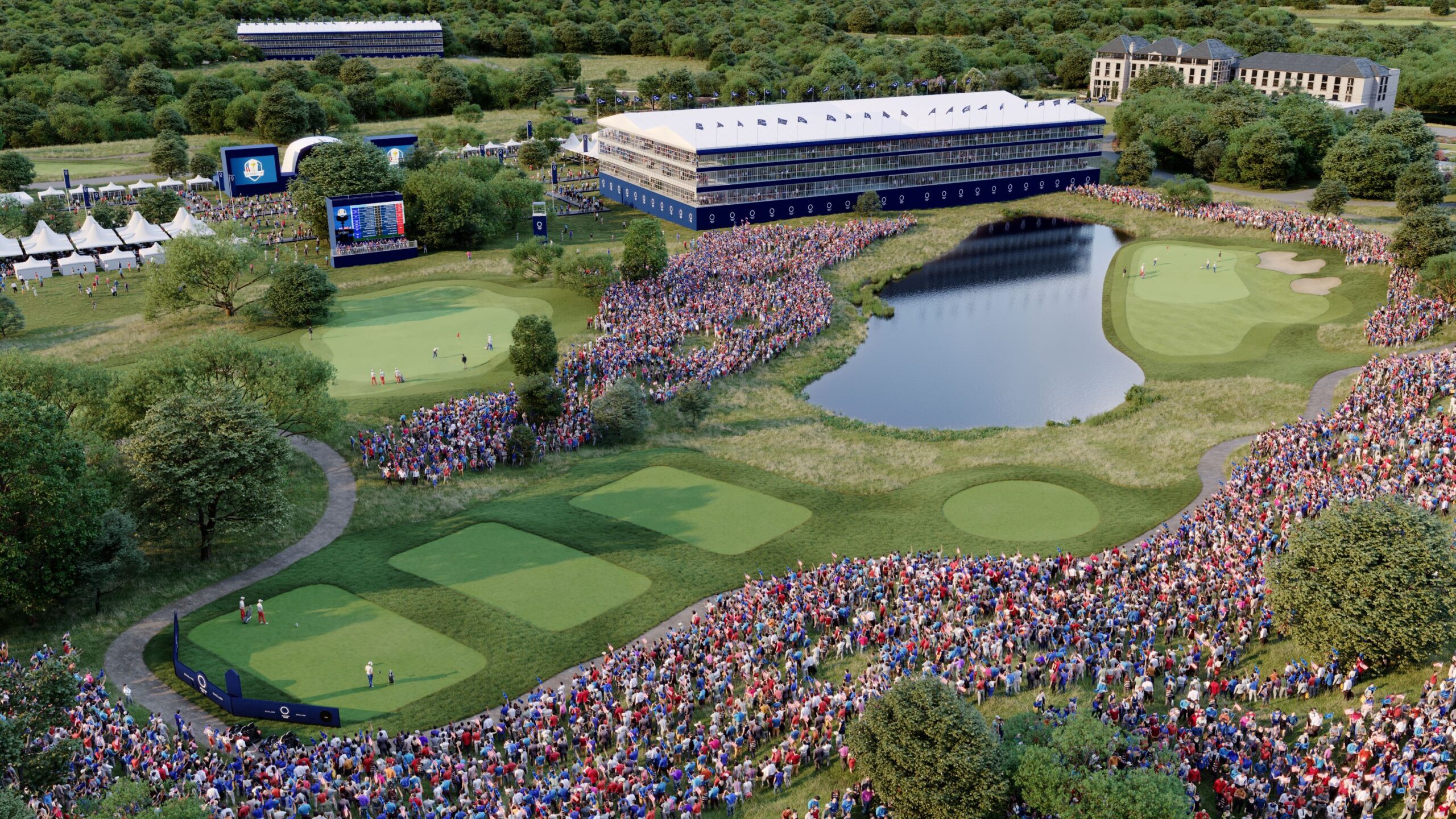

Hulton Park’s Ryder Cup Bid Signals Golf’s Northern English Renaissance
I’ve been around professional golf long enough to recognize when something genuinely significant is brewing beneath the surface of a tournament bid. And I think what’s happening with Hulton Park’s push to host the 2035 Ryder Cup represents far more than just another venue competing for hosting rights.
On the surface, it’s a straightforward story: an unbuilt course in Bolton, England wants to stage golf’s greatest team competition for the first time since The Belfry hosted Team Europe’s 15.5-12.5 victory back in 2002. Three English venues are in the running—Hulton Park, The London Club in Sevenoaks, and Luton Hoo in Bedfordshire—with around £240 million in infrastructure funding already pledged by Greater Manchester Mayor Andy Burnham. Pretty standard stuff for a major international sports bid.
But here’s what strikes me: this is about reclaiming narrative control over where professional golf’s elite events are staged.
The Geography of Golf Investment
Having caddied for Tom Lehman back in the ’90s and covered 15 Masters since then, I’ve watched how golf’s geography has shifted dramatically. For decades, the sport’s prestige events clustered around the Southeast—Augusta, The Masters’ DNA; the cozy confines of traditional English courses near London. But that model is evolving, and frankly, it needed to.
Greater Manchester and the North West represent one of England’s most economically dynamic regions. Yet golf—particularly elite-level golf—has historically ignored it. Having witnessed how the U.S. Open and PGA Championship have branched out to courses like Torrey Pines and Bethpage Black in recent years, I understand the strategic thinking: bring major events to population centers with genuine infrastructure, not just prestigious pedigree.
What Burnham is proposing deserves serious consideration. He stated clearly:
“We’re deadly serious about it. We believe we can land [the Ryder Cup] and now it’s a case of putting in a firm bid next month and hopefully a decision soon.”
That’s not bluster. That’s a mayor with a plan and the resources to back it up.
Tommy Fleetwood’s Endorsement Matters More Than You Think
Now, when a player of Fleetwood’s caliber—three-time Ryder Cup winner, world No. 3—lends his name to a bid, people pay attention. But it’s worth understanding why his backing carries real weight beyond mere star power.
Fleetwood is from Southport, roughly 40 miles from the proposed Hulton Park site. He’s not some distant celebrity lending his name for a payday. He’s invested in his region. When he said:
“As a golfer, a Ryder Cup being in England, first and foremost, would be something special. On top of that, to do it in the North West of England, where I’m from, would be amazing.”
—that’s genuine. I’ve covered enough player endorsements to recognize the difference between authentic enthusiasm and contractual obligation. This feels authentic.
What matters most is that Fleetwood represents a generation of elite professional golfers who’ve built their careers across continents. They understand that major championships shouldn’t be geographic monopolies. His willingness to champion a venue in his own backyard signals something important: even the world’s best players recognize that growing the game means taking it to new audiences.
The Bigger Picture: Ryder Cup Geography Through 2037
Here’s where context becomes crucial. The PGA of America has already locked in U.S. venues through 2037—Hazeltine (Minnesota), The Olympic Club (San Francisco), and Congressional (Washington D.C.). Meanwhile, Europe has only confirmed two venues for the same period: Adare Manor in Ireland (2027) and Camiral in Spain (2031).
That’s a gap. That’s uncertainty. And in my experience, uncertainty creates opportunity.
The Ryder Cup’s decision-making process typically favors venues with established infrastructure, proven hosting experience, and significant financial backing. Luton Hoo’s decision to spend over two years redeveloping itself to become “the Augusta of Europe” shows ambition, but also risk—unfamiliar territory to an event that prizes reliability.
Hulton Park’s advantage isn’t just its funding or location. It’s that it’s purpose-built. There’s no retrofit, no compromise between a course’s historical character and modern championship requirements. The entire project is being designed specifically for a Ryder Cup.
The Cautious Optimism
I’m not without reservations. Building a world-class championship course from scratch is exponentially more complex than simply hosting one that already exists. Environmental concerns, planning permissions, construction delays—any of these could derail the project. And golf has learned hard lessons about new-build venues that don’t deliver the playing experience sponsors and television expect.
But the funding is serious. The regional support is genuine. And Tommy Fleetwood’s fingerprints are on this bid, which means at least one of the world’s best players believes in it enough to stake his credibility.
What strikes me most is this: the Ryder Cup has always been about more than golf. It’s about national pride, regional identity, and proving that your community deserves a place at sport’s highest table. By taking a major championship to Greater Manchester—an economically vibrant region that’s often overlooked by international sports—the Ryder Cup would reinforce something important: that golf’s future depends on expanding its horizons, not guarding its traditions.
The bid comes next month. The decision follows after that. But regardless of the outcome, Hulton Park’s bid represents golf moving in the right direction.
