


The Valspar Championship Represents Everything Right About PGA Tour Golf in 2025
After two weeks of signature events that have frankly exhausted my caffeine supply covering them—and I say that affectionately—the PGA Tour returns to what I’d call “honest golf” next week at Innisbrook. The Valspar Championship, concluding the Florida Swing, sits at an interesting crossroads in the modern tour calendar, and I think it deserves more respect than it typically gets from casual fans.
Look, I’ve been doing this for 35 years. I caddied for Tom Lehman in the ’90s when the tour felt different, smaller somehow. I’ve covered fifteen Masters tournaments. I’ve watched the evolution from one-week events to these sprawling signature tournaments that demand everything from players and media alike. What strikes me about the Valspar is that it’s still fundamentally about golf—pure, competitive golf—without the celebrity sheen and $20 million purses dominating the narrative.
A Field That Actually Means Something
Here’s what caught my eye in the field announcement: Seven of the world’s top 20 competing, headlined by Robert MacIntyre at eighth and Xander Schauffele at tenth. Now, on the surface, that might sound thin. But think about what we’re actually seeing here. These aren’t players obligated to show up because of some contractual minimum. These are legitimate competitors who chose to come to Innisbrook because they respect the course, respect the competition, and understand that winning here matters.
“A field of 133 will take on the challenge, including seven of the world’s top 20.”
That’s a healthy field size, by the way. Not so bloated that it loses intimacy, not so small that you’re wondering about legitimacy. It’s Goldilocks golf, if you will.
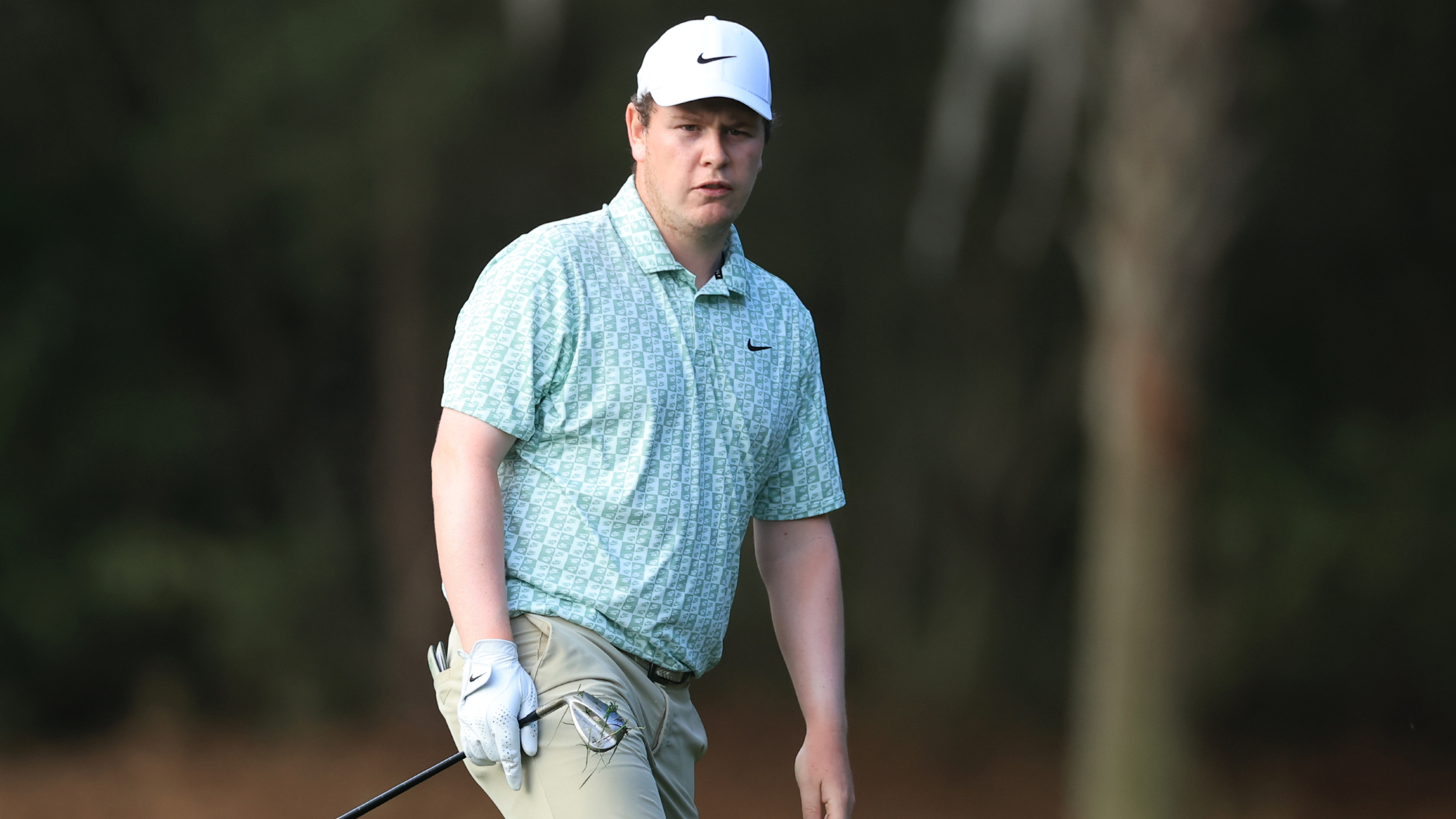
What particularly interests me is MacIntyre’s inclusion. The Scot made one appearance here in 2024, finished T33, and apparently took something away from that experience worth coming back for. That’s the kind of learning curve I respect. He’s not a Valspar regular banking on past success; he’s a top-10 player in the world treating this like an opportunity, not an obligation.
The Defending Champion Question
Viktor Hovland returns as defending champion after his one-shot victory over Justin Thomas last year. In my experience, defending champions at these mid-tier events face an interesting psychological dynamic. There’s confidence, absolutely. But there’s also the weight of expectation at a place where you’ve already succeeded. Hovland’s had a quieter 2025 relative to his brilliant 2024, so this could be exactly the kind of environment where he recalibrates and remembers why he won here in the first place.
The presence of other former winners—Peter Malnati (2024), Adam Hadwin (2017), and Jordan Spieth (2015)—tells you something important: The Valspar has sustained legitimacy. These aren’t one-hit wonders or players riding nostalgia. They’re competitors who’ve proven they can navigate the Copperhead Course’s particular demands, particularly that infamous Snake Pit finishing stretch.
“The course is particularly known for its notorious Snake Pit comprising the 16th, 17th and 18th holes.”
Having watched thousands of holes played on those three, I can tell you they’re brutal in the most elegant way possible. The pressure distills down to its essence there. No hiding. No lucky bounces saving you. Just three holes that separate the composed from the rattled.
What About Brooks and the LIV Contingent?
I’ve been watching Brooks Koepka navigate his return to the PGA Tour after four years on LIV Golf, and honestly, it’s been fascinating from a narrative standpoint. The Valspar isn’t a signature event—it doesn’t carry the immediate prestige of a Players Championship or an Arnold Palmer Invitational. That makes it an ideal proving ground for someone like Brooks. Lower-pressure environment, solid field, chance to build momentum without every shot being analyzed through the lens of “LIV vs. PGA Tour.”
I think we’ll see more of this strategy from LIV players rejoining the tour. Pick your spots. Build confidence. Let your game speak rather than the headlines.
The Prize Money Reality
The $9.1 million purse with $1.638 million to the winner is significant—absolutely. In my three decades covering the tour, I’ve seen purses fluctuate wildly, and this represents genuine investment by the tour in keeping mid-tier events competitive and attractive. It’s not signature money, but it’s respectable. It’s enough that a player can win here and genuinely impact their season financially and competitively.
“Players will be competing for a share of the $9.1m purse, while the winner will receive $1.638m.”
What matters more to me, though, is that this prize structure lets competitive golfers compete for something real without the circus atmosphere that sometimes surrounds the biggest events.
Why This Week Actually Matters
The Florida Swing concludes at Innisbrook, and that’s significant. Players leave Florida either with momentum heading into the spring schedule or with work to do. The Valspar is often that last chance to make a statement before the tour scatters across the country. It’s consequential in a way that doesn’t always get recognized.
In my experience, some of the most important golf moments happen at tournaments that don’t carry the marquee names or signature branding. This is where players prove they belong, where careers get quietly built. Watch the Valspar this week. You might just see something special—and you’ll definitely see golf that matters.
