

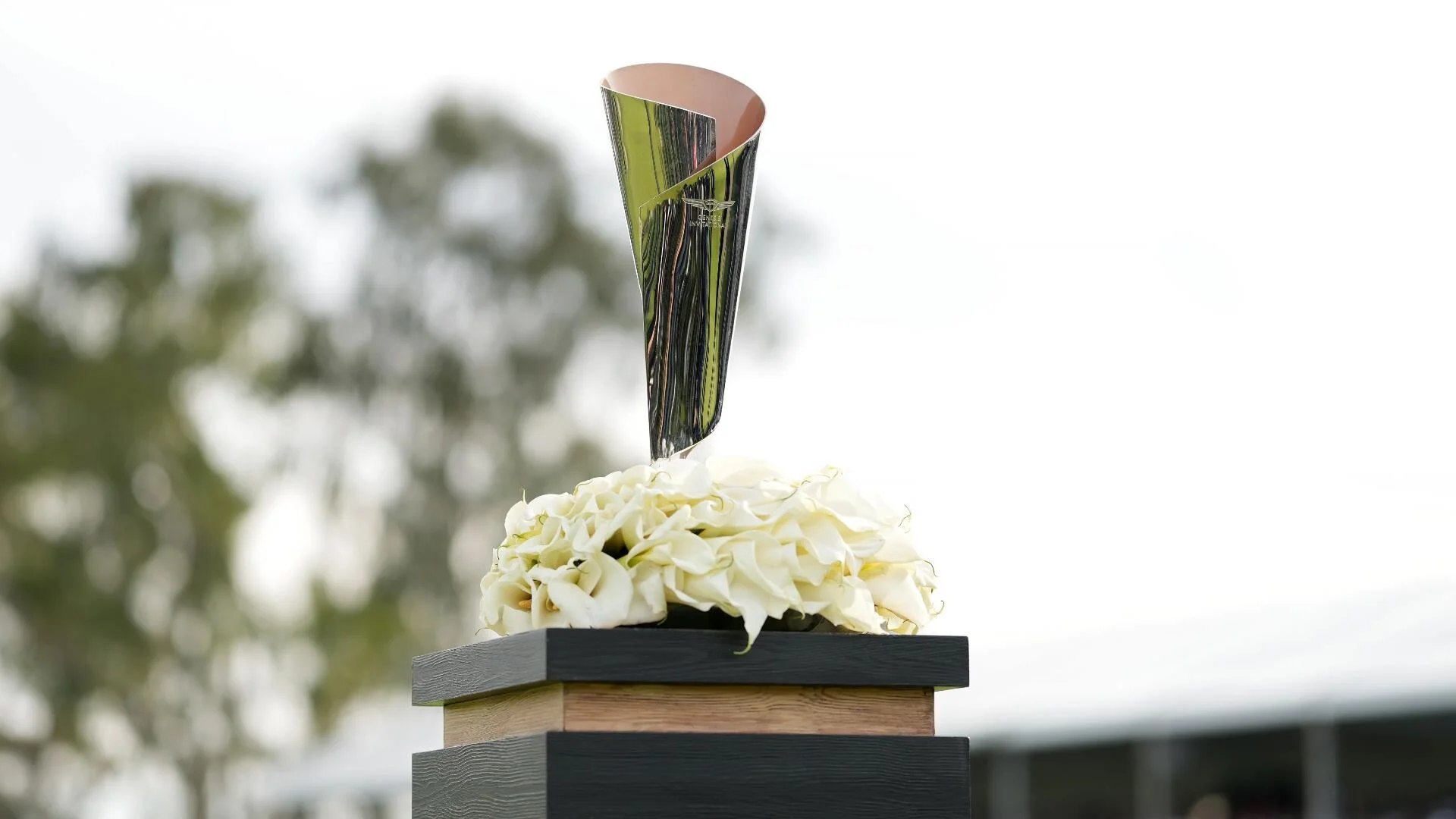

The Genesis Invitational and the Beautiful Chaos of Modern Tour Parity
After 35 years covering professional golf—and having spent a few of those years lugging Tom Lehman’s bag around some of the world’s finest courses—I’ve learned that the PGA Tour’s narrative arc tends to shift in ways that catch even seasoned observers off guard. This week at Riviera Country Club, we’re witnessing one of those pivotal moments, and frankly, it’s a lot more interesting than the doom-and-gloom crowd wants to admit.
Let me set the scene: Scottie Scheffler, the consensus heavy favorite before nearly every event on the modern tour, barely scraped into the weekend at the Genesis Invitational. Meanwhile, Jacob Bridgeman has torn apart one of golf’s most prestigious venues, sitting atop the leaderboard heading into Round 4. And Rory McIlroy, that perennial bridesmaid, finds himself six shots back in second place.
What strikes me most, though, isn’t that Scheffler stumbled or that an emerging name like Bridgeman has seized control. It’s what this moment represents about the fundamental shift we’re witnessing on the PGA Tour.
Nine Straight Winners: A Statistical Sea Change
Consider this: "Nine straight signature events have been won by different players, a significant departure from 2024 when Scottie Scheffler won four of the eight events on the calendar."
In my experience covering tour golf through various eras, this kind of parity at the highest level is genuinely rare. During the Tiger Woods era, you’d have stretches where one dominant player won three or four events in a season. It was almost expected—inevitable, even. The narrative was simple: Tiger’s playing. Everyone else’s playing for second.
But 2026 is telling us a different story. It’s a tour where depth has genuinely improved. Where talent is distributed more evenly across the field. Where the 30th-ranked player in the world shows up to a signature event and knows they can compete—not finish second or third, but actually win.
I’m not sure the casual fan fully appreciates what this means. In my caddie days, you’d work an entire season and watch the same three or four names atop leaderboards. These days? The signature events are becoming anyone’s to claim.
The Money Still Matters—A Lot
Here’s where the financial structure becomes crucial to understanding modern tour dynamics. With "$20 million in prize money on the line," the Genesis Invitational represents a genuine lottery ticket for the winner, who takes home $4 million.
The breakdown is worth noting:
Top Finishers at the 2026 Genesis Invitational:
- 1st Place: $4,000,000
- 2nd Place: $2,200,000
- 3rd Place: $1,400,000
- 4th Place: $1,000,000
- 5th Place: $840,000
Even finishing outside the top 10 provides six figures. A player finishing 25th walks away with $184,000 for four days of work. That’s transformational money for mid-tier professionals, and it changes how players approach their preparation and mental state heading into these events.
I think what’s happening is that these signature events, with their expanded purses and reduced field sizes (72 players instead of the traditional 80-plus), have created genuine opportunity. There’s less randomness when you’re competing against a tighter, more elite group. And with that opportunity comes the real possibility of breakthrough moments.
The Narrative Around Morikawa and Bridgeman
Collin Morikawa’s victory at Pebble Beach—"his triumphant return to the winner’s circle after a winless drought of nearly three years"—deserves more attention than it’s probably getting. That’s a significant mental barrier broken. Three years is a long time in professional sports, and Morikawa’s temperament and talent suggest he was due for this kind of breakthrough.
Now Bridgeman, playing with the freedom of a relative newcomer, has seized the moment at Riviera. Is he the future? Maybe. But what matters is that he had the opportunity to prove it. On the old tour structure, he might’ve been outside the cut line entirely, watching from home.
A Brief Word on Scheffler’s Weekend Challenge
Look, Scottie Scheffler remains the best player in the world. One missed cut—or near-miss—doesn’t change that. What it does change is the narrative. He’s not invincible. He’s human. And for the health of professional golf, that matters tremendously.
Having covered 15 Masters tournaments and seen dominant performances from multiple eras, I can tell you: fans connect to the drama of uncertainty. Yes, they respect Scheffler’s brilliance. But they’ll watch this weekend with genuine intrigue precisely because we don’t know if he can claw his way back into contention from so far back.
Looking Ahead to Sunday
Round 4 airs "live from 3-6:30 p.m. on CBS," and I’d genuinely encourage fans to tune in. Not because of the names you expect to see in contention, but because of the ones you might not have anticipated. Bridgeman’s play all week suggests he belongs in this conversation. McIlroy’s still within striking distance. And somewhere down the leaderboard, there’s a player making moves who might be tomorrow’s story.
The PGA Tour in 2026 is more competitive, more unpredictable, and—I’d argue—more compelling than it was during Scheffler’s dominance in 2024. That’s not a criticism of Scottie’s greatness. It’s an observation about the health of professional golf. The talent has deepened. The opportunities have expanded. And the outcomes, mercifully, are no longer predetermined before the opening tee shot.
That’s good golf. That’s worth watching.
