


Hello, Daily Duffer readers! Sarah Chen here, your golf instruction editor, always excited to help you unlock your best game. I’ve spent over 15 years on the range and course, working with golfers of all levels, from weekend warriors to tour professionals. My philosophy is simple: with the right approach and a little dedication, anyone can improve. And today, I want to talk about one of the most rewarding aspects of golf: making birdies!
Birdies aren’t just for the pros. They inject excitement into your round, erase a few bogeys, and build immense confidence. As Justin Rose, a player known for his consistency and ability to go low, shares in a fantastic piece from our archives:
“I know how to birdie holes, so I’ll let you in on a little secret You can’t even attempt to make birdie if you don’t hit greens. And it’s difficult to hit greens if you don’t hit fairways. That’s why my scoring plan favors accuracy over all else.”
This is a fundamental truth! Birdies start with solid contact and strategic course management. Let’s break down how you can gain the confidence to chase more birdies, just like a seasoned pro.
Building the Foundation: Driving for Success
When we think about making birdies, our minds often jump to incredible iron shots or clutch putts. But it all begins with the tee shot. A chaotic drive scrambling from the rough dramatically decreases your birdie chances. Justin Rose, who was No. 1 in total driving (a combination of distance and accuracy) heading into the U.S. Open at Merion in 2013, understands this deeply. He prioritizes accuracy, and so should you.
The secret to finding the fairway isn’t necessarily hitting it harder, but hitting it in rhythm. Many amateurs try to gain distance by swinging faster, often at the expense of control. Here’s what Rose advises:
“Drives fly straight when you swing with good rhythm. Take the club back so slowly that you can feel the segments of your backswing unfolding in succession.”
This “slow and steady” approach allows your body and club to synchronize, leading to a smoother transition and more consistent strike. Don’t be afraid to take your time on the backswing. Think about creating a controlled coil, not a frantic dash to the top.
Try this Smooth Delivery Drill:
On the range, practice hitting drives at 70-80% effort. As you take the club back, mentally name out the positions: “Shoulder turn, right elbow fold, wrist hinge, arm lift.” This internal monologue forces you to slow down and feel each part of the movement. Focus on getting everything to the top together. Then, on the downswing, visualize a second ball a few inches in front of your actual ball. Try to “hit both,” ensuring you accelerate *through* impact, not just *to* it. This helps square the face and prevents that dreaded “chopping motion” that leads to slices.
Mastering Your Irons: Compression is Key
Once you’re in the fairway, the next step towards a birdie is hitting the green. Good iron play comes down to compressing the ball effectively. This means hitting down on the ball, creating forward shaft lean at impact. I see so many players “flipping” at the ball, trying to scoop it into the air, which leads to weak, inconsistent strikes.
Justin Rose highlights a key element to achieving this solid impact:
“The key is to shift the vast majority of your weight to your front foot on your downswing — I’m talking 90 percent of your weight.”
This is crucial! Getting your weight forward prevents you from “hanging back” on your trail side, which forces you to use your wrists to try and save the shot. When your weight shifts forward, your hands naturally stay ahead of the clubhead, promoting that desirable shaft lean and solid compression.
Here’s an Actionable Drill for Better Iron Contact:
Set up with an iron and intentionally place about 70-80% of your weight on your lead leg before you even start the swing. As you take your backswing, maintain that feeling of weight on your lead side. Then, on the downswing, exaggerate the feeling of pressing that lead foot into the ground as you come into impact. You should feel your sternum over the ball at impact, and your hands leading the clubhead. You’ll hear and feel a crisp, clean strike, and the ball will fly with a powerful trajectory.
Wedge Play: Finesse Around the Green
Even the best iron players miss greens. That’s where your wedges come in. Birdies often come from converting those up-and-downs from close range. While full swings emphasize ground-up power, wedge play requires a different focus. As Rose explains, for shorter shots, it’s less about your lower body and more about your upper body control.
For me, a game-changing insight for many of my students is understanding that for soft wedge shots, your upper body needs to be the primary mover. Your lower body stays relatively stable, providing a pivot point while your shoulders, arms, and club work in unison.
Practice Your Trajectory Control:
One stock wedge shot isn’t enough. The best short game players can alter trajectory. To practice this, hit a few shots aiming for a lower flight: finish with your hands and clubhead in line with your forearms. Then, for a higher flight, aim to release the club up and to the left in your finish. The goal isn’t just to hit it high or low, but to control *how* you get it there through your finish position.
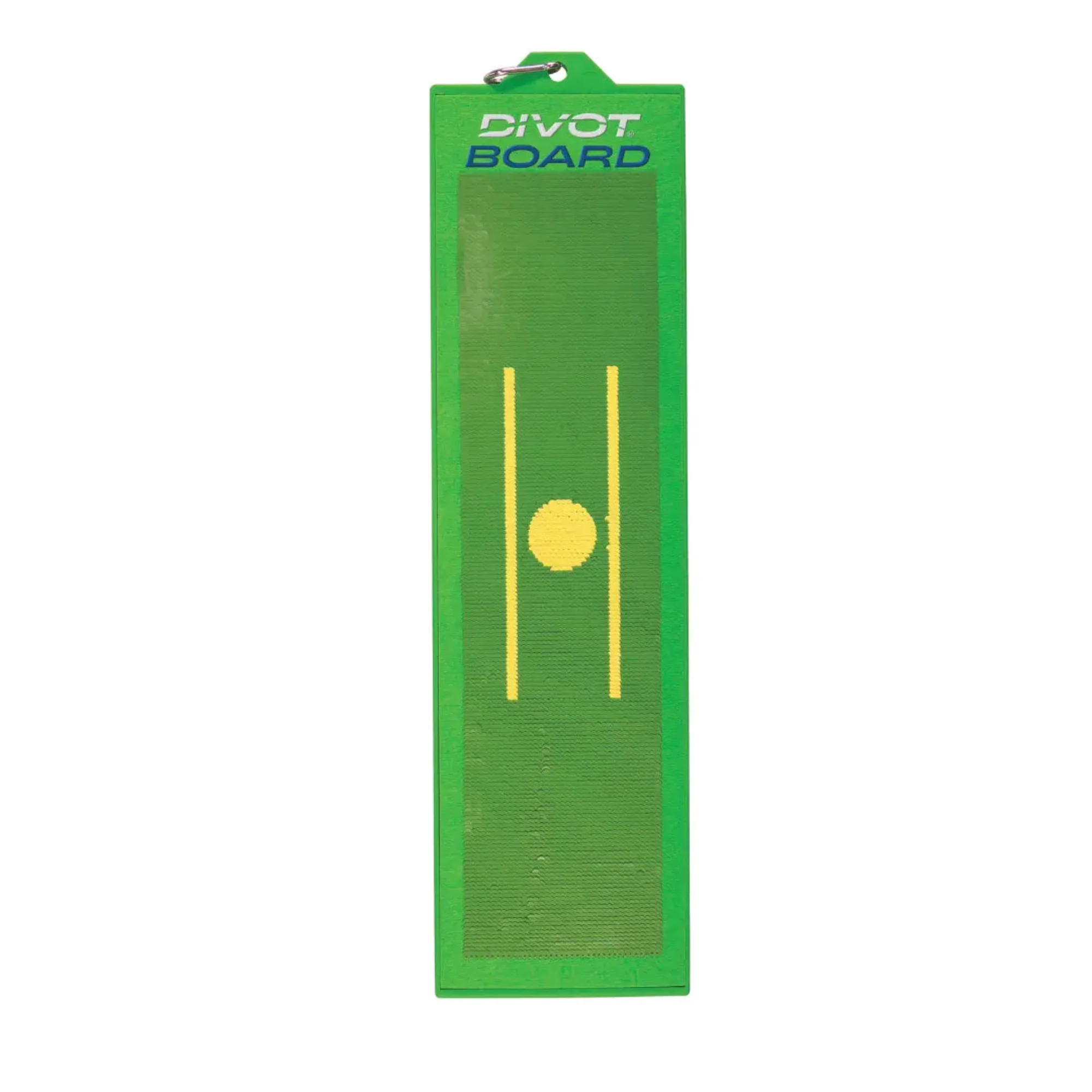
This Divot Board is a fantastic tool to practice your strike and club path, which is fundamental for consistent wedge play. It gives you instant visual feedback on how you’re hitting down on the ball and where your club is traveling, helping you refine your technique and build muscle memory for those crucial short-game shots.

Divot Board
The Divot Board is a revolutionary golf training aid that gives golfers instant feedback on every swing. By showing exactly where your club contacts the ground, the Divot Board makes it easy to spot errors and correct them on the spot. Whether you’re practicing indoors or outdoors, this tool helps you improve ball striking, swing path, and low-point control. With consistent use, the Divot Board builds muscle memory so you can strike the ball cleaner, hit straighter shots, and lower your scores.
Instant Feedback for Faster LearningResearch shows that immediate feedback can accelerate learning by 50–70%. The Divot Board provides real-time feedback on your swing so you can make quick adjustments and refine your technique instantly.
Improve ConsistencyDid you know 70–80% of golfers struggle with inconsistent contact? The Divot Board reveals exactly where your club struck the surface, helping you identify flaws and build a repeatable, reliable swing.
Train AnywhereCompact and portable, the Divot Board can be used at home, on the driving range, or even in the office. Its high-quality construction ensures durability through countless practice sessions. Proudly designed and assembled in the USA.
Using a Divot Board consistently will transform your practice routine. It’s the easiest way to gain awareness, develop better ball striking, and see results faster.
View Product
Putting for the Birdie: Read, Don’t Just Stroke
You’ve hit the fairway, nailed the green, and now you have a golden opportunity. But how often do those “easy” birdie putts slip by? Rose points out that obsession with a “perfect” stroke can actually hinder performance. The real key, he argues, is green reading.
His method involves walking a semicircle behind the ball, using his feet to feel the ‘inflection point’ where the ground transitions from downhill to uphill. This awareness helps you understand the subtle breaks that influence the putt. If the ball is left of that point, it breaks right; if it’s right, it breaks left. Knowing this is far more valuable than a robotic stroke every time.
The “Still Eyes, Listening Ears” Putting Drill:
Justin Rose’s ultimate putting tip is simple yet profound: “Keep your eyes still.” Any movement of your eyes during the stroke translates to subtle body movement, impacting your contact. The drill? Focus intensely on the spot where your putter meets the ball. Don’t lift your head to watch the ball roll into the cup. Instead, keep your eyes fixed until you hear the satisfying sound of the ball dropping into the hole. This trains you to maintain a stable head and body, leading to more centered strikes and, ultimately, more made putts.
Making birdies on the golf course is incredibly satisfying and entirely within your reach. Focus on driving rhythm and accuracy, commit to solid iron compression, develop a versatile wedge game, and become a master green reader. With consistent practice and these actionable tips, you’ll be seeing more circles on your scorecard in no time. Keep practicing, keep learning, and most importantly, keep having fun out there!
