


There are courses that challenge you, and then there are courses that stare into your soul, daring you to blink. TPC Sawgrass, home to Pete Dye’s iconic Stadium Course, undoubtedly falls into the latter category. Having walked these hallowed grounds and, yes, even sacrificed a few Titleists to its watery graves, I can attest to the unique psychological warfare it wages. It’s not merely a golf course; it’s a masterclass in strategic design, a theatre of the absurd for the world’s best, and a bucket-list pilgrimage for architecture enthusiasts like myself.
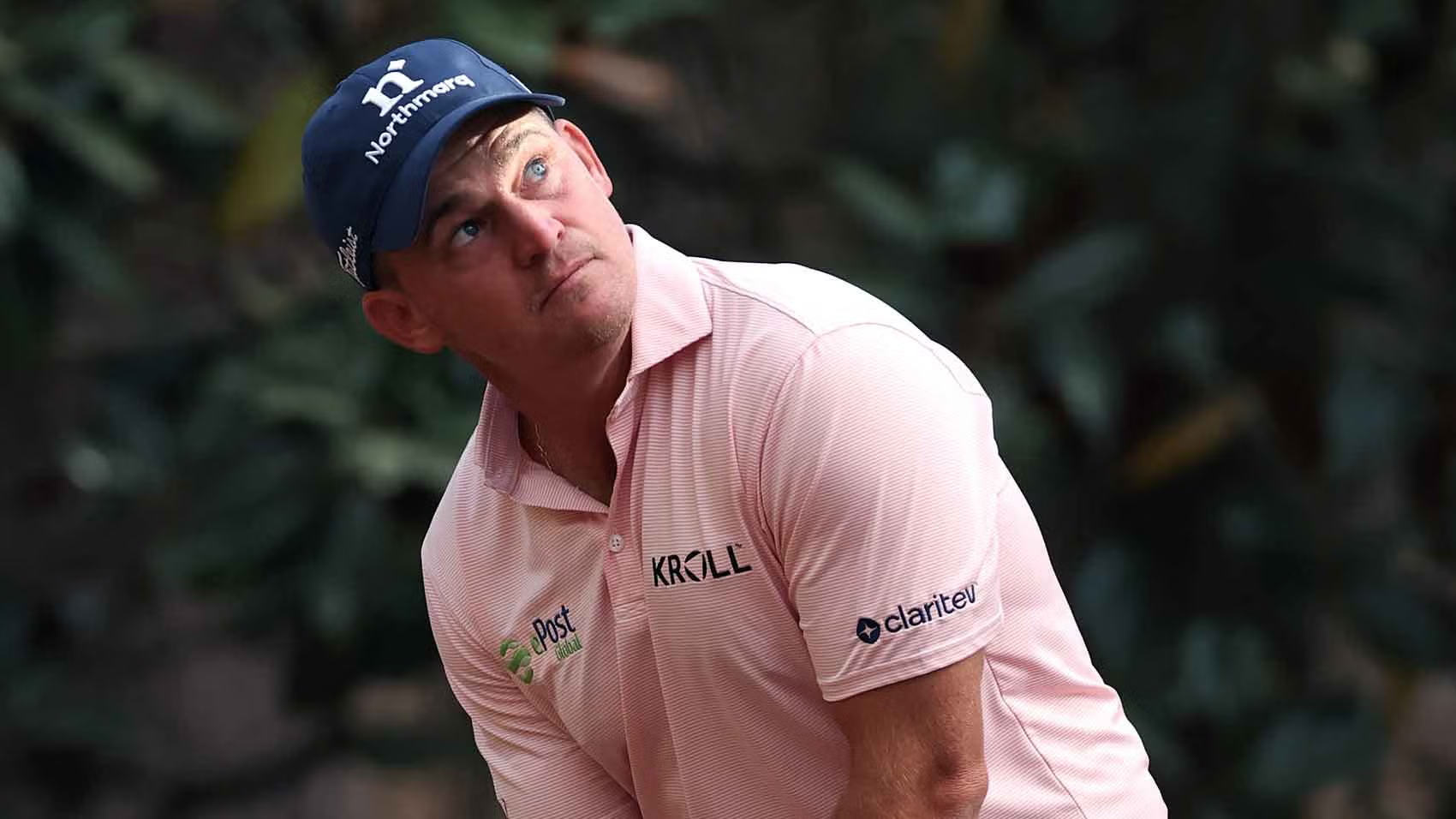
My recent read of Bud Cauley’s Players Championship first-round experience brought back a flood of memories and reaffirmed my conviction that Dye’s genius at Sawgrass lies not just in the visible hazards, but in the unseen psychological pressures he deftly injects into every shot. Cauley’s encounter with the infamous 17th, albeit delayed, perfectly encapsulates this.
The Stadium Course: A Dye-abolical Masterpiece
Opened in 1982, the Stadium Course at TPC Sawgrass was Dye’s audacious answer to Commissioner Deane Beman’s desire for a championship course owned by the players, one that would provide a consistently exciting experience for spectators. And exciting it most certainly is. Dye, a man whose architectural philosophy I’ve studied extensively, was a master of visual deception, utilizing mounding, railroad ties, and water features to create courses that often look more intimidating than they actually play – or vice versa.
Here at Sawgrass, the routing is a brilliant dance, weaving through the Florida wetlands and forests, giving each hole a distinct character. While the opening holes are often perceived as a gentle handshake, they quickly lull you into a false sense of security before Dye’s signature challenges begin to unfold. The course is a magnificent example of a designer understanding his audience – both the players and the thousands lining the fairways.
But let’s be honest, for all of Dye’s brilliant strategic elements throughout the 18 holes, one hole truly dominates the conversation, often occupying a special, albeit stressful, corner of a player’s mind from the moment they step onto the property.
The 17th: An Island of Indecision
The par-3 17th. Two words that evoke a mixture of dread and exhilaration for any golfer. From approximately 140 yards, players face a shot to a green entirely surrounded by water. On paper, for a touring professional, it’s a wedge or a short iron – a pedestrian shot. Yet, the reality is anything but. As the article vividly describes:
“In any other setting, it’d be a nothing shot for the world’s most skilled golfers — but when you ring the green with thousands of fans plus a massive corporate hospitality buildout, mix in wind gusts and club indecision and the pressure of one of the game’s marquee events, the generous 4,000-square-foot target can feel more like 400 square feet.”
This is Dye’s architectural genius at its absolute peak. He didn’t just build a hole; he built a pressure cooker. The wind, often swirling and unpredictable off the surrounding marshland, becomes a character in itself. The article highlights Cauley’s experience perfectly. After a brief storm delay, the wind dramatically shifted:
“From down off the left to pumping straight in,” Cauley said of the wind direction. “Probably close to 30 yards.”
Imagine that: a 30-yard adjustment on a short par-3, with the tournament on the line and water everywhere. It transforms a routine shot into an intellectual and emotional battle. Cauley’s original club, a wedge, became an 8-iron. His relief at merely finding land, despite spinning back into the rough, speaks volumes about the psychological impact of this hole.
The 17th isn’t just about avoiding the water; it’s about managing anxiety. Dye understood that golf at the highest level is as much a mental game as a physical one. This hole is a testament to his belief in testing every facet of a player’s game.
Beyond the Island: The Rest of the Masterpiece
While the 17th gets all the headlines, it’s crucial to remember that it’s merely one stroke in a symphony of strategic design. The par-5 16th, which Cauley had just birdied, is a fantastic example of a risk-reward hole, often setting the stage for the drama that follows. The closing 18th, a daunting par-4 with water down the left and menacing trees on the right, provides a fittingly difficult conclusion. It’s a hole designed to elicit heroic shots or devastating blow-ups, ensuring that the tournament is rarely decided until the final putt drops.
The green complexes at Sawgrass are another of Dye’s hallmarks. They are often subtly contoured, with false fronts, collection areas, and dramatic slopes that demand precise approach shots. The approach into the 17th may be to a seemingly flat green, but the subtle undulations ensure that even successful tee shots can leave tricky putts.
A Pilgrimage Worth Taking
TPC Sawgrass is located in Ponte Vedra Beach, Florida, just outside Jacksonville. As a TPC network course, the Stadium Course is generally open to public play, though it comes with a premium price tag, particularly during peak seasons. Is it worth it? Absolutely. For an architecture enthusiast, it’s akin to visiting a cathedral. You’re not just playing a round of golf; you’re experiencing a piece of golf history, a living testament to one of the game’s most innovative and challenging designers.
When you visit, take your time. Appreciate the subtle mounding, the strategic bunkering, and the way Dye uses railroad ties not just as hazard definition but as aesthetic elements. Understand that every element has a purpose, designed to challenge the best players in the world and provide an exhilarating spectacle for fans. And when you finally stand on that 17th tee, no matter how calm you try to be, remember Bud Cauley’s experience. That little voice in your head, the one questioning your club choice and the wind direction? That’s Pete Dye, still playing tricks from beyond the grave.
