

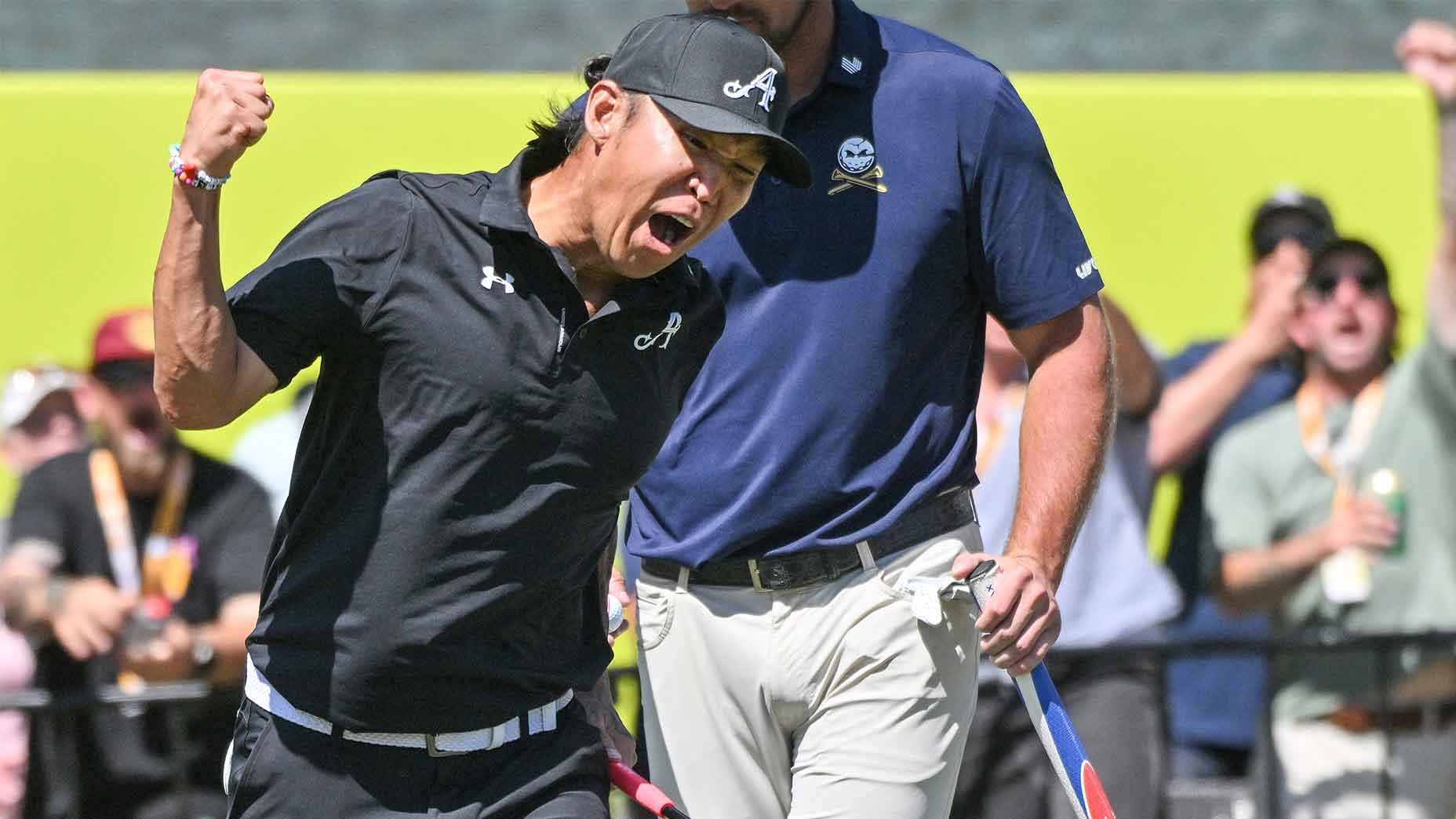

Anthony Kim’s Adelaide Miracle Reveals What Professional Golf Has Been Missing
I’ve been covering professional golf for 35 years, and I’ve seen comebacks. I’ve seen redemption arcs. I’ve seen players battle back from injury, disappointment, and public scandal. But I’ve never—and I mean never—seen anything quite like what Anthony Kim did on the weekend in Adelaide.
Let me be direct: what happened at LIV Australia wasn’t just a victory. It was a reclamation. A validation. And frankly, it was the kind of genuine, unpredictable sporting moment that the professional game has been starving for.
The Improbability That Defies Easy Explanation
Here’s what makes this so difficult to process. Anthony Kim’s last professional victory came in 2011—before Instagram, before most people owned a smartphone, before the landscape of professional golf looked anything like it does today. He was a prodigy then, talented enough that his early retirement seemed like a tragedy. But the tragedy deepened into something far more serious: a decade of public invisibility, personal struggle with addiction and depression, and a battle for his life itself.
When Kim returned to competitive golf on the LIV tour, I’ll admit I was skeptical. Not cynical, mind you—skeptical. The man had been away from the sport for years. Even when he appeared at tournaments, he looked uncomfortable, out of place. He got relegated. That should have been the end of the story. A footnote. An asterisk in golf history.
Then came the LIV Promotions event, where Kim earned his way back into contention. That impressed me. That showed something. But even then, I wasn’t thinking: “This guy is about to beat Jon Rahm and Bryson DeChambeau at a major tour event.”
“There was no sign that this was coming. He was not competitive in his first two years on LIV. He got relegated. That seemed an anticlimactic but inevitable end to the experiment.”
And yet, on a Saturday night in Australia that turned into a Sunday morning for those of us watching stateside, he did exactly that. In a final round where the pressure should have crushed him, where the magnitude of the moment should have seized his joints and dulled his senses, Anthony Kim instead shot 63 and won by three.
When the Hole Becomes Impossibly Large
I’ve caddied in major championships. I’ve walked inside the ropes when the stakes were astronomical. I know what it feels like when a player enters that rare zone where the cup appears the size of an asteroid crater. Every putt seems predestined to fall.
That’s what I witnessed in Adelaide.
“Everything dripped into the center of the cup like there was nowhere else these putts could go. Reminds me of a Paul Azinger phrase from the day after Smith had that birdie barrage at the Old Course: ‘His putts, they would have fell into a thimble.'”
The golf Kim played down the stretch wasn’t just good. It was supernatural. He didn’t miss a shot for roughly two hours. He didn’t let the pressure, the significance, the sheer unlikelihood of what was happening affect his mechanics or his mindset. In my experience, that’s the hallmark of a player operating at an elite level—one where conscious thought gets out of the way entirely.
The Deeper Story We’re Still Learning
Here’s what strikes me most: we still don’t know the full scope of what Kim battled. Back in February 2025, he shared publicly that he’d celebrated two years of sobriety. He disclosed that he’d suffered severe withdrawal symptoms in rehab. He suggested his addiction issues persisted even while competing in major championships. That’s a level of struggle that most casual golf fans can’t fully comprehend.
And that was just one chapter of a much longer story—a decade-long absence, depression, the slow climb back toward any kind of normalcy.
“He suggested he had used drugs while playing in major championships. And THAT story? That story didn’t include the decade he’d spent away or the rest of the golf stuff he needed to work through to get within a hundred miles of a victory … let alone in the winner’s circle.”
The victory in Adelaide isn’t the end of that narrative. It’s a pivotal moment in it. And I suspect—I hope—that Kim will continue to share his journey in his own time and on his own terms. That story matters, not just for golf, but for anyone struggling with addiction and the long road back to purposeful living.
What This Means for LIV Golf
Let’s talk about the elephant in the room: the LIV Golf context. Does this victory validate the league? Does it change the conversation around professional golf’s fractured landscape?
Honestly, I think it’s both simpler and more complex than that. This is fundamentally an Anthony Kim story. You can’t build a league’s entire identity on one improbable victory—he can only win for the first time once, after all. But the venue matters. The crowd matters. The visibility matters.
Adelaide was packed. The energy was electric. Fans crowded around the 18th hole. The celebration was organic and genuine. In four years of covering LIV events, I haven’t seen the league generate that kind of authentic sporting theater from the competition itself. The championship walks, the fireworks, the concert-stage production—those are fun, but they’re manufactured. This was real.
If LIV is serious about building a sustainable professional golf league, they need more moments like this. More venues that generate genuine crowd energy. More storylines that transcend the league itself and tap into something bigger in the sporting consciousness.
The Adelaide crowd and the magnitude of Kim’s victory prove one thing conclusively: golf fans care deeply about compelling narratives and unexpected drama. That’s not a LIV thing or a PGA Tour thing. It’s a golf thing. The league that figures out how to consistently deliver both elite competition and those kinds of moments will prosper.
For now, Anthony Kim’s Adelaide miracle stands as a reminder that professional golf, at its best, is still capable of delivering the improbable. And sometimes, that’s all we really need.
