

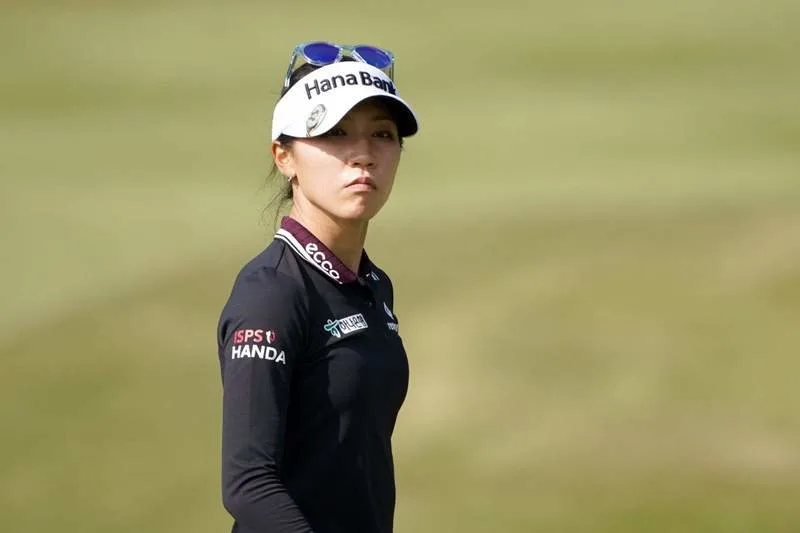

Lydia Ko’s Long Road Back: Why the Drought Matters More Than You Think
Look, I’ve been around professional golf long enough to know that 380 days without a victory doesn’t sound like much until you realize it’s 380 days of questions. Every missed cut stings a little differently when you’ve been to the mountaintop. Every near-miss gets replayed in hotel rooms and on the range. That’s the weight Lydia Ko carries as she returns to competition at the Fortinet Founders Cup—not just as a former champion looking to reclaim form, but as a player navigating one of golf’s most brutal psychological gauntlets.
Having spent 35 years covering this tour—and having caddied through my share of slumps back in the day—I can tell you this: what separates champions from everyone else isn’t talent. It’s how they metabolize failure. And what strikes me about Ko’s current situation is how genuinely instructive it is for understanding professional golf in 2025.
The Phenomenon That Became Human
Let’s be clear about what we’re discussing here. Lydia Ko wasn’t just good once. She was a generational talent who became the youngest world No. 1 at 17 years old, won 14 LPGA events, claimed two majors, and basically did everything the sports establishment promised a phenom would do. Then she didn’t. That’s not a scandal—it’s golf.
But here’s what fascinates me: the specificity of her struggle. 2023 was genuinely rough. Two top-10 finishes in 20 starts. Zero wins. And that 82 in Vancouver? That’s the kind of score that stays with a player. I’ve seen it before—not often, but I’ve seen it—where a professional golfer posts something so far from their norm that it becomes a marker. A before-and-after point.
Then came 2024, and she absolutely exploded back. Three wins, an Olympic gold medal, $3.2 million earned in a single year. The kind of season that rewrites narratives.
And now? We’re 380 days into the next chapter, and Ko is being asked to do it all over again.
The Stacy Lewis Wisdom That Echoes
Here’s where Ko reveals something I think most casual fans miss entirely. She quotes advice from Stacy Lewis, someone who walked this exact road during her own prime years. Lewis, incredibly, was world No. 1 while simultaneously trapped in a winless streak—finishing second three times in five starts during early 2015 alone. That’s not a failure of talent. That’s golf’s cruelty with a microscope on it.
“Don’t try to be the person that I was when I was world No. 1 in 2015 or 2016. I’m never going to be that same person, and all I can do is be the best person and best player I am in the present.”
What Ko internalized from Lewis—and what she’s articulating now—is something I wish every junior golfer understood before they turned pro: chasing versions of yourself is a losing game. In my three decades covering the tour, I’ve watched players self-destruct trying to recapture lightning in a bottle. The ones who survive and thrive are the ones who accept evolution.
Ko’s acknowledgment that she has “scar tissue” now—that she can “handle the bad situations a lot better”—that’s not defeat talking. That’s maturity. She’s no longer the naive teenager free-swinging with nothing to lose. She’s experienced enough setback to understand that what looks like failure in the moment is often just data collection.
The Nelly Kord Comparison That Shouldn’t Be Overlooked
Here’s something I found genuinely striking about the article’s parallel with Nelly Kord’s 2025 season: Kord went 0-for-20 despite having better statistics than her dominant 2024 campaign. Better scoring average. Better off-the-tee metrics. Better tee-to-green performance. Zero wins.
That’s not a personal failure. That’s the tour’s current reality. We’re in an era where the statistical gap between first place and eighth place has compressed to almost nothing. Where consistency has become almost a curse because it distributes wins across more players rather than concentrating them.
“You put so much time and effort into your craft, and you just don’t play well. You just do it over and over and over again. Occasionally, you just go a little crazy.”
Kord’s honesty here is worth sitting with. She’s describing not a crisis of capability but a crisis of probability. And eventually—she did break through at the 2026 Hilton Grand Vacations Tournament of Champions. Ko hasn’t yet.
That matters, but not the way skeptics might think it does.
Why This Moment Matters
Ko entering the Fortinet Founders Cup with a streak and the memory of five top-10 finishes at this event isn’t a story about redemption yet. It’s a story about persistence in a sport that punishes impatience and rewards resilience. She’s chasing a Career Grand Slam—needing only the Chevron Championship and the U.S. Women’s Open to complete the collection. That’s generational talent thinking.
But here’s what I think matters most: Ko’s not pretending the drought doesn’t exist, and she’s not reinventing herself trying to escape it. She’s just returning to play golf. That distinction—that acceptance of what is without being defined by it—that’s championship DNA expressing itself.
In my experience, that’s usually when the wins come back.
