


Ah, the magic of a well-named golf hole. It’s more than just a label, isn’t it? It’s a whisper of what’s to come, a nod to history, or perhaps a wry chuckle at the architect’s cunning. We often celebrate the grand, multi-hole stretches – the “Bear Traps” and “Amen Corners” of the world – for their evocative monikers, but as a seasoned architect-obsessed wanderer of the golf globe, I’ve found that some of the most profound names apply to individual challenges. These are the holes that imprint themselves on your memory, often for the delightful dread they instill or the sheer ambition they demand.
My recent travels led me down a path less trodden, away from the usual suspects, to rediscover some truly outstanding examples. These aren’t just holes; they’re narrative chapters within a larger architectural story, each name a perfect preface to the drama. Let’s delve into a few that truly capture the essence of their design and the spirit of the game.
The Art of the Gambit: King’s North’s “The Gambler”
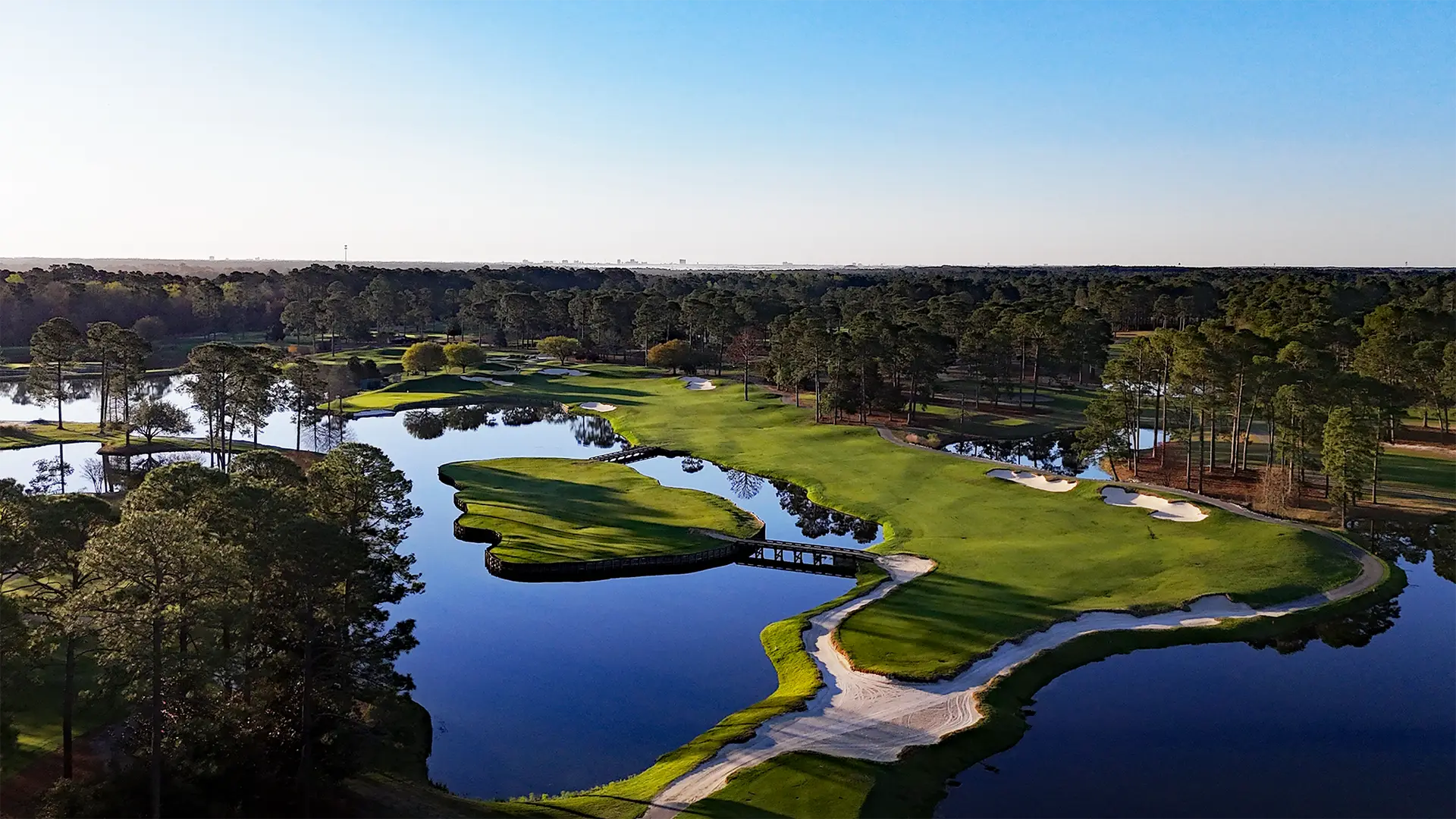
I’ve always admired architects who offer a genuine risk-reward proposition, a true fork in the road that doesn’t just tease but demands a decision. Arnold Palmer and Francis Duane’s design at King’s North in Myrtle Beach delivers this in spades with their 6th hole, aptly named “The Gambler.” Most par-fives offer a glimmer of hope for reaching in two, often involving a beefy hybrid and a prayer. But here, the architects present a literal, audacious shortcut.
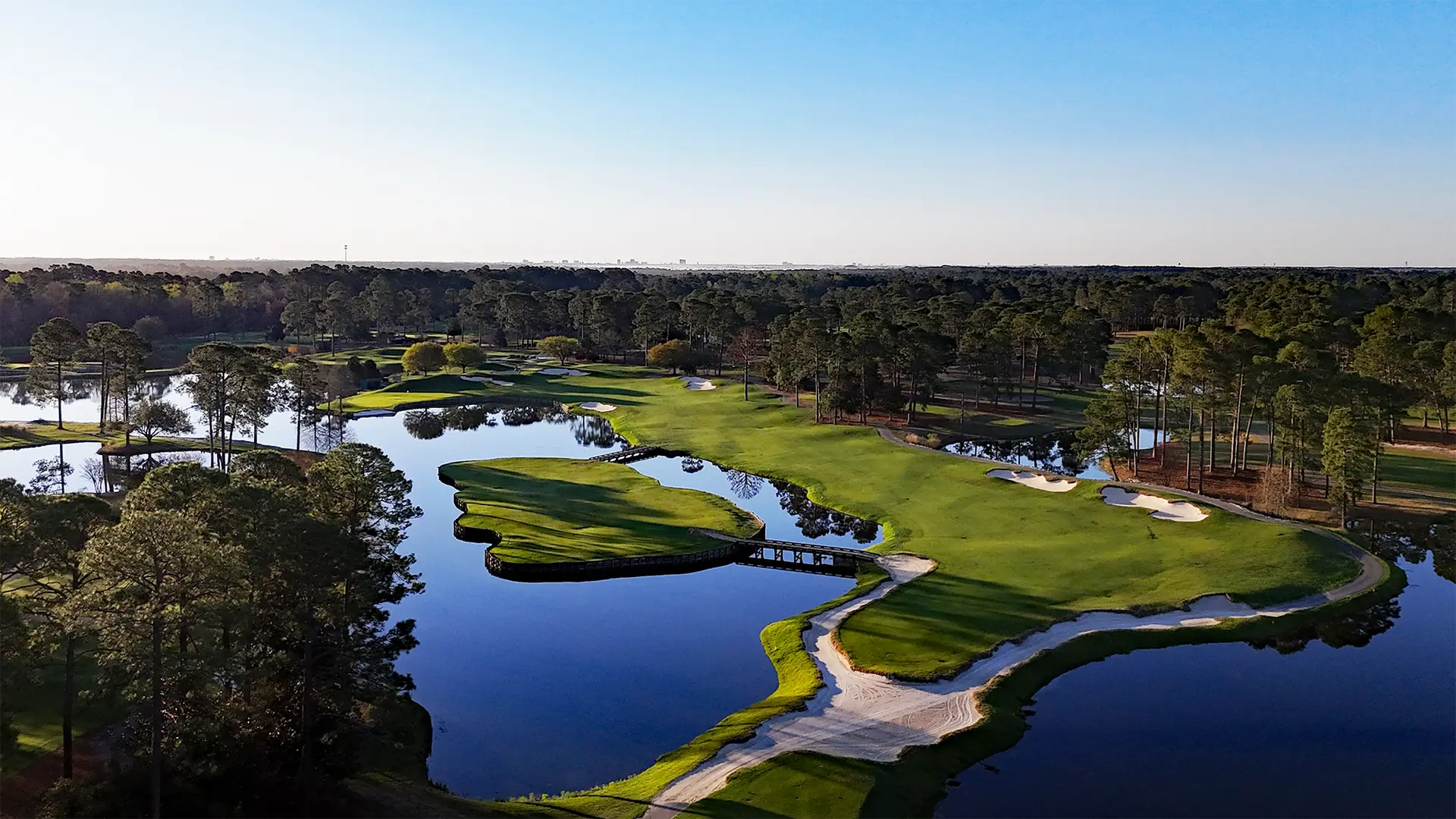
“Those who live dangerous and take aim at that island fairway might have only 150 or 160 yards into the green, but such a tee shot comes with plenty of risk—hence, this hole’s name: The Gambler.”
The sheer audacity of aiming for that small, isolated patch of fairway, surrounded by water, is enough to make knees buckle. It’s a psychological test as much as a physical one. Success here shortens the hole dramatically, leaving a wedge into the green – a potential eagle. Failure, however, usually means a splash and a dropped shot. It truly encapsulates the core tenet of strategic golf: understanding your limits versus the potential reward. This is a hole that demands a choice of character.
Desert Deception: Troon North’s “Hidden Green”
The desert landscapes of Scottsdale, Arizona, provide a dramatic backdrop for golf, and Troon North’s Monument course, a Fazio design, is a prime example of how to integrate golf with rugged topography. Its 1st hole, “Hidden Green,” is a masterclass in subtlety and tactical awareness, right from the opening tee shot.

From the elevated tee, the fairway stretches invitingly, but the name warns you. You see a sliver, perhaps a mirage, of the putting surface. The genius of this “hidden” green lies in its deception. The landforms cleverly conceal a significant, bisecting slope that divides the green. A conservative shot to what appears to be the center can leave you miles from the hole if the flag is tucked on the opposite side of that ridge. It forces you, on the very first hole, to think about your approach shot and not just blast away. It’s an intelligent introduction to a course that rewards foresight.
Architectural Mayhem: Whistling Straits’ “Sand Box”
Pete Dye’s designs are known for their audaciousness, their demanding nature, and their sheer visual spectacle. Whistling Straits, carved out of an abandoned airfield along Lake Michigan, is a testament to his bold vision. The “Sand Box,” the 11th hole on the Straits course, embodies this perfectly.
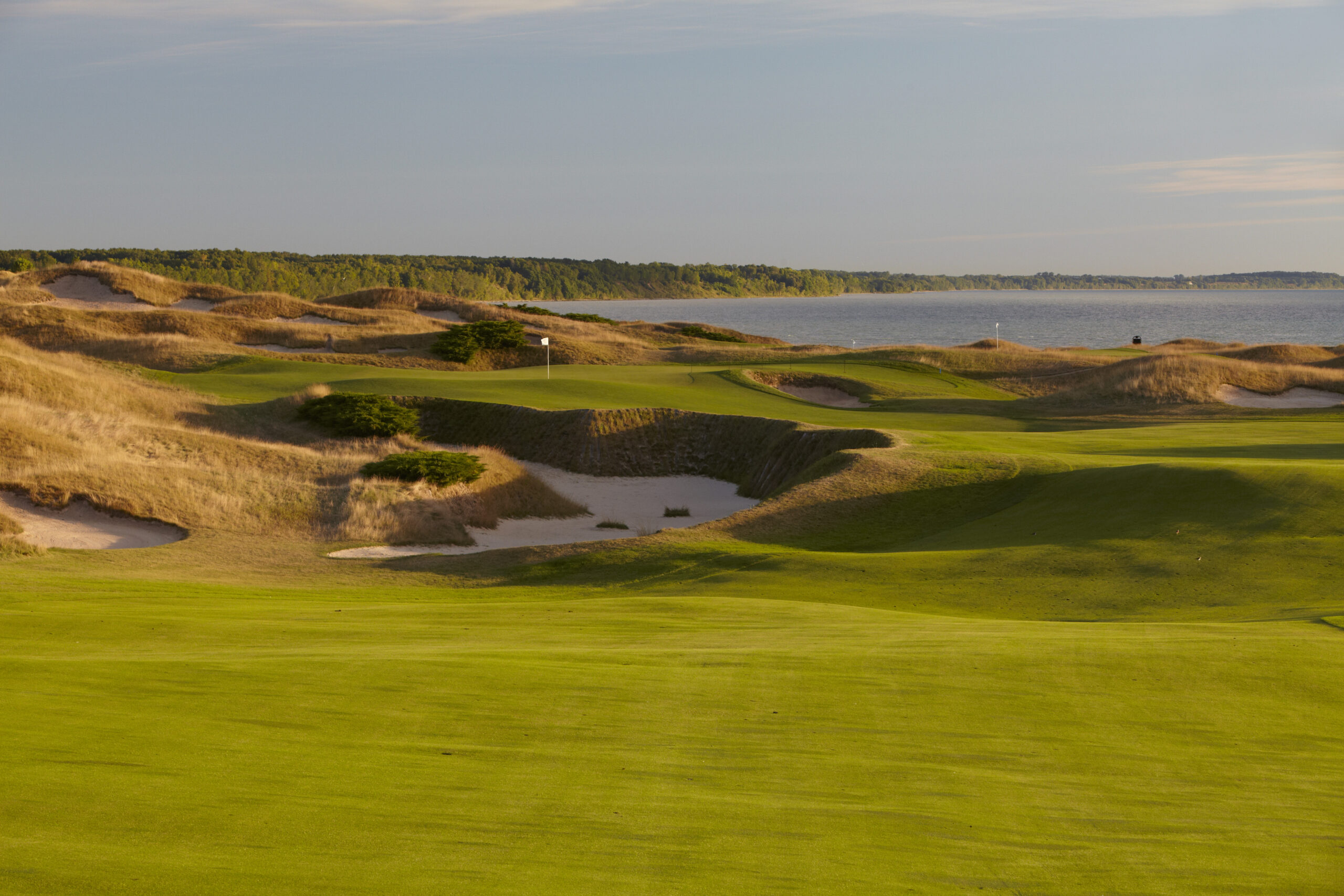
This colossal par-five, stretching over 645 yards, is an exercise in intimidation. I’ve walked these fescue-covered dunes, and the sheer number of bunkers—more than 100 on this single hole—is staggering. But the true meaning of “Sand Box” reveals itself in a particular hazard.
“Others will argue the name is based on the cavernous trap that guards the last 100 yards or so of the fairway on the left. Both perspectives would be correct, though it’s hard not to think that the gigantic trap was the initial inspiration.”
That enormous, gaping bunker, deep enough to make you feel like you’ve fallen into a forgotten archeological dig, is the heart of the “Sand Box.” It’s not just a hazard; it’s an event. If your ball finds itself at the bottom of this mini-canyon, you are, indeed, in the “sand box” for an extended play session. Dye’s philosophy here seems to be: ‘If you’re going to create trouble, make it memorable.’ And he certainly did.
A Link to Legends: Carnoustie’s “Hogan’s Alley”
Stepping onto the historic links of Carnoustie, you’re not just playing golf; you’re walking in the footsteps of legends. The 6th hole, a rugged par-five, acquired its famous moniker, “Hogan’s Alley,” relatively recently, yet it instantly feels as ancient and enduring as the course itself.
“That didn’t deter Ben Hogan in 1953, who hit precise drives to that area all four days of the tournament, recording birdies each day. (Incidentally, Hogan won the championship by four strokes.) For that reason alone, Hogan’s Alley is a very apt name.”
The genius of this hole lies in its strategic demands. The prevailing wind often pushes into your face, and the optimal line off the tee is precariously close to out-of-bounds on the left, threading a narrow gap between internal bunkers. It’s a line of minimal error, requiring a surgical precision that only a few possess. Ben Hogan, during his iconic 1953 Open win, demonstrated this mastery, driving into that tight “alley” with unerring accuracy, earning birdies all four days. The name isn’t just a tribute; it’s a challenge, daring you to emulate “The Hawk’s” unmatched control. It’s a constant reminder of the level of golf required to conquer such a historic, demanding layout.
The Final Word
These holes, with their telling names, reveal the deeper narratives woven into the fabric of golf course architecture. Whether it’s the psychological warfare of “The Gambler,” the subtle deception of “Hidden Green,” the brute force challenge of “Sand Box,” or the historical reverence of “Hogan’s Alley,” these monikers don’t just describe; they *define*. They are reminders that the greatest designs engage not just our swing, but our minds, our courage, and our appreciation for the enduring spirit of the game. They are, in essence, the soul of the course distilled into a few perfectly chosen words.
